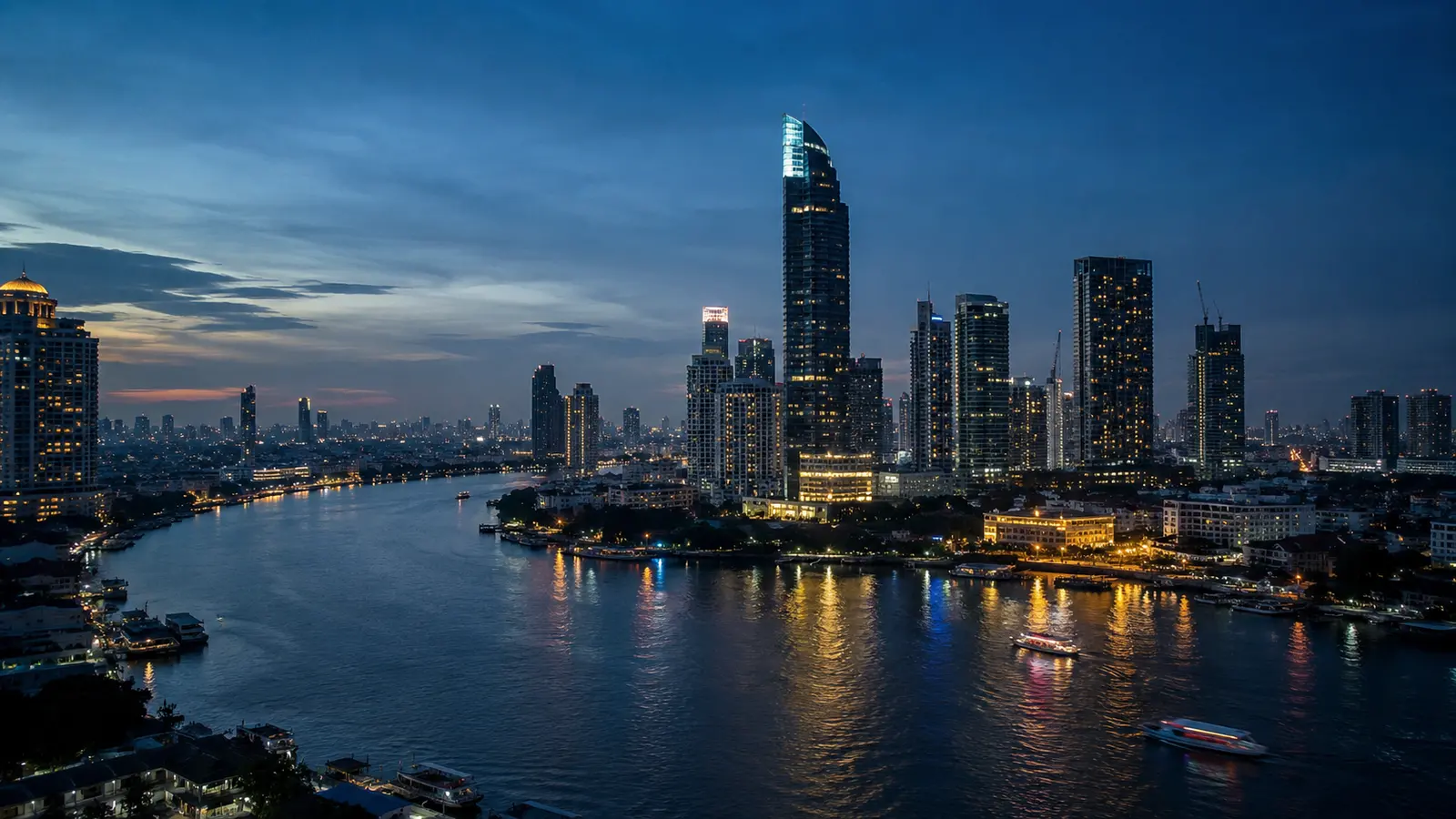
The most powerful central banker in the world came to Bangkok, and he chose his words carefully. In a fireside chat with IMF Managing Director Kristalina Georgieva on 16 October, Federal Reserve Chair Kevin Warsh declined to say whether the Fed would raise interest rates again this month. But he offered a phrase that every central bank in Asia will remember: in today's synchronised global tightening, there are no free riders, as reported by CNBC.
It was his last public appearance before the Fed's blackout period ahead of its next meeting, which made every word count. Markets read the remarks as slightly less hawkish than feared, and the dollar slipped. For Asia, where currencies from the peso to the rupiah have been under heavy pressure, even a small softening in the dollar matters.
What Warsh said and did not say
Warsh was clear about what he would not do. He refused to hint at whether the Fed would hike again at its October meeting, consistent with his long standing opposition to forward guidance, the practice of signalling future policy moves in advance. He said he is committed to delivering price stability but would not commit to a path for rates, as noted by FXStreet.
That approach marks a sharp break from the Fed's practice in recent years, when officials often guided markets heavily about upcoming decisions. Under Warsh, investors must interpret data and remarks more independently, which can increase volatility around each meeting.
He did offer a view of the global picture. Central banks around the world have been tightening together in response to inflation pressures, and Warsh described that as a synchronised effort in which no country can ride free on the actions of others. He also expressed optimism that AI will boost productivity, while warning that the path will be very bumpy.
Why no free riders matters for Asia
The phrase has a specific meaning for Asian central banks. When the Fed tightens and the dollar strengthens, countries that do not raise their own rates often see their currencies weaken, imported inflation rise and capital flow out. In effect, they cannot avoid the consequences of global tightening by standing aside.
That is exactly what Asia has experienced this year. The Philippine peso has hit record lows, the rupiah has slid toward its lifetime low and several central banks have raised rates or intervened in currency markets. Warsh's comment can be read as an acknowledgement that the burden of fighting inflation is shared, and that countries which delay act at their own risk.
When the world's central bank says there are no free riders, every central bank that hoped to wait it out has been put on notice.
It may also be read as encouragement. By praising global tightening, Warsh signalled that he sees other central banks' actions as helpful in bringing inflation down worldwide, which could reduce the pressure on the Fed to tighten as aggressively on its own.
How markets reacted
The immediate market reaction was modest but meaningful for Asia. The dollar index fell about 0.22 percent to 101.82 on the day, with Warsh's comments cited as a headwind, according to FXStreet. The Japanese yen strengthened, with USD JPY dropping back toward 158 in the Asian session, and the Australian dollar rose toward 0.6950.
Asian stock indexes and Treasury yields were largely stable, suggesting that markets did not see the remarks as a major shift. Goldman Sachs read Warsh's comments as pointing to a pause in October, while still expecting one more hike in December, according to CNBC.
For currency traders across Southeast Asia, the key takeaway was that the Fed is not committing to further aggressive tightening. That gave some breathing room to pressured currencies, although it did not change the underlying forces of high oil prices and regional market stress.
What it means for Asian central banks
Asian central banks now face a delicate balance. If the Fed pauses, pressure on their currencies may ease, giving them more room to focus on domestic conditions. If the Fed hikes again in December, the dollar could strengthen once more, renewing pressure on weaker currencies.
The decisions coming up in the region will reflect this:
- The Philippine central bank meets on 22 October with a hike widely expected.
- Bank Indonesia is under pressure to defend the rupiah after the MSCI shock.
- Japan faces intervention risk as the yen trades near 158 per dollar.
- Singapore has paused, betting the AI driven cycle is easing.
The interplay between the Fed and Asian policymakers will shape currency markets through year end. We examined how the region's currencies have reacted to dollar strength, including the Philippine peso's slide to a record low, which shows how exposed some economies are.
The AI productivity bet
Warsh's comments on AI deserve attention. He expressed optimism that AI will raise productivity, which would allow the economy to grow faster without generating inflation, but warned that the path will be very bumpy. That view has implications for how the Fed thinks about rates in the long run.
If AI delivers a lasting productivity boost, the Fed could eventually tolerate stronger growth without raising rates as much. But the bumpy path Warsh described suggests disruption along the way, from job losses in some sectors to swings in investment and asset prices. For Asian economies tied to AI supply chains, that bumpiness could translate into volatile export demand.
The IMF's own outlook flagged AI market risk as one of the main threats to Asia's growth. Warsh's remarks reinforce that AI is now central to how policymakers view the global economy, both as a source of hope and a source of instability.
A Fed that keeps markets guessing
Warsh's Bangkok appearance captured his approach to leadership. He offered a broad view of the global economy, praised coordinated action against inflation and refused to give markets the guidance they crave. For Asia, that means more uncertainty around each Fed meeting, and a greater need for local central banks to make their own judgements.
The no free riders message is likely to echo through the region's policy decisions in the coming weeks. Asian central banks cannot rely on the Fed to set an easy path, and they cannot avoid the consequences of global tightening by standing aside. Each will have to decide its own course, knowing that the dollar remains the force that shapes them all.
What did Kevin Warsh say in Bangkok?
In a fireside chat with IMF chief Kristalina Georgieva on 16 October 2026, Warsh declined to signal the Fed's next move, said he is committed to price stability and described a synchronised global tightening with no free riders.
Did Warsh signal a rate hike in October?
No. He declined to pre judge the Fed's October meeting and reiterated his opposition to forward guidance.
What does no free riders mean?
Warsh used the phrase to describe a synchronised global tightening in which no country can avoid the effects of fighting inflation by relying on others to do the work.
How did the dollar react?
The dollar index fell about 0.22 percent to 101.82 on the day, and USD JPY dipped toward 158 in the Asian session, according to FXStreet.
What did Goldman Sachs say after the remarks?
Goldman Sachs read Warsh's comments as pointing to a pause in October, while still expecting one more rate hike in December, according to CNBC.
What did Warsh say about AI?
He said he is optimistic that AI will boost productivity but warned that the path will be very bumpy.
Why does the Fed matter for Asian currencies?
When the Fed tightens and the dollar strengthens, Asian currencies often weaken, imported inflation rises and capital can flow out, which pressures local central banks to respond.
Which Asian central banks are under the most pressure?
The Philippines, Indonesia and Japan face the most visible currency pressure, while Singapore has chosen to hold policy steady.
What is forward guidance?
Forward guidance is when a central bank signals its likely future policy moves in advance. Warsh opposes the practice, preferring to let decisions follow the data, which can make markets more uncertain before each meeting.
When is the Fed's next decision?
The Fed's next policy meeting follows the blackout period that began after Warsh's Bangkok remarks. Markets will watch whether it pauses, as Goldman Sachs expects, or raises rates again.
Kevin Warsh used his Bangkok stage to describe a world where every central bank shares the burden of fighting inflation, and none can sit it out. For Asia, the message is both a warning and a small relief: the Fed is not promising aggressive new hikes, but it is not promising an easy path either. In a region where currencies have been tested all year, the dollar remains the tide that every central bank must swim against.
Talk to the SpinDepth deskYou've finished this story
Read on, send it to someone, or ask about it.