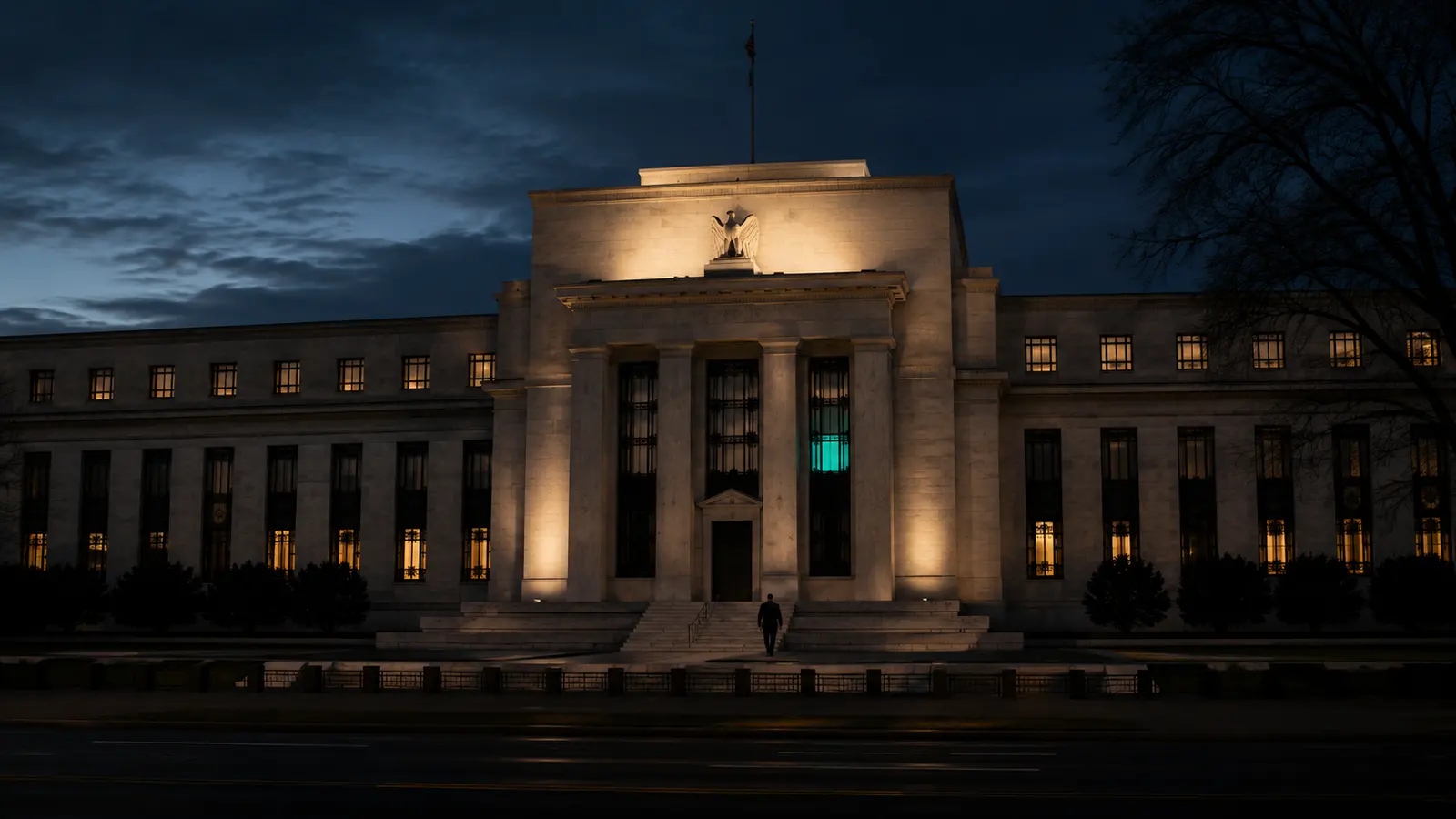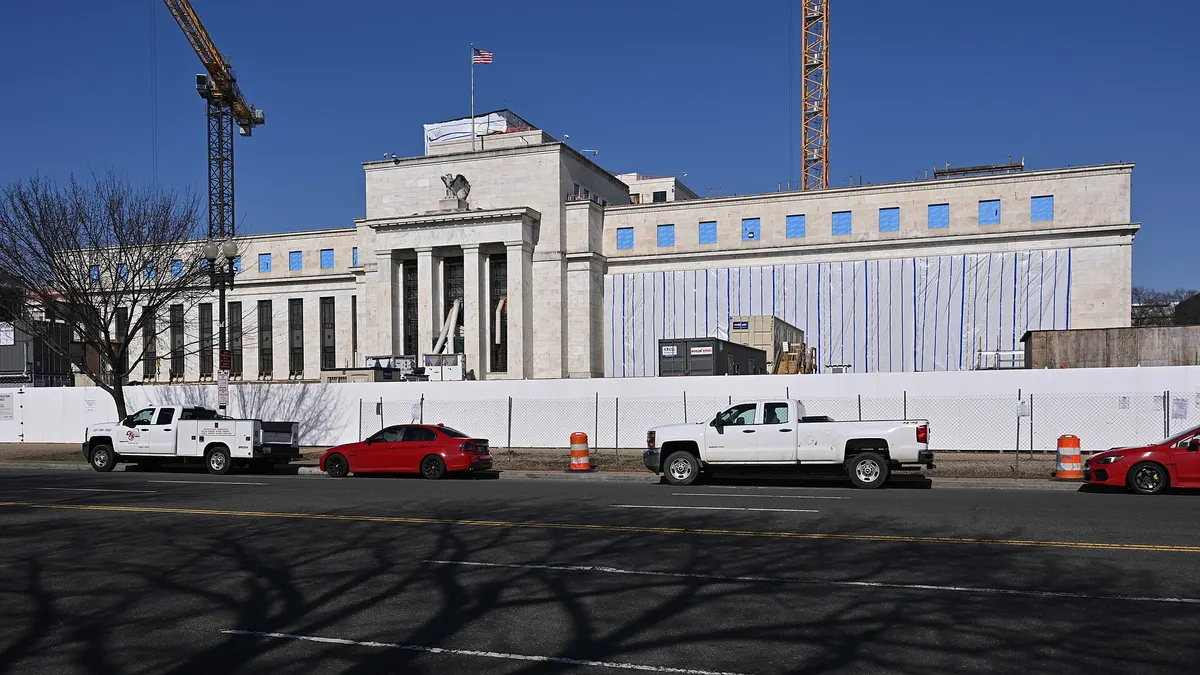
The most important meeting for Asian markets this month will happen in Washington. The Federal Reserve gathers on 27 and 28 October, with its decision due on 28 October, and markets are leaning toward a hold after September's hike, according to Admiral Markets. The current target range stands at 3.75 to 4.00 percent.
For traders in Bangkok, Jakarta, Kuala Lumpur and Manila, the number the Fed announces is only half the story. What the central bank says about where rates go next will move Asian currencies, capital flows and risk appetite just as much as the decision itself, and often more.
What the Fed is expected to do
The base case is patience. After raising rates in September, its first hike in three years, the Fed is widely expected to hold in October, with market pricing putting a hike this month in the mid teens by probability, per coverage from Chase. The more likely move, markets think, comes in December.
The reason for caution is a mixed economy. Inflation remains uncomfortably high, with September running near 3.7 percent year over year, which argues for tighter policy. But other signals, including softer jobs data, argue for waiting. Caught between the two, the Fed may prefer to hold and keep its options open. A hold also buys the central bank time to see more data before committing, which is valuable when the signals point in different directions. The risk is that waiting too long lets inflation settle in, so the Fed must weigh the cost of moving too slowly against the cost of choking off growth by moving too fast.
That is why the guidance matters so much. A hold paired with hawkish language about December would hit markets very differently from a hold paired with a signal that the Fed is nearly done. The words, not just the rate, are the event.
Why Asian markets hang on a Washington decision
United States rates set the price of the world's most important currency, and that ripples straight into Asia. When the Fed is expected to keep rates high, the dollar tends to strengthen, which pressures Asian currencies, raises the cost of dollar debt, and can pull capital out of emerging markets toward safer United States yields.
For export driven economies across Southeast Asia, a strong dollar is a double edged thing. It can make exports more competitive, but it also raises import costs and strains companies and governments that borrowed in dollars. Central banks in the region watch the Fed closely because its decisions constrain their own.
In forex, you are never only trading a currency, you are trading what a central bank is about to say about it.
For the region's forex traders, this is the core of the craft. Nasri Mohammed, the Southeast Asia fintech reputation expert, notes that disciplined traders treat a Fed meeting as a known risk to manage, not a lottery to bet on, because the volatility around the announcement punishes the overconfident.

How traders should approach the decision
A central bank meeting is one of the few market events whose timing is known in advance, which is a gift to anyone willing to prepare. The mistake is to treat it as a moment for a big directional bet. The smarter approach is to decide, before the announcement, how you will act under each plausible outcome.
That preparation has a simple shape, and it is the same every time:
- Know the three likely scenarios: a dovish hold, a hawkish hold, and a surprise hike.
- Decide your response to each before the announcement, not during it.
- Size positions for the volatility a Fed decision brings, which is higher than normal.
- Expect sharp moves in both directions in the first minutes, and do not chase them.
None of this predicts the outcome. It simply ensures that whatever the Fed does, the trader is reacting from a plan rather than from adrenaline.
The wider backdrop for the region
The Fed decision lands on a region already navigating heavier regulation and consolidation in its financial markets. Brokers are getting larger, oversight is tightening, and the trust of clients is harder won, a shift we describe in our report on AvaTrade's acquisition of FXCM. A volatile Fed meeting is exactly the kind of event that tests whether a broker and a trader are built for stress.
It also sits within a broader change in how business and markets behave when conditions are uncertain, where caution and credibility matter more than aggression, a theme explored in the column on why B2B sales must adapt in a changing global economy. The same discipline that wins a long sales cycle wins a volatile trading week.
Whatever the Fed decides on 28 October, the decision will pass and the guidance will linger. The traders and firms that came through it well will be the ones who treated it as a scheduled test of their discipline rather than a chance to get rich in an afternoon. There is a quieter lesson in that for the region as a whole. Southeast Asia's economies are deeply exposed to decisions made far away, which makes resilience, strong reserves, diversified trade and credible local institutions, more valuable than any single bet on which way the Fed will lean. The meeting is a moment. The capacity to withstand whatever it brings is the thing worth building.
Beyond October: the path that matters
Whatever happens on 28 October, the more important story is the path of rates into 2027, and that is what the Fed's language will hint at. If inflation stays near 3.7 percent, the pressure to keep tightening remains, and a December hike becomes the base case. If the jobs market weakens further, the Fed may signal that it is close to the end. Asian markets will trade on which of those two stories the central bank tells.
For the region specifically, a longer period of high United States rates is the scenario that demands the most attention. It keeps the dollar firm, pressures Asian currencies, and raises the cost of servicing dollar debt for companies and governments that borrowed heavily. Central banks across Southeast Asia would then face their own hard choice between defending their currencies and supporting growth.
The practical point for anyone trading or doing business across the region is to plan for a range of outcomes rather than a single forecast. The firms and traders that assume rates will fall quickly, and build around that hope, are the ones most exposed if the Fed stays higher for longer. Preparing for several paths is not indecision, it is the discipline that volatility rewards.

When is the Fed decision?
The Federal Reserve meets on 27 and 28 October 2026, with the decision due on 28 October. The current target range is 3.75 to 4.00 percent after a hike in September.
Will the Fed hike or hold in October?
Market pricing leans toward a hold in October, with a hike seen as more likely in December. Inflation near 3.7 percent argues for tightening, while softer jobs data argues for patience.
Why does the Fed matter for Asian markets?
United States rates drive the dollar and global capital flows. When rates are expected to stay high, the dollar tends to strengthen, pressuring Asian currencies, raising dollar debt costs and pulling capital toward United States yields.
Why does the guidance matter more than the rate?
A hold with hawkish language about December affects markets very differently from a hold that signals the Fed is nearly done. Traders react to the expected path of rates, so the words shape the move as much as the decision.
How should traders prepare?
Decide responses to a dovish hold, a hawkish hold and a surprise hike before the announcement, size positions for higher volatility, and avoid chasing the first sharp moves. Preparation beats prediction around a known event.
What is the likely path for rates after October?
Markets see a December hike as more likely than an October one. If inflation stays near 3.7 percent the pressure to tighten remains, while weaker jobs data could bring the Fed closer to the end of its hikes. The guidance the Fed gives on 28 October will do much to shape those expectations for the months ahead.
The Fed meeting on 28 October is a reminder that Asian markets are never fully in control of their own weather. A decision made in Washington will move currencies, flows and sentiment from Tokyo to Jakarta, and the guidance will matter as much as the rate. For the region's traders, the lesson is the one that outlasts every meeting: known risks are managed, not gambled, and the discipline you bring to the announcement matters far more than the call you try to make.
Talk to the SpinDepth deskYou've finished this story
Read on, send it to someone, or ask about it.