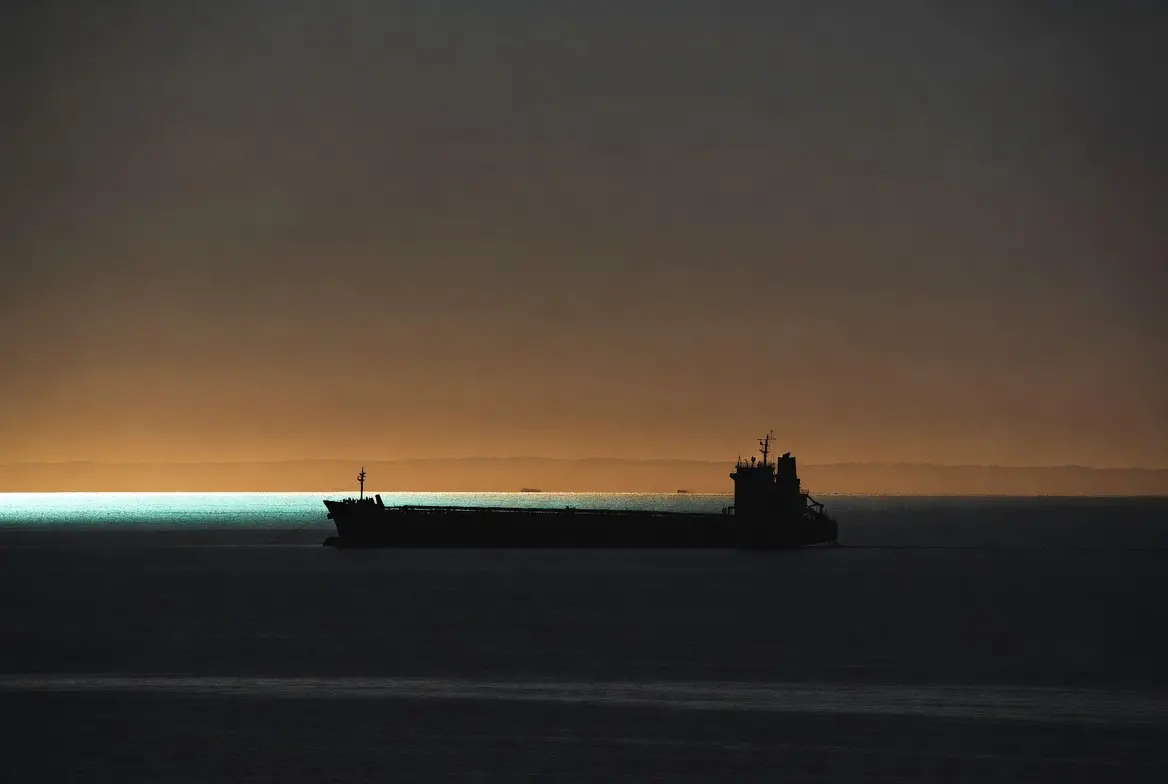
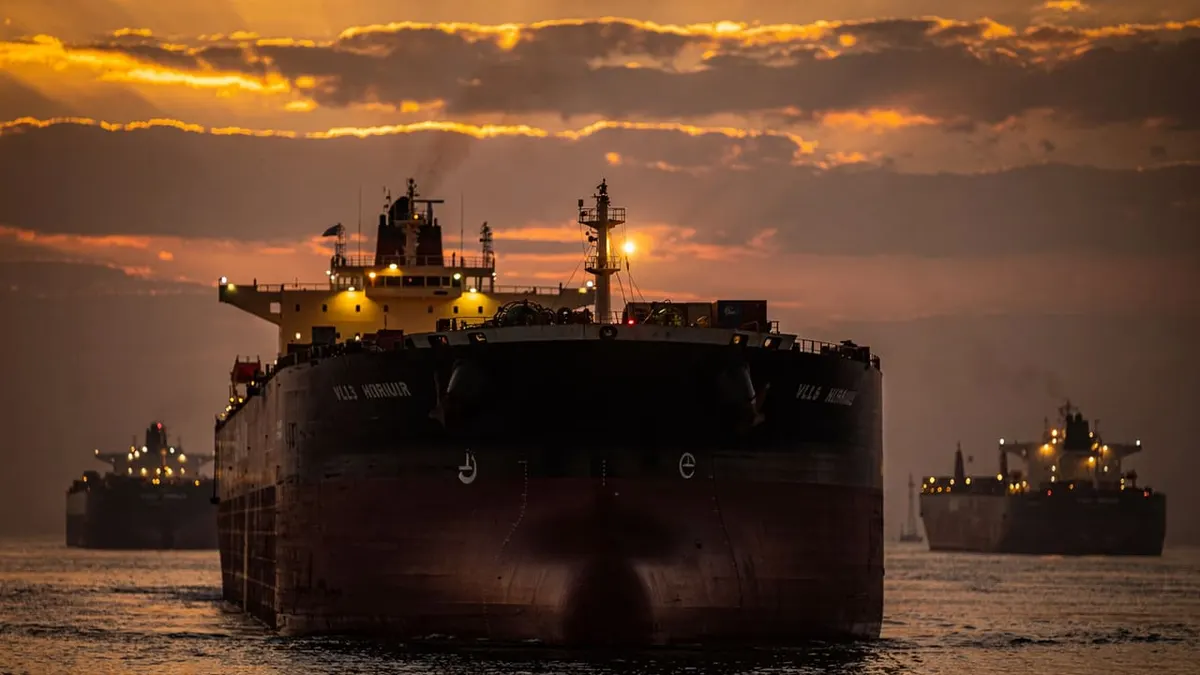
The price of oil is only half the story. The cost of moving it has exploded. Freight rates for very large crude carriers, the supertankers that carry about two million barrels each, passed 1 million dollars a day on routes from the Middle East to Asia in mid September and were later reported near 1.3 million dollars, as the Iran war chokes traffic through the Strait of Hormuz, according to Startup Fortune.
For Asia, which buys most of the oil that flows through Hormuz, that is a direct hit. The International Energy Agency now estimates that shipping alone adds about 36 dollars to every barrel delivered from the Gulf to Asia, more than five times the pre war level. Southeast Asian economies that import most of their fuel are paying that bill through higher prices, weaker currencies and strained public finances.
Why freight has gone vertical
The cause is the conflict around Iran and its effect on the Strait of Hormuz, the narrow waterway through which a large share of the world's seaborne oil normally passes. Attacks on shipping and the risk of further strikes have made shipowners reluctant to send vessels through, and those that do demand enormous premiums for the danger, the insurance costs and the delays.
Traffic has collapsed. Daily transits through Hormuz fell to as few as seven vessels in early October, according to Kpler data cited in reports. Some cargoes are being moved through ship to ship transfers, which one analyst described as hugely inefficient, adding further cost. With fewer tankers willing to make the trip and each voyage taking longer, the available fleet has effectively shrunk, and rates have soared.
The scale of the increase is extraordinary. Poten put VLCC rates at about 1.3 million dollars a day, roughly 43 times the level recorded in early January, as reported by Gulf News. Average global spot earnings are lower, reported near 642,000 dollars a day by Clarksons, because the most extreme rates apply to the Gulf to Asia route.
Asian refiners are losing money
The IEA's October report spelled out what this means for the region's refineries. With freight costing about 36 dollars a barrel from the Gulf to Asia in early October, the delivered cost of crude has jumped, and margins for Asian refiners processing medium sour crude turned negative in September, as reported by the BOE Report.
Switching suppliers offers little relief. Freight from the US Gulf Coast to China has also exceeded 37 dollars a barrel, which limits refiners' ability to replace Middle Eastern crude with American oil. When every route is expensive, there is nowhere cheap to turn, and the extra cost eventually passes through to fuel prices.
When moving a barrel costs a third of its price, energy security becomes a shipping problem as much as a supply problem.
Negative margins cannot last forever. Refiners facing losses may cut runs, which reduces the supply of petrol, diesel and jet fuel in the region and can push product prices higher still. That is how a shipping shock becomes a consumer price shock.

The pressure on Southeast Asia
Most Southeast Asian economies are net importers of oil, and several depend heavily on supplies from the Middle East. Higher crude prices combined with record freight costs raise their import bills, which increases demand for dollars and weakens their currencies. The Philippine peso's slide to record lows and the rupiah's weakness this year both reflect, in part, the region's oil dependence.
Governments are feeling it too. Countries that subsidise fuel face rising costs to keep pump prices stable, and Malaysia's budget for 2027 explicitly noted that the higher cost of subsidies, with fuel prices remaining high, is a major challenge. Those that do not subsidise pass the cost directly to consumers, feeding inflation and squeezing household budgets.
Central banks are caught in the middle. Higher fuel prices push up inflation, which argues for tighter policy, but they also slow growth, which argues for caution. That dilemma is visible across the region, from the Philippines weighing another rate hike to Indonesia defending its currency.
What it means for businesses and traders
For businesses across Southeast Asia, energy and transport costs are rising whether or not they use oil directly. Manufacturers, airlines, logistics companies and retailers all face higher costs, and many will try to pass them on to customers. Companies with thin margins and limited pricing power are most at risk.
The key points for businesses and traders to watch are these:
- Freight rates on Gulf to Asia routes, which signal how severe the disruption remains.
- Refinery run cuts in Asia, which could tighten supplies of fuel products.
- Currency pressure in oil importing economies such as the Philippines and Indonesia.
- Government subsidy costs and any changes to fuel pricing policy.
We have tracked the oil shock since its early stages, including when Brent approached 98 dollars as tensions around the strait rose. The freight surge shows that even when crude prices ease, the cost of getting oil to Asia can keep energy expensive.
How the oil market is reshaping
The disruption is changing the map of global oil trade. Buyers are looking for supplies that avoid Hormuz, from the Americas, West Africa and other regions, but long voyages and high freight make those alternatives expensive too. Some reports describe record shipping bills that are pricing American oil out of Asia altogether.
Producers that can reach Asia without passing through Hormuz gain an advantage, and pipelines that bypass the strait become more valuable. Over time, the crisis may push Asian buyers to diversify suppliers more permanently and invest in strategic reserves, reducing their exposure to a single chokepoint.
For now, though, there are few quick fixes. As long as the conflict continues and Hormuz remains dangerous, freight will stay high, and Asia's energy costs will reflect it.
The cost of a chokepoint
The tanker rate surge is a vivid illustration of how a single geographic chokepoint can reshape the economics of an entire region. Southeast Asia did not start the conflict around Iran, but it is paying a heavy price through every barrel it imports.
The lasting lesson is about resilience. Countries and companies that diversify energy sources, build reserves, invest in efficiency and accelerate the shift to alternative energy will be better protected the next time a chokepoint closes. Those that remain dependent on a single route will keep paying whenever conflict flares.
Why are supertanker rates so high?
The conflict around Iran has made the Strait of Hormuz dangerous, so fewer tankers are willing to transit and those that do demand large premiums. Traffic fell to as few as seven vessels a day in early October, sharply reducing available capacity.
How much does it cost to hire a supertanker now?
Rates for very large crude carriers on Middle East to Asia routes passed 1 million dollars a day in mid September and were reported near 1.3 million dollars in October, about 43 times early January levels.
How much does freight add to the cost of oil?
The IEA estimated that freight from the Gulf to Asia cost about 36 dollars a barrel in early October, more than five times the level before the Iran war.
Are Asian refiners losing money?
Yes. The IEA said margins for Asian refiners processing medium sour crude turned negative in September because of higher delivered crude costs.
Can Asia buy oil from elsewhere?
Alternatives exist, but freight from the US Gulf Coast to China has also exceeded 37 dollars a barrel, so switching suppliers offers limited savings.
How does this affect Southeast Asia?
Most Southeast Asian economies import oil, so higher crude and freight costs raise import bills, weaken currencies, increase subsidy costs and push up inflation.
What is the current oil price?
Brent crude settled at 109.86 dollars a barrel on 16 October 2026, its highest close since mid May, after briefly touching 110 dollars, while WTI rose to about 101.41 dollars. Houthi attacks on Saudi oil facilities and attacks on energy infrastructure drove the rise.
What can countries do to reduce their exposure?
Diversifying energy suppliers, building strategic reserves, improving energy efficiency and accelerating alternative energy can reduce dependence on a single chokepoint like Hormuz.
Why is the Strait of Hormuz so important for Asia?
A large share of the world's seaborne oil normally passes through Hormuz, and most of it heads to Asian buyers, so disruption there hits Asian economies harder than most.
The record cost of moving oil to Asia is a reminder that energy security is about routes as much as reserves. Southeast Asia's import dependent economies are absorbing a shock they did nothing to cause, and it is showing up in their currencies, budgets and inflation figures. Until Hormuz is safe again, the region will keep paying a premium on every barrel, and the strongest protection is to need fewer of them.
Talk to the SpinDepth deskYou've finished this story
Read on, send it to someone, or ask about it.