

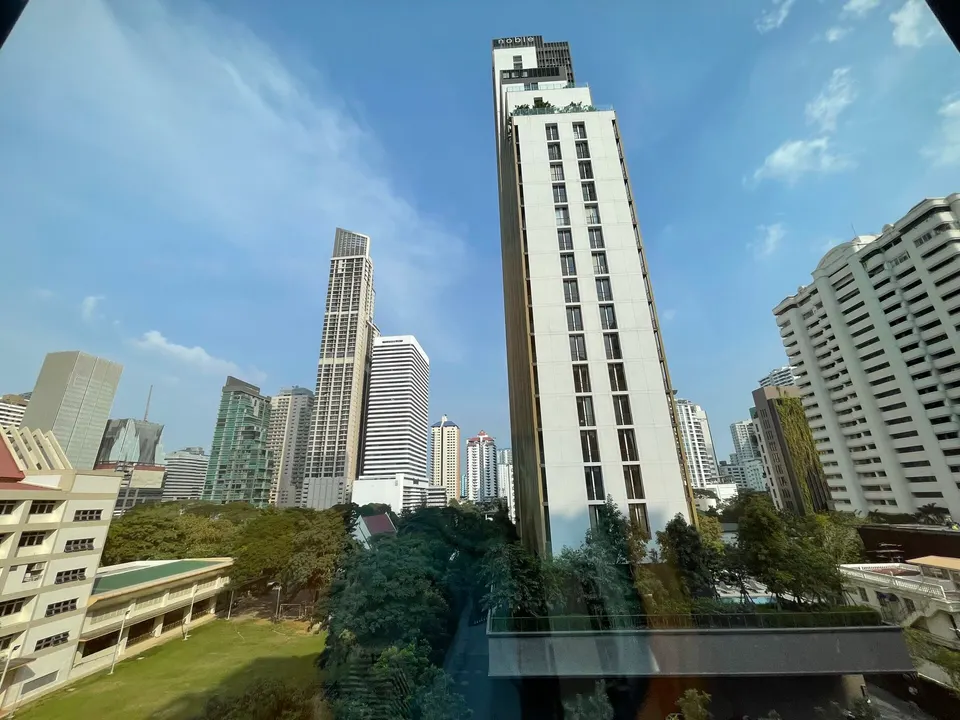
For a week, Bangkok was the capital of the global economy. More than 15,000 policymakers, central bankers, economists and executives gathered for the IMF and World Bank Annual Meetings, held in Thailand for the first time since 1991. The headline message for the region was flattering and sobering at the same time: Asia is carrying the world economy, and it is doing so with shrinking room for error.
The IMF projected that the Asia Pacific region will grow 4.8 percent in 2026 and contribute 68 percent of total global growth this year, according to Business Today. In the same breath, it warned Asian central banks about inflation, flagged risks from energy prices and AI markets, and noted that borrowing costs across the region have risen sharply this year.
An upgrade with a warning attached
The IMF's numbers were better than many expected. Its forecast of 4.8 percent growth for Asia Pacific in 2026 is above the 4.4 percent it projected in April, reflecting stronger than expected activity driven in part by AI related investment and exports. Growth is still slowing from 5 percent last year and is expected to ease further to 4.4 percent in 2027.
Globally, the Fund raised its forecast for 2026 to 3.1 percent from 3.0 percent in July, as reported by Fortune. But CNBC captured the tone of the meetings in its framing that resilience is nearing its limits, as reported in its coverage from Bangkok. The world economy has absorbed war, high oil prices and tighter monetary policy better than feared, but the buffers that made that possible are being used up.
For Asia, the upgrade reflects the region's position at the centre of the AI investment boom. Economies that make chips, servers and electronics have benefited enormously, and that strength has offset weakness elsewhere. The concern is what happens when that cycle cools.
China and India as the twin engines
The IMF's research director, Silvana Tenreyro, described China and India as the big engines of growth in developing Asia. India is forecast to grow 7.0 percent in both 2026 and 2027, supported by domestic demand, services and AI related investment. China is expected to grow 4.5 percent this year and 4.0 percent in 2027, with higher oil prices and structural headwinds weighing on activity.
For developing Asia as a whole, the outlook is for growth to slow to 5.1 percent this year from 5.6 percent in 2025, according to China Daily. That is still far faster than most of the rest of the world, which explains why Asia's share of global growth is so large.
Carrying two thirds of global growth is a compliment and a burden, because when Asia stumbles, the world feels it.
The concentration of growth in a few large economies is itself a risk. If China's slowdown deepens or India's momentum fades, the impact would ripple across the region through trade, commodity demand and investor confidence.

The three risks the IMF flagged
The IMF highlighted three main risks for the region. The first is energy prices. The conflict around Iran has kept oil expensive and disrupted shipping, and most Asian economies are net energy importers. Higher fuel costs raise inflation, weaken currencies and strain public finances, as countries from the Philippines to Indonesia have experienced this year.
The second is AI market risk. Much of Asia's recent strength comes from AI related investment and exports, and asset prices tied to AI have risen sharply. A correction in AI valuations or a slowdown in investment would hit the region's technology exporters hard, and could tighten financial conditions more broadly.
The third is bond yields. Long term sovereign yields have risen by 40 to 60 basis points across most Asian economies in 2026, raising borrowing costs for governments, companies and households. Higher yields make it more expensive to finance deficits and can weigh on investment and growth.
Advice for central banks
The IMF's guidance to Asian central banks was nuanced. It said the case for rate hikes is strongest in emerging markets and technology exporting economies, where growth has been strong and inflation pressures are building. By contrast, energy importers outside the technology supply chain face a more cautious outlook, because their growth is weaker and higher rates could deepen the slowdown.
That distinction matches what is happening across the region:
- Technology exporters with strong growth have room to tighten if inflation builds.
- Energy importers with weak growth face a harder trade off between inflation and output.
- Countries with weak currencies face pressure to hike to defend them.
- Rising bond yields are tightening financial conditions even without rate moves.
The Philippine central bank's expected hike this week, Singapore's surprise decision to hold policy steady and Indonesia's efforts to defend the rupiah all reflect these different positions. We looked at Singapore's choice in our analysis of the MAS surprise hold, which hinged on its view of the AI cycle.
What it means for Southeast Asia
Southeast Asia sits in an interesting position within the IMF's picture. Some economies, such as Vietnam and Malaysia, are deeply integrated into technology supply chains and have benefited from the AI boom. Others are more exposed to energy prices and capital outflows, and have struggled with weak currencies and market stress.
Thailand, the host of the meetings, used the occasion to showcase its digital finance initiatives, including the Paotang app and a co payment scheme using its government wallet. Hosting the meetings gave the region a platform to present itself as a dynamic, innovative part of the global economy.
The challenge for Southeast Asian policymakers is to capture the benefits of the AI cycle while protecting their economies from energy shocks and volatile capital flows. That means sound fiscal management, credible central banks and continued investment in the infrastructure and skills that attract high value industries.
Resilience with limits
The IMF's message from Bangkok was ultimately one of cautious optimism. Asia has proven remarkably resilient through a difficult period, and it remains the world's most important source of growth. But resilience is not unlimited, and the risks the Fund identified are real and interconnected.
For investors and businesses, the takeaway is to stay engaged with Asia's growth story while preparing for volatility. Energy prices, AI valuations and bond yields will shape the region's path in 2027, and the economies that manage those risks best will continue to lead.
What is the IMF's growth forecast for Asia Pacific?
The IMF projects Asia Pacific growth of 4.8 percent in 2026, down from 5 percent in 2025 but above its April forecast of 4.4 percent. Growth is expected to ease to 4.4 percent in 2027.
How much of global growth comes from Asia?
The IMF said the Asia Pacific region will contribute 68 percent of total global growth in 2026.
What is the IMF's global growth forecast?
The IMF raised its global growth forecast for 2026 to 3.1 percent, up from 3.0 percent in July.
What are the main risks to Asia's economy?
The IMF highlighted energy prices, AI related market risks and rising bond yields, with long term sovereign yields up 40 to 60 basis points across most Asian economies in 2026.
How fast are China and India expected to grow?
India is forecast to grow 7.0 percent in 2026 and 2027, while China is expected to grow 4.5 percent in 2026 and 4.0 percent in 2027.
What did the IMF advise Asian central banks?
The IMF said the case for rate hikes is strongest in emerging markets and technology exporting economies, while energy importers outside the technology supply chain face a more cautious outlook.
Where were the 2026 IMF and World Bank meetings held?
They were held in Bangkok, Thailand, from 12 to 18 October 2026, the first time Thailand has hosted the meetings since 1991.
What does the outlook mean for Southeast Asia?
Economies tied to technology supply chains, such as Vietnam and Malaysia, have benefited from the AI boom, while energy importers with weak currencies face harder choices on inflation and growth.
Why are bond yields rising in Asia?
Long term sovereign yields have risen 40 to 60 basis points across most Asian economies in 2026, reflecting higher global interest rates, inflation pressures from energy prices and larger government borrowing needs.
The IMF's Bangkok outlook puts Asia at the centre of the global economy, with all the opportunity and responsibility that brings. The region is growing faster than expected and carrying most of the world's growth, but it faces energy shocks, AI market risks and rising borrowing costs at the same time. The economies that thrive in 2027 will be those that treat today's strength as a chance to build buffers, not a reason to assume the good times will last.
Talk to the SpinDepth deskYou've finished this story
Read on, send it to someone, or ask about it.