
For most companies, managing cash across countries is a constant cycle of checking balances, moving funds, converting currencies and reconciling records. Airwallex wants AI agents to take over much of that work. The cross-border payments company has upgraded its business accounts into what it calls Agentic Business Accounts, which let AI agents handle corporate finance tasks within rules, permissions and approval controls defined by the business, according to Fintech News Singapore.
Businesses can connect the accounts to Airwallex's own AI assistant, Kai, or to another AI agent they choose. The agents can move money, manage foreign exchange exposure, rebalance liquidity and put idle cash to work. The business sets the objectives, the rules and the points at which a person must step in. It is one of the clearest examples yet of agentic AI moving from demonstration to a product that handles real money.
What Airwallex's agentic accounts can do
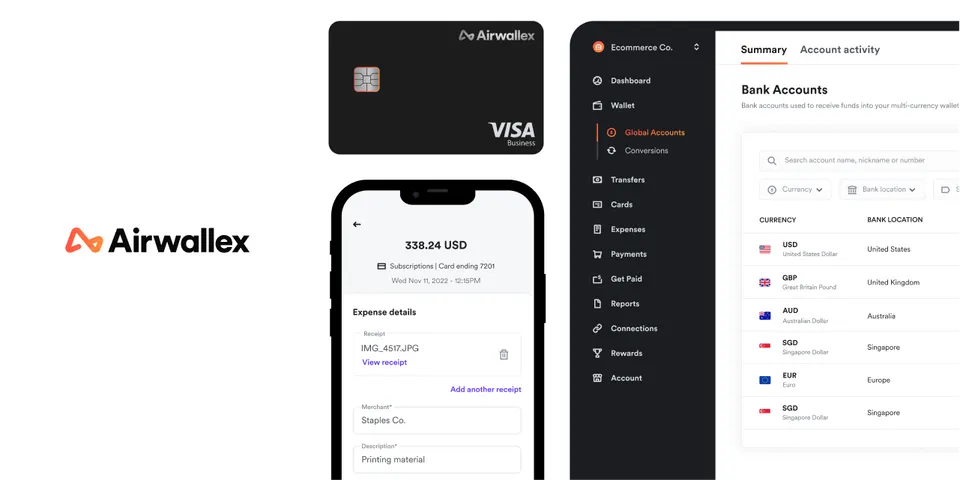
The upgraded accounts let a business manage multiple entities, accounts and currencies from one organisation account. Companies can create dedicated accounts for different purposes, such as payroll, supplier payments or tax reserves, and move funds between them or to external parties.
AI agents operating on these accounts can carry out four core tasks: moving money, managing foreign exchange exposure, rebalancing liquidity and putting idle cash to work. Each action happens within permissions the business defines, so an agent might be allowed to move funds between internal accounts automatically but require approval for payments above a threshold or to new recipients.
The controls are the product as much as the automation. Businesses set objectives, rules and approval requirements, and define when a human must intervene. Agents operate only within those permissions. That design aims to give finance teams the speed of automation without surrendering control.
- Agents: Airwallex's assistant Kai or another AI agent chosen by the business.
- Tasks: move money, manage FX exposure, rebalance liquidity, put idle cash to work.
- Structure: multiple entities, accounts and currencies under one organisation account.
- Controls: business-defined objectives, rules, permissions and approval points.
The design reflects how finance teams already work. Most companies have approval matrices that define who can authorise which payments up to what amounts. Agentic accounts translate those matrices into rules that software can follow, so the agent becomes another participant in an existing control framework rather than a replacement for it.
From transactions to outcomes
Airwallex chief executive Jack Zhang explained the idea in a blog post, describing a shift in which the unit of work moves from transaction to outcome. Instead of instructing a system to make individual payments, a finance team sets goals, such as keeping several months of supplier payments funded or maintaining a minimum cash buffer across entities. Agents then determine and execute the steps needed to meet those goals.
Zhang described the move from periodic to continuous financial management as agentic speed, and summarised the operating loop as observe, decide, act, reconcile and repeat. In practice, an agent watches balances and obligations, decides what needs to happen, acts within its permissions, reconciles the result and starts again.
He gave a cross-entity example. If a US entity has excess cash and a UK entity needs funds ahead of a large euro payment, an agent could move the money to the UK and convert only the amount required, rather than a treasurer doing the analysis manually days in advance.
The unit of work shifts from the transaction to the outcome. Finance teams set the goal, agents work out the steps.
The approach could change the role of finance staff. Instead of spending time on routine transfers and conversions, treasury teams would focus on setting objectives, monitoring exceptions and reviewing results. That shift mirrors what automation has done in other functions, freeing people for judgement while machines handle repetition.
Why infrastructure decides who can offer this
Agentic finance sounds like a software feature, but it depends on regulated infrastructure. Zhang argued that agents need visibility across entities, currencies and markets, the ability to move funds between them without losing context across disconnected systems, and the regulatory licences, local payment network connections and security systems to act safely.
That is where Airwallex sees its advantage. The company says it holds 89 licences and permits globally and has spent about a decade building its international financial infrastructure. An AI agent is only as useful as the actions it can take, and the ability to move and convert money across many countries requires exactly that kind of network.
The point applies to the wider market. Many companies can build AI assistants that suggest actions. Far fewer can let those assistants execute payments and conversions across borders within regulatory requirements. The firms that own the rails will have the strongest agentic products.
The risks finance teams must manage
Handing money movement to software raises obvious questions. What happens if an agent misreads an objective, acts on bad data or is manipulated by a malicious instruction? Clear limits, approval thresholds and audit trails are essential, and finance teams must decide which actions remain strictly human.
Accountability does not move to the AI. In Singapore, the Monetary Authority of Singapore has just finalised its Guidelines on AI Risk Management, which require financial institutions to remain accountable for AI used in their services, including third-party AI, as we covered in our report on the MAS guidelines. Businesses using agentic accounts will need similar discipline in their own controls.
Security is the other concern. Agents that can move money are attractive targets for attackers. Strong authentication, restrictions on adding new payees, anomaly detection and the ability to pause agents instantly are basic safeguards. Companies should test how the system behaves when things go wrong, not only when they go right.

How Airwallex compares with rivals
Airwallex competes for business accounts with Wise, Revolut Business, digital banks and incumbent banks' digital offerings. In the same week, Revolut announced a nearly S$350 million investment in Singapore with expanded business account features, and Wise launched overseas QR payments and eSIM plans in Singapore and Malaysia, as we covered in our report on Revolut's Singapore plans.
Agentic features add a new dimension to that competition. For mid-sized companies with entities in several countries, automating treasury tasks can save significant time and reduce idle cash. If Airwallex's agents work reliably, they could become a reason to choose its accounts over rivals with similar pricing.
Banks are moving too. Backbase, which supplies digital banking software to banks, rolled out conversational banking in October that lets customers complete tasks by voice or text through AI agents. The race is on to make financial services operate through agents rather than menus.
Pricing will still matter. Agentic features add value only if the underlying foreign exchange rates, transfer fees and account costs are competitive. Airwallex built its business on lower-cost cross-border payments, and agentic tools are layered on top of that proposition rather than replacing it.
What it means for Asia's businesses
Southeast Asian companies often operate across several currencies and jurisdictions from an early stage, exporting to multiple markets and paying suppliers in different countries. Agentic treasury tools could give smaller firms capabilities that previously required a dedicated treasury team.
Adoption will depend on trust and on local rules. Finance leaders will want proof that agents behave predictably and that controls are robust, and regulators in each market will shape how much automation is allowed in payments. Early users are likely to start with low-risk tasks such as internal transfers and idle cash management before letting agents handle external payments.
What are Airwallex Agentic Business Accounts?
They are upgraded Airwallex business accounts that let AI agents, such as Airwallex's assistant Kai or another chosen agent, handle tasks like moving money and managing FX within rules and approvals set by the business.
What can Airwallex's AI agents do?
They can move money, manage foreign exchange exposure, rebalance liquidity across entities and put idle cash to work, all within business-defined permissions.
Can businesses control what the AI does?
Yes. Businesses set objectives, rules and approval requirements, and define when a human must step in. Agents operate only within those permissions.
What is agentic banking?
Agentic banking uses AI agents that can take actions, such as payments or conversions, to achieve goals set by a customer, rather than only answering questions or making suggestions.
How many licences does Airwallex hold?
Airwallex says it holds 89 licences and permits globally.
What are the risks of agentic finance?
Risks include agents misreading goals, acting on bad data, security attacks and unclear accountability. Strong limits, approvals, audit trails and the ability to pause agents are essential safeguards.
Can I use my own AI agent with Airwallex?
Yes. Airwallex says businesses can connect its accounts to its own assistant, Kai, or to another AI agent of their choice, operating within the permissions the business sets.
Airwallex's agentic accounts move AI in finance from conversation to action. By letting agents manage cash, currency and liquidity within rules set by the business, Airwallex is betting that finance teams will trade manual control for supervised automation. The idea will succeed only if controls, security and accountability are as strong as the automation is fast. For businesses across Asia that operate in many currencies, the potential payoff is large, and the time to understand the risks is now.
Talk to the SpinDepth deskYou've finished this story
Read on, send it to someone, or ask about it.