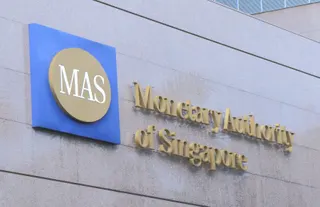
Two of Southeast Asia's most important financial regulators have formally agreed to fight fraud as a team. The Monetary Authority of Singapore and the Bank of Thailand signed a Memorandum of Understanding on Cybersecurity Cooperation and Digital Fraud Protection, announced on July 24, 2026. It is a recognition that the criminal networks targeting these markets do not respect borders, and that the regulators chasing them cannot afford to either.
What was signed and when
According to the MAS media release, the MoU was signed by MAS Managing Director Chia Der Jiun and BOT Governor Vitai Ratanakorn during Ratanakorn's visit to Singapore for the 31st Executives' Meeting of East Asia-Pacific Central Banks Governors' Meeting held from 22 to 24 July 2026.
The agreement covers three areas. Information sharing means exchanging regulatory and incident updates plus threat information affecting the financial sector. Competency building covers joint staff training, study visits and exchange of research and policy insights. Operational preparedness means conducting joint cross-border cybersecurity and crisis management exercises.
1
Why joint exercises matter more than they sound
Information sharing agreements between regulators are common and often produce little. The provision that gives this one operational weight is the commitment to run joint cross-border crisis management exercises, confirmed by FinTech Futures.
A cyber incident affecting a bank operating in both markets does not wait for a diplomatic process. Rehearsing the coordination before an incident is what turns an agreement into capability. As OpenGov Asia noted, the collaboration is expected to support faster coordination during cyber incidents affecting financial institutions operating across borders.
The scale of the problem behind it
The timing is not accidental. A United Nations Office on Drugs and Crime report released on July 21, 2026 estimated victims across East Asia, Southeast Asia, Australia and New Zealand lost between 88.3 billion and 114.1 billion US dollars to online scams in 2025, at least triple the 2023 estimate, according to Hong Kong Free Press.
MAS Managing Director Chia Der Jiun framed the reasoning directly, saying cyber risks and digital fraud are key transnational threats confronting the region and call for closer collaboration. BOT Governor Vitai Ratanakorn added that closer collaboration will help deepen mutual capabilities and achieve seamless cross-border information exchange, according to TechNode Global.
Criminal networks already operate across borders. Until now, the regulators chasing them largely did not.
The scam industry behind the agreement
Southeast Asia has become a centre of large-scale online fraud. The United Nations Office on Drugs and Crime has documented scam compounds, many in border areas of Myanmar, Cambodia and Laos, where people, often trafficked, are forced to run romance, investment and impersonation scams targeting victims around the world. Stolen money moves quickly through networks of mule bank accounts, e-wallets and crypto wallets across several countries, which makes recovery difficult once it leaves the first account.
That cross-border structure is why regulators cooperating matters: a scam that starts with a call in one country and drains an account in another can only be disrupted if authorities and banks in both share information quickly.
What Singapore has done at home
Singapore has introduced several measures against scams. Its Shared Responsibility Framework, in force since December 2024, sets out duties for banks and telecom companies to prevent phishing scams and makes them share losses with victims if they fall short. The Protection from Scams Act, passed in 2025, lets police temporarily restrict the bank accounts of people believed to be about to transfer money to scammers. Banks have added delays and checks on large transfers and new device logins.
What Thailand has done at home
Thailand passed an emergency decree in 2023 to fight technology crime, allowing banks to freeze suspicious accounts quickly and share information about mule accounts. Later changes increased the responsibility of banks, telecom companies and digital platforms for losses caused by failures in their controls. Thai authorities have also worked with neighbouring countries to cut electricity and internet links to scam compounds across the border.
How joint exercises help in practice
A cross-border crisis exercise rehearses how two regulators and the banks they supervise would respond to a real incident, such as a cyber attack on a bank operating in both countries or a coordinated fraud wave. It tests who contacts whom, how quickly information is shared and which decisions each side can make. Problems found in an exercise, such as unclear contacts or incompatible reporting formats, can be fixed before a real crisis.
What customers can do
- Treat unexpected calls, messages and investment offers with suspicion, especially those claiming to be from banks, police or government agencies.
- Never share one-time passwords or install apps sent through messages.
- Use your bank's app or official phone number to check any request.
- Report suspected scams to your bank and the police immediately; speed improves the chance of freezing funds.
- Be wary of anyone asking to use your bank account to receive money, which may make you a mule.
What it means for financial firms
Institutions operating in both markets should expect supervisors to compare notes more often and to ask about fraud controls, incident reporting and customer protection in both jurisdictions. Strong controls, clear incident procedures and honest reporting are becoming competitive advantages as well as regulatory requirements.
Why bilateral agreements spread
Agreements between two regulators often become templates. Once Singapore and Thailand have tested information sharing, joint training and crisis exercises, other central banks in the region can adopt similar arrangements, and regional bodies can build on them. Fraud networks look for the weakest link in a chain of countries, so the value of cooperation grows as more authorities join. Watching which regulators sign similar agreements next shows how quickly the regional defence is closing gaps.
What it means for financial institutions
Any institution operating across both markets should expect tighter, faster-moving supervisory expectations. Incident reporting in one jurisdiction is now more likely to be visible in the other. Fraud typologies identified in Singapore will reach Thai supervisors sooner, and vice versa.
That raises the compliance bar and rewards institutions with genuine capability rather than paper policies. For legitimate operators, this is protective. Every fraud network the regulators disrupt is one less source of the consumer distrust that honest financial brands inherit.
This is exactly where SpinDepth helps, turning real security and compliance investment into visible, credible trust across Asia.
FAQs
Q1: What did MAS and the Bank of Thailand sign?
A1: A Memorandum of Understanding on Cybersecurity Cooperation and Digital Fraud Protection, announced July 24, 2026, according to MAS.
Q2: What does it cover?
A2: Threat information and incident information sharing, joint training and research exchange, and joint cross-border cybersecurity and crisis management exercises.
Q3: Who signed it?
A3: MAS Managing Director Chia Der Jiun and BOT Governor Vitai Ratanakorn, during the 31st EMEAP Central Banks Governors' Meeting in Singapore.
Q4: Why now?
A4: Regional scam losses reached up to 114.1 billion dollars in 2025 according to the UNODC, roughly triple 2023, driven by cross-border syndicates.
For brands operating across Southeast Asia, regulatory coordination is tightening, and that is exactly where SpinDepth helps brands show up.
Source:
Source 1: MAS, MAS and BOT Sign MoU on Cybersecurity Cooperation and Digital Fraud Protection
Source 2: FinTech Futures, MAS and Bank of Thailand forge cybersecurity partnership
Source 3: TechNode Global, Singapore, Thailand sign MoU on cybersecurity cooperation
Source 4: OpenGov Asia, Singapore, Thailand Strengthen Financial Cybersecurity Cooperation
Source 5: Hong Kong Free Press, Scam losses in Asian regions up to 114 bn in 2025 UN
You've finished this story
Read on, send it to someone, or ask about it.