What licence does a payment company need in Southeast Asia? There is no single one. Each of the region's six main markets has its own regulator, its own law and its own licence names, and a licence in Singapore gives no right to process payments in Jakarta or Manila. A PSP expanding across the region is really applying six times.
This guide sets out, for Singapore, Malaysia, Thailand, Indonesia, the Philippines and Vietnam, who regulates payments, under which law, and what the licences are called. Where a regulator publishes a capital figure on its own pages, we give it exactly as stated; where it does not, we say so rather than repeat figures from secondary sources. For how payment companies are reshaping the region's infrastructure, see our PSP playbook.
Singapore: three MAS licences under one Act
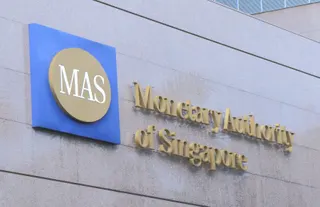
Singapore has the most detailed regime in the region. The Monetary Authority of Singapore licenses payment providers under the Payment Services Act 2019, which commenced on 28 January 2020 and was amended on 4 April 2024. The Act regulates seven payment services: account issuance, domestic money transfer, cross-border money transfer, merchant acquisition, e-money issuance, digital payment token services and money-changing, according to MAS.
There are three licences. A money-changing licence covers buying or selling foreign currency notes. A Standard Payment Institution licence applies while a firm stays below S$3 million of monthly transactions for any payment service and S$5 million of daily outstanding e-money. A Major Payment Institution licence lets a firm operate above those thresholds. MAS states a minimum base capital of S$100,000 for a standard institution and S$250,000 for a major institution, and a major institution must also lodge security of S$200,000, or S$100,000 in the lower volume case.
Licensed firms appear in MAS's Financial Institutions Directory, the register partners and banks will check. MAS consulted from 1 September to 16 October 2026 on amendments to the Act for stablecoins, so firms planning stablecoin payments should expect the rules to change; our report on Singapore's stablecoin law covers that track.
Malaysia and Thailand: central bank approval for e-money and acquiring
In Malaysia, Bank Negara Malaysia regulates payments under the Financial Services Act 2013 and the Islamic Financial Services Act 2013. Its directory of financial service providers uses three payment categories: E-Money Issuer (Non-bank), Registered Merchant Acquirer (Non-bank) and Approved Payment System Operator. The directory showed 239 entries across its categories on 4 November 2026.
BNM's e-money policy document, issued on 31 January 2025, sets the main conditions for issuers. An issuer must be a company incorporated under the Companies Act 2016, must hold the minimum capital funds that BNM prescribes under section 12(1) of the FSA, and must keep customer funds separate from its working capital, with a non-bank issuer depositing them in a trust account at a bank. The policy document points to BNM's prescription for the capital amount rather than stating a figure itself, so applicants should confirm it with the central bank.

In Thailand, the Bank of Thailand supervises payments under the Payment Systems Act B.E. 2560 (2017). The Act separates designated payment systems, such as interbank fund transfer and card networks, from designated payment services. The services include credit, debit and ATM card services, electronic money transfers, e-money, and "accepting electronic payment for and on behalf of sellers or service providers", the category that covers most payment facilitators and gateways. The BOT pages reviewed do not state capital figures; those sit in its notifications under the Act. Thailand's real time rail, PromptPay, shapes what local merchants expect, as our PromptPay analysis explains.
Indonesia: Bank Indonesia's licensed provider types
Bank Indonesia licenses payment system service providers and lists nine provider types on its licensing page: issuers, acquirers, principals, clearing providers, settlement providers, payment gateway operators, e-wallet providers, switching companies and funds transfer providers. Applications go through BI's e-licensing system, and BI publishes a list of licensed institutions.
Law firm summaries of the current framework describe a shift, from 1 July 2021, to activity and risk based licence categories under BI Regulation 22/23/PBI/2020 and its implementing rule for payment service providers, with capital and domestic ownership requirements that vary by category. BI's English pages reviewed for this guide do not set out those figures, so a PSP should take them from the Indonesian regulation text or from BI directly rather than from summaries.
Indonesia is also a market where licensing can touch more than one regulator. Bank Indonesia covers payment systems, while the financial services authority, OJK, supervises other financial services, so a payment product that adds credit or investment features should check whether it also falls under OJK.
What a PSP should prepare before applying
The six regimes differ in detail, but the regulators' own pages point to the same preparation. Before filing anywhere, a payment company should have answers to five questions:
- Which of the regulator's service categories each product feature falls into, using MAS's seven payment services, the BOT's designated payment services or BI's nine provider types
- Where customer money will sit, since BNM, for example, requires non-bank e-money issuers to hold customer funds in a trust account at a bank
- How much capital each market requires, taken from the regulator's own figure, such as MAS's S$100,000 or S$250,000 base capital
- Which local company will hold the licence, since BNM requires an e-money issuer to be incorporated under Malaysia's Companies Act 2016
- Which register partners and banks will check, from MAS's Financial Institutions Directory to the BSP's list of registered operators
In Southeast Asian payments, the licence is not paperwork after the product. It decides what the product is allowed to be.
Order matters as much as preparation. Many regional PSPs start with the market whose licence best fits their first product, then use that licence, its audited controls and its compliance team as the template for the next application. A Singapore licence does not transfer, but the policies, risk assessments and safeguarding arrangements built for MAS are the kind of material the other central banks ask to see.
Partnerships are the other route. Where a licence is slow, PSPs often work through a licensed local acquirer, e-money issuer or bank while their own application is reviewed. That approach can open a market sooner, but the licensed partner, not the PSP, then owns the regulatory relationship, which limits what the PSP can change without its partner's agreement.

The Philippines and Vietnam: registration and intermediary licences
In the Philippines, the Bangko Sentral ng Pilipinas supervises payment systems under the National Payment Systems Act, Republic Act No. 11127, which the BSP describes as the legal framework "for a safe and efficient payment system". The BSP's process centres on registration as an Operator of Payment System, with a separate Merchant Acquisition License for acquirers, and it publishes a list of operators holding a certificate of registration. E-money issuers are licensed separately by the BSP.
In Vietnam, non-bank companies need a licence from the State Bank of Vietnam to provide intermediary payment services. The governing rule is Decree 52/2024/ND-CP on non-cash payments, which took effect on 1 July 2024 and replaced Decree 101, according to law firm Tilleke & Gibbins. The licensed services include e-wallets, collection and payment support, payment gateways and financial switching, and the decree sets minimum charter capital by service. The decree also gave Vietnam its first legal definition of e-money, tied to Vietnamese dong prepaid to banks and e-wallet providers. We could not reach the SBV's own pages for this guide, so capital figures are left to the decree text and the SBV.
Do I need a separate payment licence in each Southeast Asian country?
Yes. Singapore, Malaysia, Thailand, Indonesia, the Philippines and Vietnam each license payment providers under their own laws, and a licence in one market gives no right to operate in another.
What is the minimum capital for a payment licence in Singapore?
MAS states a minimum base capital of S$100,000 for a Standard Payment Institution and S$250,000 for a Major Payment Institution, with additional security required for a major institution.
Who regulates e-money in Malaysia?
Bank Negara Malaysia, under the Financial Services Act 2013. Its January 2025 e-money policy document requires issuers to be Companies Act 2016 companies and to hold customer funds separately.
Which law governs payment services in Thailand?
The Payment Systems Act B.E. 2560 (2017), supervised by the Bank of Thailand. It covers designated services including e-money and accepting electronic payments on behalf of merchants.
How long does a payment licence take in Southeast Asia?
None of the six regulators states a fixed approval time on the pages reviewed for this guide. Timelines depend on the licence, the completeness of the application and the regulator's questions.
The six regimes share a direction, toward activity based licences, tighter safeguarding of customer funds and closer links to national real time rails, but they share almost nothing in paperwork. For a PSP the fastest route is rarely to apply everywhere at once. It is to pick the market whose licence matches the product, usually Singapore for regional headquarters and the largest consumer market for volume, and to budget for each regulator's own timetable.
Talk to SpinDepth about your Southeast Asia payments entryYou've finished this story
Read on, send it to someone, or ask about it.