
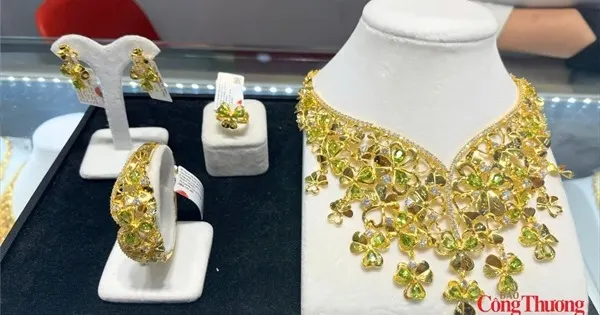
In Vietnam, gold is not just an investment. It is how families save, how weddings are celebrated and how many people protect themselves against inflation and uncertainty. That makes a new rule from Hanoi far more personal than most financial regulations. Under Decree 390/2026/ND-CP, dated 16 October, gold purchases and sales of 5 million dong or more in a single day must now be paid through non cash channels, as reported by Vietnam.vn.
The new threshold is a quarter of the previous one. Under a decree issued in 2025, the cashless requirement applied to transactions of 20 million dong or more per day by a single customer. Lowering it to 5 million dong means that almost any meaningful gold purchase, well below the price of a single tael of gold bar, must now go through a bank transfer, card or other traceable method.
What the decree requires
The core requirement is simple. Any gold purchase or sale reaching 5 million dong or more in a single day must be settled without cash. That means buyers and sellers must use bank transfers, cards or other electronic payment methods, creating a record of who bought or sold gold, how much and when.
The decree amends Decree 24 of 2012, the long standing framework for Vietnam's gold market, and also updates how the State Bank of Vietnam oversees gold activities, including licensing, reporting and the use of imported raw gold, according to Vietnam.vn. The State Bank remains responsible for inspecting and supervising gold businesses within its scope.
For gold shops and dealers, the rule means more customers paying electronically and more record keeping. For buyers, it means the end of anonymous cash purchases for anything beyond small amounts.
Why Vietnam is doing this
The main goals are transparency and control. Gold has long been a way to store wealth outside the banking system, which makes it attractive for legitimate savers and for people trying to hide money. Large cash purchases of gold can be used to launder proceeds of crime or evade taxes, because they leave little trace.
By requiring non cash payments, the government brings gold transactions into the financial system, where they can be monitored. That supports anti money laundering efforts and helps authorities track flows of money into gold, which can be large during periods of uncertainty.
Gold has always been the quiet savings account of Vietnamese families, and the state now wants to see every deposit.
The rule also connects to Vietnam's broader push toward cashless payments. The government has been encouraging digital payments for years, and bringing gold, one of the most cash heavy markets, into that system is a significant step.

How the gold market has been reformed
The new decree builds on a major reform last year. In 2025, Vietnam ended the long standing state monopoly on gold bar production, allowing banks and businesses back into the bullion market under licences, as reported by VietNamNet. The monopoly had been blamed for limited supply and for domestic gold prices that often traded well above world levels.
Since then, interest in producing gold bars has grown. As of April 2026, the State Bank had received 11 applications from businesses and commercial banks for licences to produce gold bars. More suppliers should, over time, increase competition and narrow the gap between domestic and international prices.
The cashless rule is the other side of that liberalisation. As the market opens up and more players enter, authorities want stronger oversight of how gold is bought and sold, to prevent speculation and illegal flows from undermining the reform.
What it means for savers
For ordinary Vietnamese savers, the change requires adjustment. Many people, especially older generations and those in rural areas, are used to buying gold with cash and keeping it at home. They will now need bank accounts or electronic payment methods to buy anything beyond small amounts.
The practical points for gold buyers are clear:
- Purchases of 5 million dong or more in a day must be paid by bank transfer, card or other electronic means.
- Small purchases below the threshold can still be made in cash.
- Electronic payments create a record of gold transactions.
- Sellers must also use non cash channels for qualifying transactions.
Some savers may worry about privacy, since their gold purchases will now be visible to the banking system. Others may welcome greater safety, as carrying large amounts of cash to buy gold carries risks of theft. The government will need to communicate clearly to maintain public trust.
The wider picture for Vietnam's economy
Vietnam's economy is growing at nearly double digit rates, with third quarter growth of 9.95 percent, and the government is modernising its financial system to match. Bringing gold into the formal financial system can help channel savings more productively, because money held in gold at home does not fund investment or lending.
We have argued that Vietnam is the most important financial market opportunity in Southeast Asia, and reforms like this one are part of that story. A more transparent gold market, combined with expanding digital payments and the development of regulated crypto and capital markets, points to a financial system that is maturing quickly.
The timing also matters. Global gold prices have been volatile this year, well below the record set in January but still historically high, and periods of volatility often bring surges in domestic gold buying. Better oversight helps authorities manage those surges and their effects on the currency and financial stability.
Modernising a tradition
Vietnam's new gold rule is an attempt to modernise one of the country's oldest financial traditions without destroying it. Families will still buy gold for weddings, savings and security, but they will do so increasingly through the banking system, leaving a trail that makes the market more transparent.
The success of the reform will depend on how smoothly people adapt. If digital payments are easy and trusted, the change will feel natural. If they are not, some buyers may look for ways around the rules. Either way, Vietnam has made clear that the era of large anonymous cash purchases of gold is over.
What is Vietnam's new gold payment rule?
Under Decree 390/2026/ND-CP, gold purchases and sales of 5 million dong or more in a single day must be paid through non cash channels such as bank transfers or cards.
When did the rule take effect?
The decree is dated 16 October 2026, and the cashless requirement applies from that date.
What was the previous threshold?
Under Decree 232 of 2025, the cashless requirement applied to gold transactions of 20 million dong or more per day by a single customer.
Can I still buy gold with cash in Vietnam?
Yes, but only for purchases below 5 million dong in a single day. Larger purchases must be paid electronically.
Why did Vietnam lower the threshold?
The aim is to improve transparency, support anti money laundering efforts, curb speculation and bring the cash heavy gold market into the formal financial system.
Who signed the decree?
Decree 390/2026/ND-CP was signed by Deputy Prime Minister Nguyen Van Thang.
Did Vietnam end the gold monopoly?
Yes. In 2025, Vietnam ended the state monopoly on gold bar production, allowing banks and businesses to apply for licences. As of April 2026, 11 applications had been received.
What does the rule mean for gold shops?
Gold shops and dealers must accept and use non cash payments for qualifying transactions and keep records, which increases transparency in the market.
Does the rule apply to selling gold as well as buying?
Yes. The non cash requirement applies to both purchases and sales of gold that reach 5 million dong or more in a single day.
Why is gold so important in Vietnam?
Gold has long been a trusted way for Vietnamese families to save and protect wealth against inflation and uncertainty, and it plays a central role in weddings and other traditions.
Will the rule change domestic gold prices?
The rule mainly affects how gold is paid for rather than its price. Domestic prices are influenced more by world gold prices and supply, which the 2025 reform ending the production monopoly aims to improve.
How does the rule support anti money laundering efforts?
Large cash purchases of gold can be used to hide the proceeds of crime because they leave little trace. Requiring electronic payment creates records that authorities can monitor and investigate.
Vietnam's lower cashless threshold for gold is a small number with large implications. It brings one of the country's most important savings habits into the light of the banking system, supports the fight against money laundering and complements last year's opening of the gold market. If savers adapt smoothly, Vietnam will have modernised a centuries old tradition and strengthened the transparency its fast growing economy needs.
Talk to the SpinDepth deskYou've finished this story
Read on, send it to someone, or ask about it.