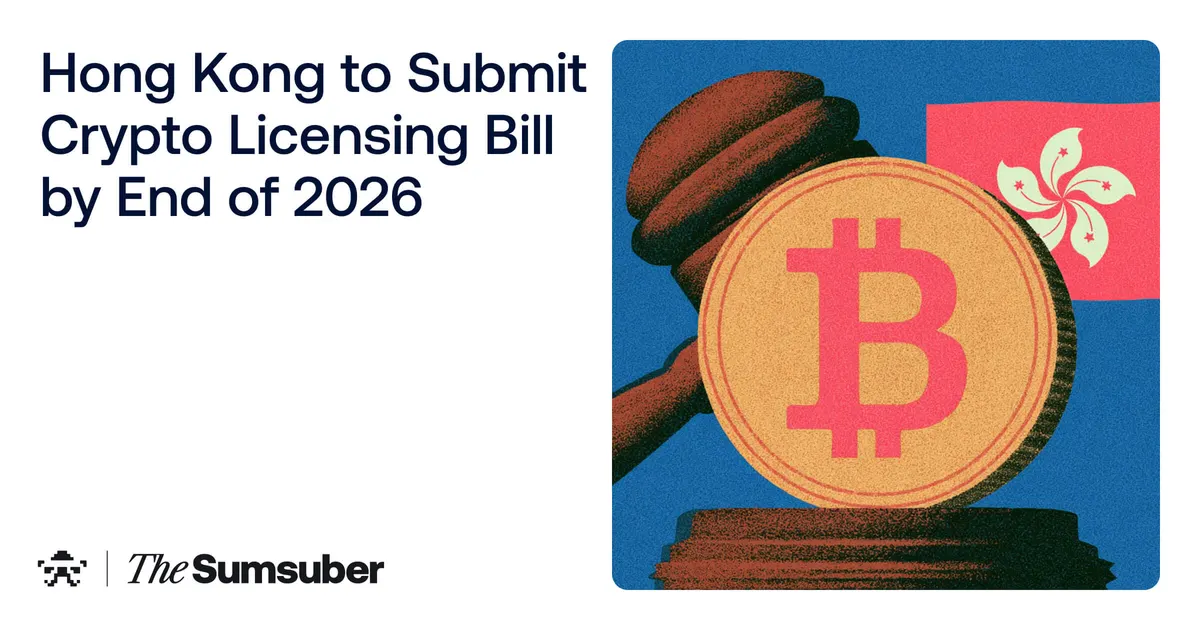
Hong Kong wants to be Asia's most complete crypto regulatory regime, and it is about to fill the remaining gaps. On 5 October, Secretary for Financial Services and the Treasury Christopher Hui told a Legislative Council Finance Committee briefing that the government will submit a bill by the end of 2026 to create four new licensing regimes for virtual asset businesses, as reported by Crypto Briefing.
The four licences will cover dealing, custody, advisory and management, all supervised by the Securities and Futures Commission. Together they would bring under regulation the crypto activities that happen around exchanges rather than on them, from over the counter trading desks to firms that hold private keys for clients. It is the next step in Hong Kong's long campaign to become a trusted global hub for digital assets.
What each licence covers
The dealing licence targets over the counter trading, the desks that match large buyers and sellers away from public exchange order books. OTC desks handle a significant share of crypto volume, especially for wealthy individuals and institutions, and they have operated with lighter oversight than exchanges in many markets. A dedicated licence would bring them under SFC supervision.
The custody licence covers firms that hold private keys and digital assets on behalf of clients. Custody is one of the most critical functions in crypto, because whoever controls the keys controls the assets. Failures or thefts at custodians have caused some of the industry's worst losses, which is why regulators see strong custody rules as essential to investor protection.
The advisory and management licences cover businesses that give advice on virtual assets and those that manage digital asset portfolios for clients. As more investors seek professional guidance and managed exposure to crypto, these licences would ensure that advisers and managers meet standards similar to those in traditional finance, according to crypto.news.
Why Hong Kong needs these licences
Hong Kong already licenses virtual asset trading platforms and has begun licensing stablecoin issuers. But exchanges and stablecoins are only part of the crypto ecosystem. Much activity happens through OTC desks, custodians, advisers and fund managers that fall outside the existing regimes, creating gaps that could be exploited or that leave investors without protection.
The new licences aim to close those gaps. By covering the full chain of services, from trading to custody to advice, Hong Kong can offer investors and institutions a consistent level of protection, and give legitimate businesses a clear path to operate legally. That consistency is a selling point for a city competing with Singapore, Dubai and others to attract crypto firms.
A regulator that licenses the exchange but not the custodian has only locked the front door of the house.
The custody regime has been shaped by earlier consultation, including conclusions published in December 2025, and the bill is framed as a joint effort between the Financial Services and the Treasury Bureau and the SFC. Industry participants have had time to understand the direction, which should help the transition when the rules take effect.

The legislative path ahead
The licences are not yet law. The bill must first be introduced to the Legislative Council and pass through the lawmaking process, which includes committee scrutiny and debate. Even once passed, there will likely be transition periods to allow existing businesses to apply for licences and adjust their operations.
There has been some variation in how officials described the timing, with reports quoting Hui saying the bill would come within this year while the government's framing emphasises the end 2026 deadline. Either way, the direction is clear and the timeline is near, as noted by Sumsub.
For businesses currently operating in these areas in Hong Kong, the priority is preparation. Firms providing OTC trading, custody, advice or management for crypto will need to assess whether they can meet the new requirements, including capital, governance, risk management and anti money laundering controls, and plan their licence applications.
What it means for the industry
The new regimes will raise the bar for crypto businesses in Hong Kong. Some smaller firms may find the requirements too costly and exit, while larger, well capitalised players will see an opportunity to gain market share and credibility. Institutions that have hesitated to engage with crypto because of regulatory uncertainty may feel more comfortable dealing with licensed providers.
The practical implications include the following:
- OTC desks serving Hong Kong clients will need a dealing licence to continue operating.
- Custodians will face strict requirements on how they safeguard client assets.
- Advisers and portfolio managers will need to meet professional standards for crypto.
- Firms operating without licences after the transition will face enforcement risk.
Hong Kong's regulators have shown they are willing to act forcefully when they see misconduct, as their recent crackdown on suspected IPO rigging demonstrated. That enforcement culture will apply to the new crypto licences as well.
Hong Kong versus Singapore
Hong Kong and Singapore have long competed to be Asia's leading financial centre, and crypto has become a new front in that rivalry. Singapore built a licensing regime early through its Payment Services Act and has since tightened rules, including requirements for firms serving overseas customers. Hong Kong has moved more recently but is now building one of the most comprehensive frameworks in the world.
The two cities are taking somewhat different approaches. Singapore has emphasised caution about retail speculation, while Hong Kong has actively courted the industry with a clear message that it wants to be a crypto hub, while insisting on strong rules. The new licences fit that strategy of combining openness with regulation.
For crypto firms choosing where to base their Asian operations, the comparison matters. Hong Kong's comprehensive regime and its link to mainland Chinese capital give it distinct advantages, while Singapore's reputation for stability and rule of law remains a powerful draw.
Building a complete framework
Hong Kong's four new licences would complete a framework that covers nearly every part of the crypto value chain. Exchanges, stablecoin issuers, OTC desks, custodians, advisers and managers would all operate under SFC oversight, giving investors consistent protection and businesses clear rules.
The challenge now is execution. Passing the bill, designing practical rules and supervising a growing industry will test the SFC's capacity. If Hong Kong gets it right, it will have one of the most attractive regulated crypto markets in the world, and a strong claim to be Asia's digital asset capital.
What crypto licences is Hong Kong planning?
Hong Kong plans four new licensing regimes for virtual asset businesses covering dealing, custody, advisory and management, all supervised by the SFC.
When will Hong Kong submit the crypto licensing bill?
Secretary Christopher Hui said on 5 October 2026 that the government will submit the bill by the end of 2026.
What does the dealing licence cover?
The dealing licence covers over the counter crypto trading, where large buyers and sellers are matched away from public exchange order books.
What does the custody licence cover?
The custody licence covers firms that hold private keys and digital assets on behalf of clients.
Are the new crypto licences already in force?
No. They are proposals. The bill must be introduced to the Legislative Council and pass through the lawmaking process before the regimes take effect.
Does Hong Kong already regulate crypto exchanges?
Yes. Hong Kong already licenses virtual asset trading platforms and has begun licensing stablecoin issuers. The new regimes cover activities around exchanges.
How will the new licences affect crypto businesses?
Firms providing OTC trading, custody, advice or management to Hong Kong clients will need to meet new requirements on capital, governance, risk management and anti money laundering, and apply for licences.
How does Hong Kong compare with Singapore on crypto?
Both have strong regimes. Hong Kong is building one of the most comprehensive frameworks and actively courting the industry, while Singapore has emphasised caution about retail speculation.
Why are OTC desks being regulated?
OTC desks handle large crypto trades for wealthy individuals and institutions away from public exchanges. They have often operated with lighter oversight, so a dedicated licence would bring them under SFC supervision and anti money laundering rules.
Will existing crypto businesses get time to apply?
Transition periods are common when new licensing regimes start, giving existing firms time to apply and adjust. The details will be set out in the bill and the SFC's rules.
Hong Kong's four new crypto licences would close the gaps around its exchanges and give the city one of the most complete digital asset regimes anywhere. The bill still has to pass, and the rules still have to be written, but the direction is unmistakable. For crypto firms in Asia, Hong Kong is offering a clear deal: operate under strong rules, and gain access to a market that wants to be the region's digital asset capital.
Talk to the SpinDepth deskYou've finished this story
Read on, send it to someone, or ask about it.