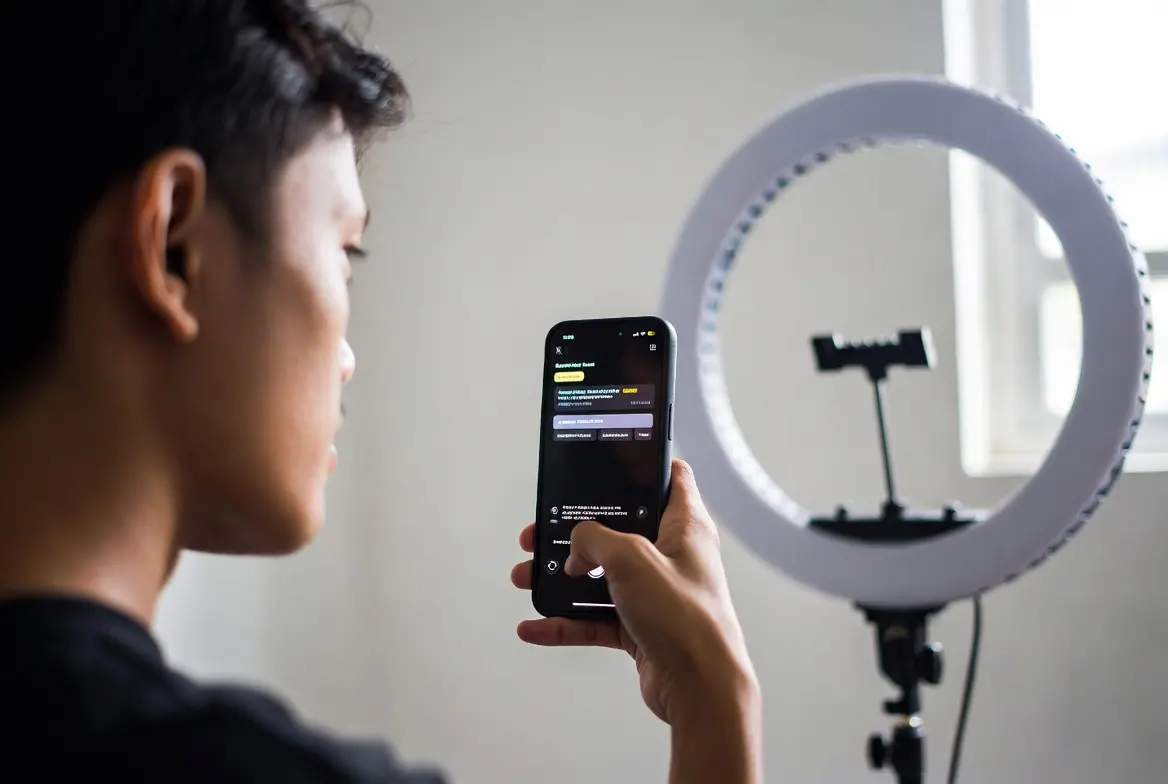

The future of shopping is not being written in Silicon Valley. It is being written in living rooms and small studios across Indonesia, Vietnam, Thailand and the Philippines, where creators sell directly to audiences through live video. TikTok Shop's sales roughly doubled in the first half of 2026, reaching about 34.7 billion dollars, with Southeast Asia driving most of it, according to the China Digital Retail Report.
That makes the region the world's live selling laboratory. What works in a Jakarta live stream today becomes a template that Western platforms copy tomorrow. For once, the rest of the world is studying Southeast Asia to learn where commerce is going, not the other way around.
The numbers behind the boom
The growth is steep by any measure. TikTok Shop's gross merchandise value reached roughly 34.7 billion dollars in the first half of 2026, up about 80 percent from the same period a year earlier, and Southeast Asia accounted for the majority of that platform wide total. The region is not a side market, it is the engine.
Indonesia sits at the centre. It is TikTok Shop's largest Southeast Asian market and among its biggest in the world, generating billions in sales as a nation of young, mobile first consumers embraces buying through video. Vietnam has seen TikTok Shop's share of online sales climb sharply, overtaking or rivalling established platforms.
This scale is reshaping the competitive landscape, pressuring established e-commerce leaders like Shopee and forcing every retailer in the region to think about how they sell through video and creators.
Why live selling works so well here
Southeast Asia was almost designed for this model. It has young populations, extraordinarily high social media use, and a culture of mobile first everything. Shopping through a phone, guided by a person rather than a product grid, feels natural rather than novel, which is why the behaviour took hold so fast.
Live selling also fits how trust works in the region. People buy from people they feel they know, and a creator demonstrating a product live, answering questions in real time, collapses the distance between advertisement and recommendation. Entertainment and commerce blur into a single experience that a static online store cannot match.
In Southeast Asia, commerce has become a form of entertainment, and the salesperson is the show.
At the centre of it are creators often called key opinion sellers, whose business is selling rather than only influencing. They have turned live commerce into a craft, and their ability to move products has made them central to how brands reach consumers in the region.

The creators powering it, and what they earn
The human engine of this boom is a vast population of creators, from large personalities to small sellers running shows from home. Mid tier creators typically earn a share of each sale they drive, often in the range of ten to twenty percent, which can be meaningful for those who build a loyal audience.
But the economics are uneven, and worth seeing clearly:
- Top creators can earn substantial incomes from commissions on high volumes.
- Mid tier sellers make a reasonable share per sale, but depend on consistent audiences.
- Platform creator funds pay very little on their own, so selling, not views, is the income.
- The work is demanding, with long live sessions and constant audience building.
This is a real economy employing large numbers of people, but it is not easy money. The creators who thrive treat it as a business with skills, inventory and customer relationships, not as a hobby that happens to pay.
The risks under the growth
For all the momentum, this model sits on ground that can shift. The clearest risk is regulatory. Governments have shown they will act against TikTok Shop when they judge it a threat to local sellers or a channel for other concerns, and the platform has faced friction and restrictions in the region before. A single policy decision can reshape a market overnight.
There are commercial risks too. A model built on a single platform leaves sellers exposed to that platform's rule changes, fee increases and algorithm shifts, with little recourse. Building an entire business on rented land is powerful until the landlord changes the terms.
This concentration echoes a wider pattern in the region's digital economy, where enormous value flows through a handful of dominant platforms, a dynamic we examine in our coverage of Grab's fintech ambitions and the way capital pools around a few winners, as in our report on Southeast Asia's fintech funding. Dominance brings reach, and dependence.
Still, the direction is set. Live, creator led commerce is not a fad in Southeast Asia, it is how a generation now shops, and the region's lead in it is real.
What brands should learn from the region
For brands, the lesson from Southeast Asia is that selling through creators is no longer an experiment to run on the side. It is becoming a primary channel, and the companies that treat it seriously are building long term relationships with sellers, investing in live production and designing products and offers that work in a fast, interactive format. A brand that only posts polished advertisements while competitors sell live through trusted creators will find itself increasingly invisible to younger shoppers.
That shift demands different skills. Brands need people who can identify the right creators, negotiate fair commission structures, manage inventory for sudden spikes in demand and respond to customer questions in real time. The traditional marketing playbook, built around campaigns planned months in advance, struggles in a world where a single live session can sell out a product in an hour and a trend can rise and fade within a week.
Western markets are now studying this model closely, but importing it is not simple. The cultural conditions that made live selling explode in Southeast Asia, from mobile first habits to the role of personal trust in buying decisions, do not exist everywhere in the same form. Some elements will travel well and others will not, which is why the region remains the place where the format is being refined, tested and pushed further than anywhere else.
Why is Indonesia so important to TikTok Shop?
Indonesia is the largest economy in Southeast Asia, with a huge, young, mobile first population that has embraced buying through video. It is TikTok Shop's biggest market in the region and one of its largest worldwide, generating billions of dollars in sales.
Is TikTok Shop bigger than Shopee in Southeast Asia?
Not overall. Estimates still put Shopee ahead across the region, but TikTok Shop has been gaining share quickly, and in some markets such as Vietnam its share of online sales has risen sharply.
Can brands outside Asia copy the live selling model?
Partly. Western platforms are studying it closely, but the conditions that made it explode in Southeast Asia, including mobile first habits and the role of personal trust in buying, do not exist everywhere in the same form, so some elements travel better than others.
How big is TikTok Shop in Southeast Asia?
TikTok Shop's gross merchandise value reached about 34.7 billion dollars in the first half of 2026, up roughly 80 percent year over year, with Southeast Asia accounting for the majority of that platform wide total. Indonesia is the largest market in the region.
Why does live selling work so well in Southeast Asia?
The region has young, mobile first populations and very high social media use, and trust flows through people. A creator demonstrating a product live and answering questions in real time feels like a recommendation, blending entertainment and shopping in a way static stores cannot.
Who are key opinion sellers?
They are creators whose focus is selling rather than only influencing. They drive sales through live streams and affiliate links, and their ability to move products has made them central to how brands reach consumers in the region.
How much do creators earn?
Mid tier creators often earn roughly ten to twenty percent of each sale they drive, while top sellers can earn substantial incomes on high volumes. Platform creator funds pay very little on their own, so income comes from selling, not views.
What are the main risks?
Regulation is the biggest, as governments can restrict or ban the platform to protect local sellers. Sellers also depend heavily on a single platform's rules, fees and algorithm, which leaves them exposed to sudden changes.
Southeast Asia has become the place where the future of retail is being tested in real time, and TikTok Shop's near doubling of sales is the clearest proof. Creator led, live stream commerce has moved from novelty to norm, employing millions and reshaping how brands sell. The risks of platform dependence and regulation are real, but the behaviour is now embedded. The world will keep watching the region, because this is where the next chapter of commerce is already being written.
Talk to the SpinDepth deskYou've finished this story
Read on, send it to someone, or ask about it.