 Media & Reputation
 Football
 Culture
 Experiences
 Advertising

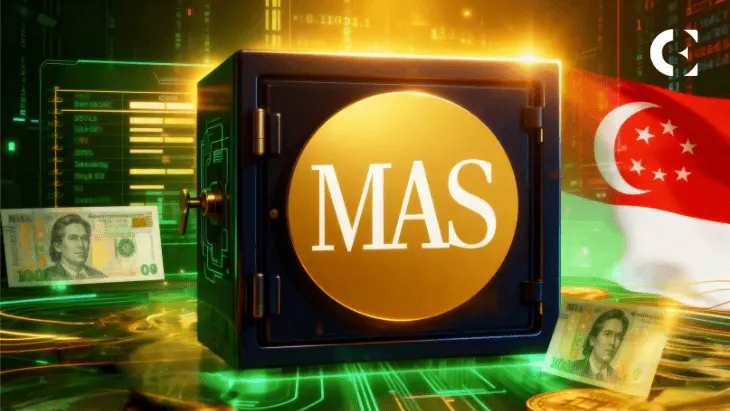
On 6 November the Monetary Authority of Singapore sold S$100 million of its own short-term bills, as it does every week. This time the bills did not exist anywhere except on a distributed ledger run by MAS, and they were paid for with central bank money that also lives on that ledger. Five of Singapore's biggest banks bid for more than twice the amount on offer.
MAS announced the result on 19 November at the Singapore FinTech Festival. It is a small trade by the standards of the money market, but it moves MAS from settlement tests to live central bank securities issued and paid for on one ledger. Here is what was tested and why the banks are paying attention.
What MAS actually did
The bills were issued "natively", a word MAS chose carefully. In most tokenisation projects a security is first issued in the conventional way and then represented by a token on a blockchain, which means two records that must be kept in line. Native issuance means the MAS Bills were recorded "directly and solely" on the ledger, MAS said in its release. There is nothing to reconcile and no intermediary keeping a separate book.
Payment was made in wholesale central bank digital currency, the digital form of the money banks hold at MAS. That makes the trade a delivery-versus-payment transaction on one ledger: the bills and the cash move together, in the same system, at the same moment.
The ledger itself is the Singapore Dollar Test Network, which MAS describes as an operational shared ledger for testing the settlement of tokenised assets in wholesale CBDC. MAS said it will be renamed SG Digital Ledger, a sign that it sees the infrastructure as permanent rather than experimental.
Who bid, and what demand says
Five primary dealers took part: DBS Bank, the Singapore branch of The Hong Kong and Shanghai Banking Corporation, OCBC, Standard Chartered Bank (Singapore) and UOB. Primary dealers are the banks MAS approves to make markets in Singapore Government Securities and MAS-issued securities, so the list is effectively the core of Singapore's money market.
Applications came to more than double the S$100 million offered. For a four-week bill, demand of that size is not about yield. It shows that the banks were willing to put real balance sheet through a new system and wanted to be in the first trade, which is what MAS needed before scaling up.
The three local banks have their own reasons. DBS, OCBC and UOB all run tokenisation and digital asset programmes, and OCBC has worked with partners on tokenised deposits across Singapore and Malaysia, as we reported in our coverage of OCBC's tokenised deposit work. A tokenised MAS Bill gives all of them a high-quality asset to use on the same rails.

From an overnight loan to a bill to collateral
This issuance is the second step in a sequence MAS has laid out. In 2025 it settled a live interbank overnight lending transaction in wholesale CBDC on the same network. The bills add an asset to the cash: a tokenised version, in MAS's words, of "a commonly used and trusted SGD asset" that can be settled in wholesale CBDC.
The third step is collateral. MAS said the issuance "paves the way for secured lending transactions involving tokenised assets" on the network. In practice, that means banks lending to one another against tokenised MAS Bills, with the loan and the collateral moving on the same ledger, potentially at any hour.
The headline is S$100 million. The point is that Singapore now has tokenised cash, a tokenised safe asset and the same ledger for both. That is the plumbing for secured lending at internet speed.
MAS's next phase has three parts: larger tokenised MAS Bill issuances, more participating institutions, and wider use of the bills for collateral management. It invited interested financial institutions and market infrastructure providers to join live trials in 2027.
What MAS said, and what it did not
Managing Director Chia Der Jiun was measured. "The live issuance allowed us to test a new method of issuance, and further enhance our in-house distributed ledger infrastructure," he said. "MAS will continue to improve the functionality and liquidity of tokenised MAS Bills as market acceptance grows. Over time, tokenised MAS Bills can play a complementary role to conventional MAS Bills."
Complementary is the key word. MAS is not replacing its conventional bills, which run to billions of dollars a week, and it has not said when tokenised issuance might become routine. It is building a parallel track and inviting the market onto it.
There is also a policy reason to move carefully. MAS Bills are one of the main tools MAS uses to manage liquidity in the banking system, so any new form of issuance has to work as reliably as the old one before it can grow. Running the two side by side lets MAS compare settlement times, operational risk and demand without putting its core liquidity operations on new infrastructure.
Nothing in the announcement involves retail investors or public blockchains. This is wholesale infrastructure, on a ledger MAS operates, for banks MAS supervises. For investors, the effects would come later and indirectly, through faster and cheaper settlement in the instruments banks use every day.
Why it matters for Asia's financial centres
Singapore's tokenisation work has been running for years, from the Project Ubin experiments to Project Guardian with the industry. What changes with this issuance is that MAS has moved from proofs of concept to live central bank securities. That puts it ahead of most regional peers on the question that matters for markets: can tokenised assets be settled in central bank money in production?
For banks, the questions now are practical:
- How large will future issuances be, and how often?
- Which institutions beyond the five primary dealers will be admitted?
- Will tokenised MAS Bills be accepted as collateral in MAS's own facilities?
- How will the SG Digital Ledger connect with other tokenisation networks in the region?
We wrote in our analysis of banks tokenising settlement rails that tokenisation would be decided by settlement assets, not by apps. Singapore has now put one of the safest settlement assets in its currency on a ledger. The next year of trials will show how much of the market follows.
What did MAS issue?
S$100 million of four-week MAS Bills, issued natively on the MAS-operated Singapore Dollar Test Network on 6 November 2026 and settled in wholesale central bank digital currency.
What does native issuance mean?
The bills were recorded directly and solely on the distributed ledger, rather than issued conventionally and tokenised afterwards, which removes the need for reconciliation and intermediaries.
Which banks took part?
Five primary dealers: DBS Bank, HSBC's Singapore branch, OCBC, Standard Chartered Bank (Singapore) and UOB.
Was there strong demand?
Yes. Applications came to more than double the S$100 million issuance size.
When do the bills mature?
On 4 December 2026.
What is the Singapore Dollar Test Network?
An operational shared ledger run by MAS for testing settlement of tokenised assets in wholesale CBDC. MAS said it will be renamed SG Digital Ledger.
What is wholesale CBDC?
A digital form of central bank money used by financial institutions for settlement between themselves, not by the public.
Can retail investors buy tokenised MAS Bills?
No. The issuance was for primary dealers on a wholesale network run by MAS.
What comes next?
MAS plans larger issuances, more participating institutions and wider use of the bills for collateral management, with live trials in 2027.
What did MAS say about conventional MAS Bills?
Managing Director Chia Der Jiun said tokenised MAS Bills could play a complementary role to conventional MAS Bills over time.
What did MAS do before this?
In 2025 it settled a live interbank overnight lending transaction in wholesale CBDC on the same network.
Is the SG Digital Ledger a public blockchain?
No. It is a ledger operated by MAS for regulated financial institutions, used to test and settle tokenised assets in wholesale central bank money.
Will tokenised MAS Bills replace conventional MAS Bills?
Not according to MAS. Its managing director described them as complementary, and conventional MAS Bills continue to be issued as before.
Why does this matter?
It shows a central bank issuing its own securities on a shared ledger and settling them in central bank money in a live transaction, a step toward secured lending with tokenised collateral.
Singapore has quietly turned a test network into the beginnings of a market. A four-week bill worth S$100 million will mature on 4 December and few people outside the money market will notice, but the banks that bid twice the amount on offer clearly did.
Talk to SpinDepth about tokenisation and financial market communicationYou've finished this story
Read on, send it to someone, or ask about it.