
The largest banks in the United States are no longer watching tokenization from the sidelines. Wells Fargo has joined JPMorgan and Citi in the race to move Wall Street's settlement rails onto distributed ledgers, CoinDesk reported. The move is the clearest signal yet that tokenization has moved from innovation-lab theatrics to core infrastructure planning at institutions that settle the bulk of the world's dollar flows.
From stablecoins to bank-issued money
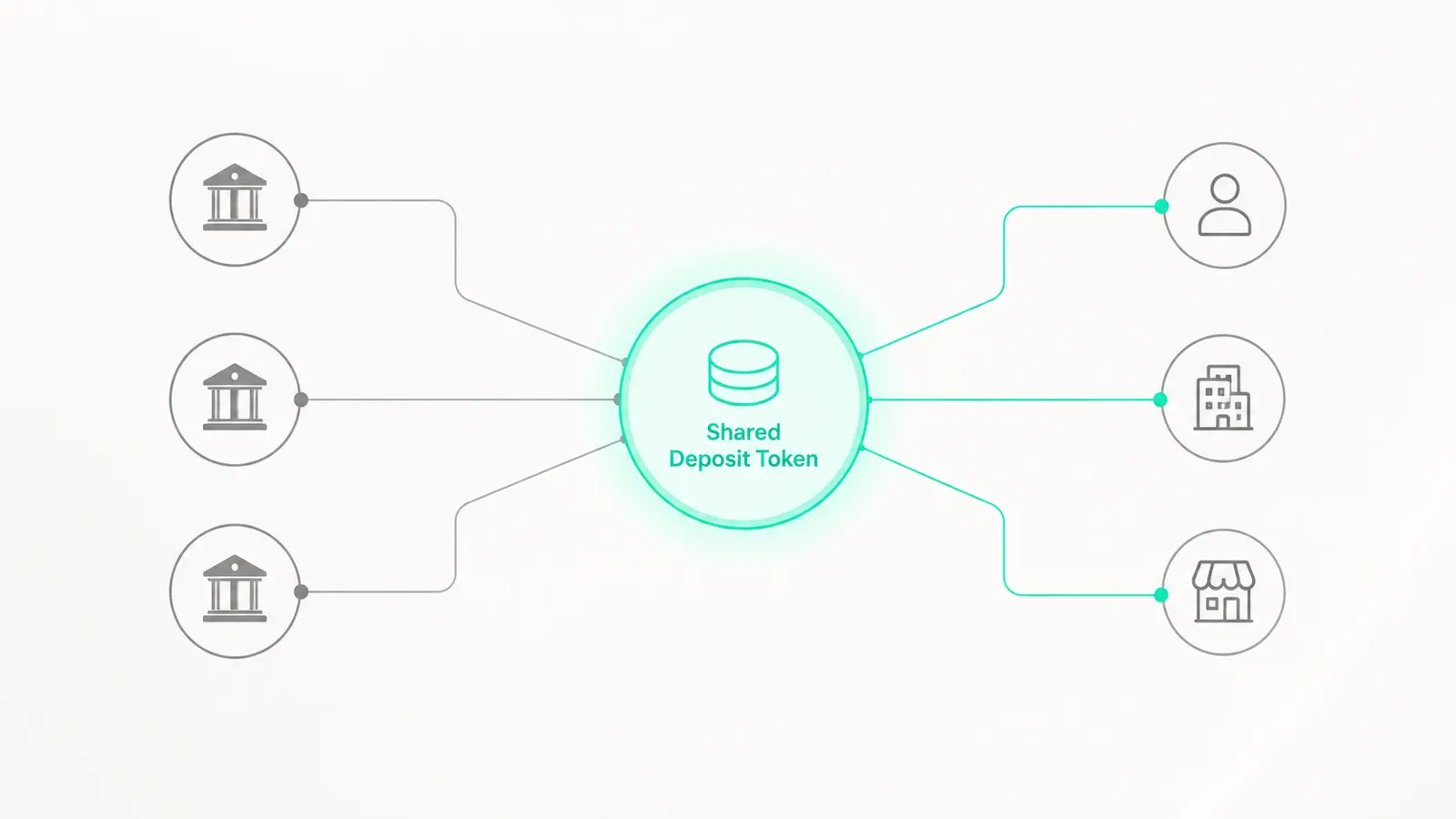
The strategic thread is a shift from public stablecoins toward tokenized deposits, bank liabilities represented on a ledger rather than tokens backed by reserves held elsewhere. Forbes reported that America's biggest banks are collaborating on a single deposit token, an attempt to keep the unit of account inside the banking system even as settlement moves on-chain. The banks are not trying to kill stablecoins. They are trying to own the rails that stablecoins currently run on.
This is a defensive and offensive move at once. Defensive because Tether, a $200 billion issuer profiled by the ICIJ, and other stablecoin providers have captured settlement volume that used to sit in correspondent banking. Offensive because a bank-issued deposit token can settle in seconds with the credit and compliance wrapper that institutional clients require. The Yahoo Finance desk noted stablecoin payment volumes have reached $33 trillion, a number large enough to force a response from the incumbents.
- Wells Fargo joins JPMorgan and Citi on tokenized settlement
- Banks building a shared deposit token to keep money on-chain in-house
- Stablecoin volume near $33 trillion forces an incumbent response
- Competition shifts from who holds the money to who owns the rail
The Southeast Asia bottleneck
The tokenization story is not only American. blockhead.co reported this week that the bank balance sheet, not the technology, is now Southeast Asia's tokenization bottleneck. In markets from Singapore to Jakarta, the constraint is regulatory capital treatment and fragmented domestic rails, not a lack of ledger ambition. The US banks have the balance-sheet heft and the federal charter clarity that regional players lack, which is why their move matters beyond Wall Street.

Earlier bank tokenization efforts failed because each institution built its own closed loop. Banking Exchange argued tokenized deposits will not scale in silos, and the current coalition appears built around that lesson. A single shared deposit token, settled across participants, is only useful if counterparties accept it. The presence of three systemic banks at the table changes the network effect from hypothetical to probable.
The banks are not trying to kill stablecoins. They are trying to own the rails stablecoins run on.
What this means for operators
For fintechs and payment operators, the implication is to decide where you sit relative to the new rail. If you build on public stablecoins, expect the banks to offer a cheaper, compliant, bank-backed alternative to their own clients. If you build settlement infrastructure, the door is open to plug into bank-led networks rather than compete with them. The KPMG and McKinsey frameworks both point the same way: on-chain money is arriving, and the issuer of the unit will capture more than the builder of the app.
The window for positioning is now, while the token standard is still being written. Once three systemic banks agree on a shared deposit token, the interoperability questions resolve in their favor. Operators who wait for the standard to finalize will be integrating into someone else's rail on someone else's terms.
Are banks abandoning stablecoins?
No. They are building tokenized deposits to keep settlement inside the banking system, responding to stablecoin volume that has reached roughly $33 trillion.
Why does a shared token matter more than past pilots?
Tokenized deposits fail in silos. A single token accepted across JPMorgan, Citi, and Wells Fargo creates the network effect past pilots lacked.
The settlement rail is the least visible and most valuable layer of finance, and the largest US banks have just decided to rewrite it together. Stablecoins proved the demand. Tokenized deposits are the incumbents' answer. Whoever defines the shared standard in the next year will sit at the center of dollar settlement for the on-chain era, and that is a prize worth more than any single product launch.
Speak with the SpinDepth desk