
The crypto market just sent two signals in the same week, and they point in opposite directions. US spot Bitcoin and ether exchange-traded funds drew roughly $1.1 billion of net inflows, their strongest week since April, according to The Block. At the same time, the CLARITY Act, the market-structure bill meant to define how Washington regulates digital assets, saw its floor vote slip to September, CoinDesk reported. One story says investors are arriving. The other says lawmakers are not. Both are true, and the gap between them is the real news.
The inflows are the louder signal
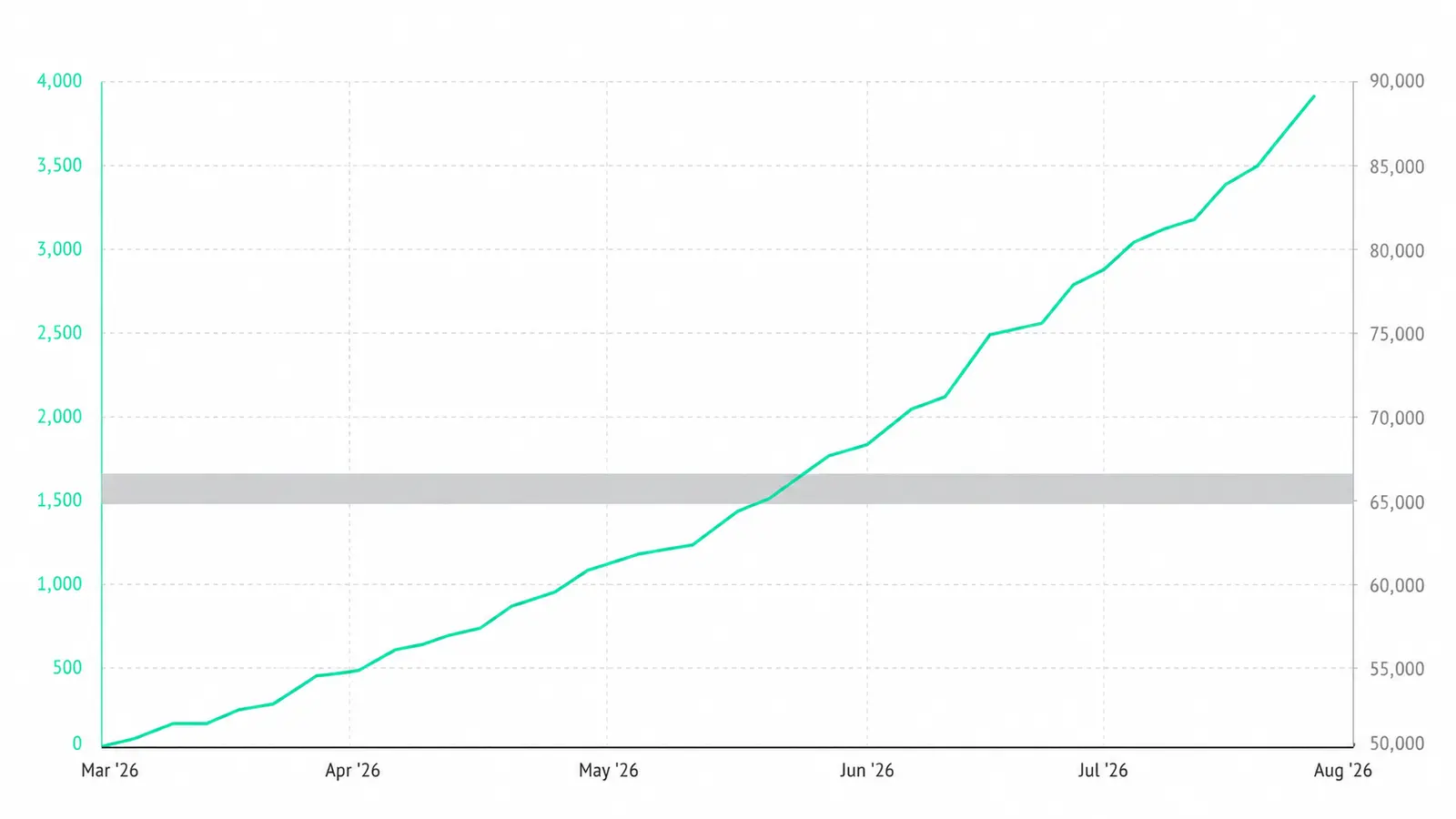
A $1.1 billion week is not a record, but the context matters. It arrived during a period of low trading volume and a Bitcoin price stuck in the mid-$60,000s, with CoinDesk noting BTC hovering near $64,000 as the legislative calendar shifted. Money moved into regulated wrappers while spot prices barely budged. That is the signature of institutional allocation, not retail frenzy. Pension consultants, registered advisors, and treasury desks buy exposure through vehicles they are permitted to hold, and they do it on a schedule, not on a headline.
The Robinhood prediction-market tape and daily price trackers from Yahoo Finance show the same quiet pattern: modest upward drift, no blow-off top. When inflows lead price, the base is being built by balance-sheet buyers. That is a different and stickier constituency than the one that drove the 2021 cycle.
- $1.1B net inflows, best ETF week since April
- Bitcoin near $64,000, volume described as low
- Inflows leading price, a sign of scheduled institutional buying
- Legislative delay not denting regulated-access demand
Why the CLARITY Act delay did not land
The CLARITY Act was expected to clarify which assets fall under the SEC and which under the CFTC, ending a decade of jurisdictional ambiguity. Pushing the vote to September removed a near-term catalyst but did not remove the trajectory. Markets have learned to price US crypto policy as a multi-quarter process, not an event. The delay is a scheduling footnote, not a regime change.
Regulation as background, not trigger
Operators should read the slip as confirmation that the US is building crypto rails through access products and enforcement precedent while the statute catches up. The ETF wrapper already exists. Custody already exists. The accounting treatment is settling. A delayed bill slows the long tail of clarity, not the parts of the market that are already live.
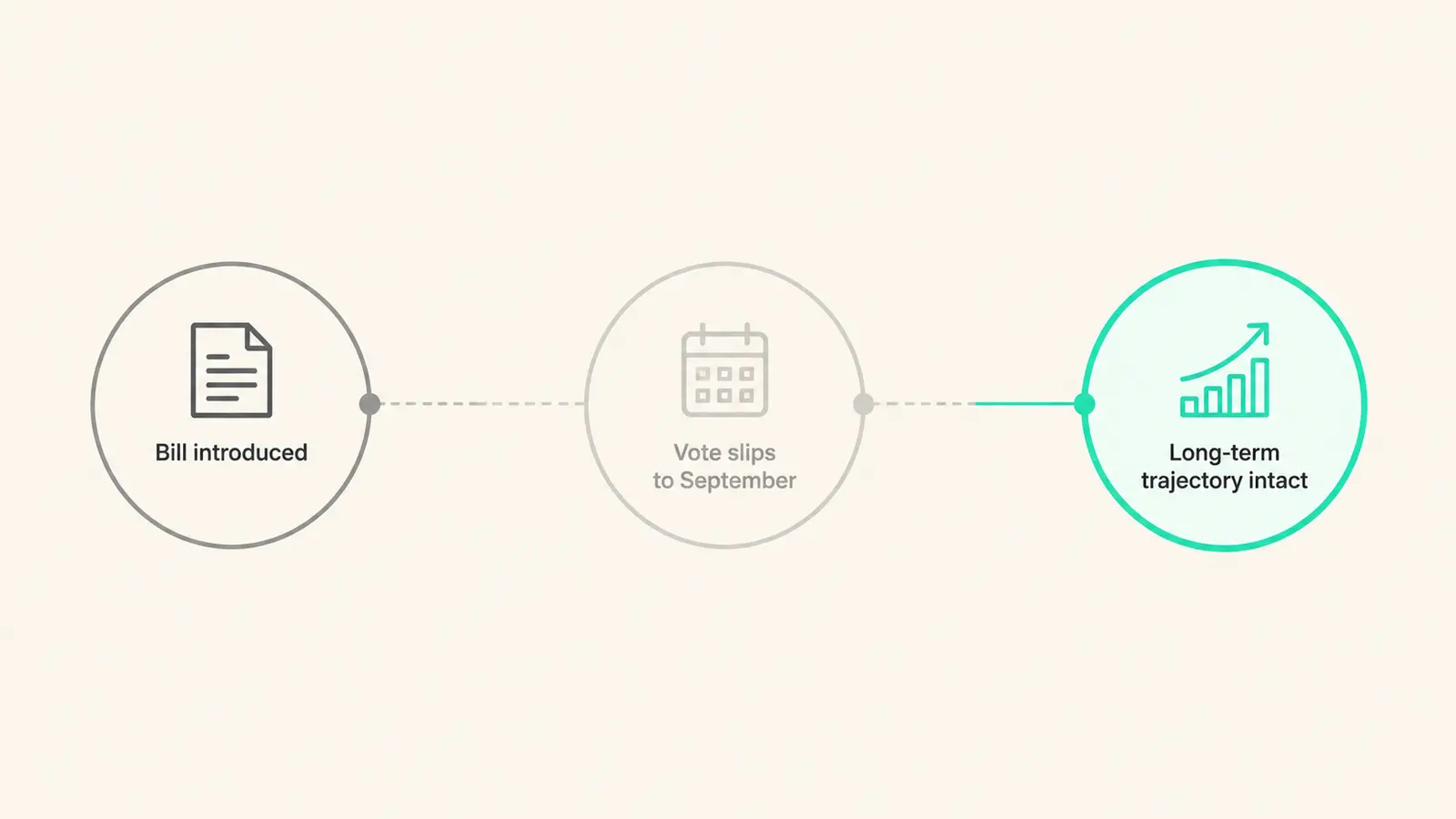
When inflows lead price, the base is being built by balance-sheet buyers, not retail frenzy.
What operators should watch
The split between strong ETF demand and stalled legislation is a gift to operators who can separate rails from rules. Build for the access layer that already works. Treat the statute as a tailwind that may arrive, not a dependency. The Reuters wires and the Bloomberg desk will keep swinging on every procedural delay, but the flow of capital into regulated products is the steadier tell.
For exchanges, custodians, and treasury-product teams, the implication is to prioritize the onboarding and reporting plumbing that institutional buyers require, because that is what is being bought right now. The legislation will land eventually and widen the door, but the buyers are already walking through the one that is open.
Did the CLARITY Act delay hurt crypto markets?
Not in the flow data. ETF inflows hit $1.1B that same week, suggesting investors are treating the bill as a future tailwind rather than a current requirement.
Why are ETF inflows rising if price is flat?
Flat price with rising inflows typically reflects scheduled institutional buying through regulated vehicles, a stickier base than retail-driven spikes.
The lesson of the week is that crypto's US story has decoupled into two clocks. The capital clock is running now, through products that already clear compliance. The legislative clock runs on congressional time. Operators who plan around the first and stay ready for the second will be positioned whether September brings a vote or another slip.
Speak with the SpinDepth desk