 Media & Reputation
 Football
 Culture
 Experiences
 Advertising

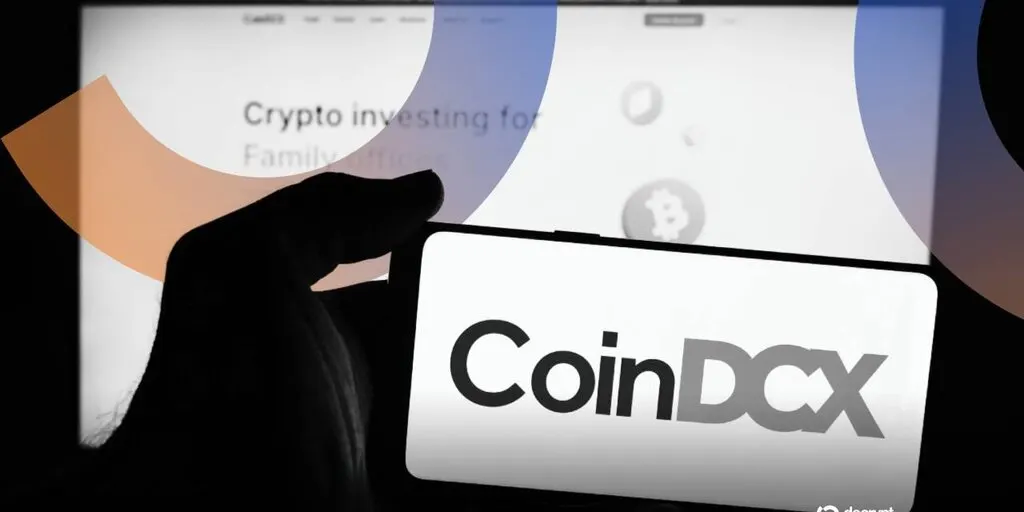
When you buy crypto on a local exchange, whose order book are you really trading on? India's financial crimes agency says that for customers of one of the country's largest exchanges, the answer was Binance, Bybit and other offshore venues. The Enforcement Directorate searched the operators of CoinDCX and Delta Exchange on 4 and 5 November under India's Foreign Exchange Management Act, alleging that rupee deposits were turned into USDT and routed abroad, Decrypt reported.
Both exchanges say they comply with the law, and no charges have been reported. But the model the agency describes, a local front with a domestic currency on one side and offshore liquidity on the other, is not unique to India. Regulators across Southeast Asia are trying to stop the same pipe.
What the agency alleges
The Enforcement Directorate said both platforms offered futures and options on crypto tokens and openly advertised trading in tokenised shares of foreign companies without being authorised to do so. It alleged that when CoinDCX users deposited rupees and placed spot or derivatives orders, the exchange converted the funds into USDT and opened matching positions on foreign exchanges including Binance, KuCoin, Bybit and Gate.io, bypassing India's framework for sending money abroad.
According to the agency, those trades ran through accounts held in the name of a Costa Rica based group entity, which it described as a shell, and were placed directly from CoinDCX through APIs. Trades in tokenised shares of companies such as Apple, Google and Tesla were in fact derivatives positions opened on the decentralised exchange Hyperliquid, it said. The agency alleged that cross border transactions in each area ran to hundreds of millions of dollars and that CoinDCX had paid tens of millions of dollars in fees to the foreign platforms.
On Delta Exchange, the agency said a large share of its derivatives trading was executed through CoinDCX, and that Delta had transferred tens of millions of dollars to overseas group entities, which is under investigation. It said the firms' products also appear to contravene India's securities and central banking laws. These are allegations at the investigation stage; no court has ruled on them.
What the exchanges say
CoinDCX said officials visited its Bengaluru office "as part of a routine enquiry" on 4 November and that it fully cooperated. It said it operates in strict compliance with all applicable Indian laws, including FEMA, and meets its know your customer, anti money laundering and reporting obligations as an entity registered with FIU-IND, India's anti money laundering reporting agency. Trading, deposits and withdrawals remain fully operational, it said.
Delta Exchange said its business "does not involve any cross-border transfer of VDAs in any form or manner," using India's term for crypto assets. It said it runs a dedicated rupee settled exchange for Indian users only, has been registered with FIU-IND since 2023, and that trading, deposits and withdrawals were functioning normally.
An exchange that matches your order on someone else's book is a broker, whatever its app says. The question regulators keep asking is whether the customer was ever told.
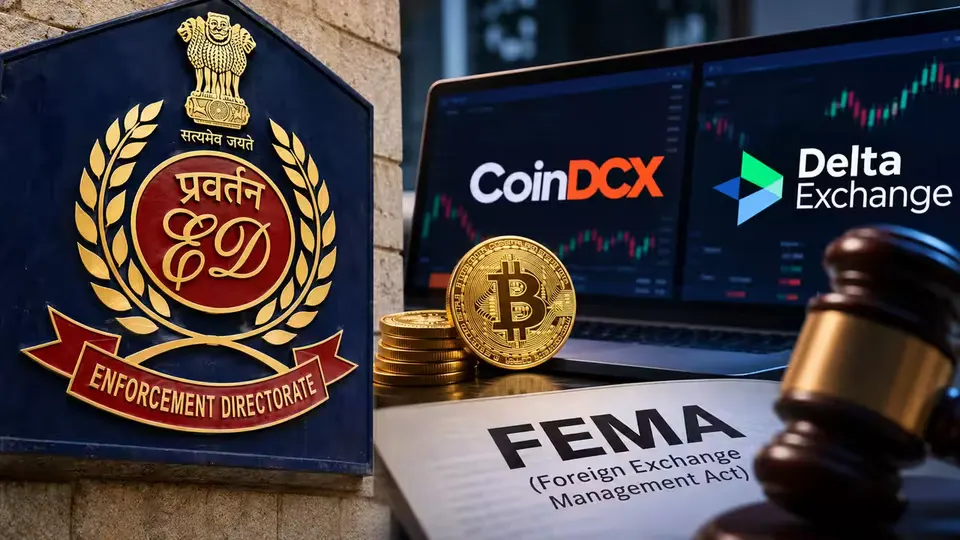
The exchanges' accounts and the agency's allegations describe the same business very differently, and the investigation will need to establish what users were told, which entities held customer funds, and whether any approvals were obtained under FEMA. The agency has not said whether it will seek penalties or refer the matter to other regulators, and no court has been asked to rule on the allegations so far.
A hard stretch for Indian crypto
The case adds to a difficult period for CoinDCX, one of India's largest exchanges. Last month it confirmed a 16 million dollar loss from retired wallets, days after its co-founder and chief executive called breach reports a false alarm, and it suffered a roughly 44 million dollar exploit in July 2025, Decrypt reported. Coinbase, an investor since 2020, has won approval from India's competition regulator to raise its minority stake in the exchange's parent.
Other Indian platforms are under strain too. Unocoin kept deposits and withdrawals halted while it looked into suspect transfers from a BitGo wallet, Cointelegraph reported. And India's wider crackdown on real money gaming, which took effect in May, has already pushed offshore prediction markets out of the country, as we set out in our comparison of Kalshi and Polymarket.

India taxes crypto heavily, with a 30 percent tax on gains and a 1 percent tax deducted at source on transfers, rules that pushed many traders toward offshore platforms after they took effect in 2022. That history is part of why authorities scrutinise any arrangement that moves domestic users' orders abroad, whether directly or through a local intermediary.
Why Southeast Asia is watching
The alleged mechanism has three parts that regulators in the region recognise: a local currency on ramp, a stablecoin bridge, and an offshore venue that the local regulator does not supervise. Thailand's SEC moved in 2025 to block access to unlicensed exchanges including Bybit and OKX from 28 June that year, and the Philippine SEC moved against Binance in 2024. Indonesia shifted crypto oversight to its Financial Services Authority, OJK, in January 2025. We set out the Thai rules in our Thailand crypto exchange licence guide.
Tokenised shares are the newer front. Offshore venues and decentralised exchanges increasingly list synthetic exposure to US stocks, and the line between a tokenised share and a contract for difference is often thin. We compared those products in our report on tokenised stocks and the OKX and ICE venue. For users, the practical questions are the same in Mumbai, Bangkok or Jakarta:
- who actually executes your order, and on which venue
- whether your money leaves the country, and in what form
- which regulator, if any, supervises the counterparty
- what happens to your position if the offshore venue freezes accounts
- whether a tokenised share gives you the stock or only a price bet
The CoinDCX case is at an early stage, and the exchanges deny wrongdoing. But it shows how regulators now look under the hood: not just at whether an exchange is registered locally, but at where the trades go. Any platform in Asia running a similar model should expect the same questions.
What happened to CoinDCX and Delta Exchange?
India's Enforcement Directorate searched their operators on 4 and 5 November 2026 under the Foreign Exchange Management Act.
What does the agency allege?
That CoinDCX converted rupee deposits into USDT and opened matching trades on foreign exchanges through a Costa Rica based entity, bypassing India's rules on sending money abroad.
Which foreign exchanges were named?
Binance, KuCoin, Bybit and Gate.io, according to the agency.
What about tokenised shares?
The agency said tokenised shares of companies such as Apple, Google and Tesla were derivatives positions on Hyperliquid.
Has anyone been charged?
No charges have been reported. The investigation is ongoing.
What did CoinDCX say?
That the visit was a routine enquiry, it cooperated fully and it complies with Indian law including FEMA.
What did Delta Exchange say?
That it runs a rupee settled exchange for Indian users and does not transfer crypto assets across borders.
Are the exchanges still operating?
Both said trading, deposits and withdrawals were functioning normally.
What is FEMA?
India's Foreign Exchange Management Act of 1999, which governs cross border payments and foreign exchange.
How large were the alleged transactions?
The agency alleged cross border transactions in each area ran to hundreds of millions of dollars.
Has CoinDCX had other problems?
It confirmed a 16 million dollar loss from retired wallets in October and a roughly 44 million dollar exploit in July 2025.
Who invests in CoinDCX?
Coinbase has invested since 2020 and won approval to increase its minority stake in the parent.
Does Thailand block offshore exchanges?
Yes. Its SEC moved to block several unlicensed exchanges, including Bybit and OKX, from 28 June 2025.
Who regulates crypto in Indonesia?
The Financial Services Authority, OJK, since January 2025.
How can users check where their trades go?
Read the exchange's terms on execution venues, check its licence with the local regulator, and be wary of products that mirror foreign assets.
Is crypto legal in India?
Trading crypto is not banned, but gains are taxed at 30 percent with a 1 percent tax deducted at source on transfers, and exchanges must register with FIU-IND.
India's case is a reminder that a local registration is only part of the picture. Regulators are following orders and money to where they actually settle, and they treat stablecoins as a payment route, not just an asset. For exchanges across Asia that depend on offshore liquidity, the safer path is to disclose execution venues clearly and seek approval for cross border flows before an investigator asks.
Talk to the SpinDepth deskYou've finished this story
Read on, send it to someone, or ask about it.