Thailand runs one of Southeast Asia's most developed licensing regimes for crypto exchanges, and one of its most actively enforced. Any business that operates a digital asset exchange, brokerage or dealing service for Thai users must be licensed, and the Securities and Exchange Commission has moved repeatedly against platforms that serve Thais without one. With searches for "Thailand crypto exchange license requirements" rising, this guide sets out how the system works in 2026, which platforms are licensed, and what it means for users and for businesses considering entry.
A caution before the detail: capital thresholds and licence lists change. The SEC's website and its licensee lists are the authoritative source, and any business planning an application should take Thai legal advice. What follows is a structured overview based on the published framework and reporting by law firms and financial media.

The legal framework behind the licence
Crypto businesses in Thailand are regulated under the Emergency Decree on Digital Asset Businesses, introduced in 2018. The decree defines digital asset businesses, including exchanges, brokers and dealers, and makes it an offence to operate one without a licence. Later rules added categories such as digital asset fund managers, advisers and custodial wallet providers.
The SEC supervises licensed operators and writes detailed rules on governance, custody, client asset protection, IT security and market conduct. Licences themselves are granted by the Ministry of Finance on the SEC's recommendation, which gives the system two layers of approval.
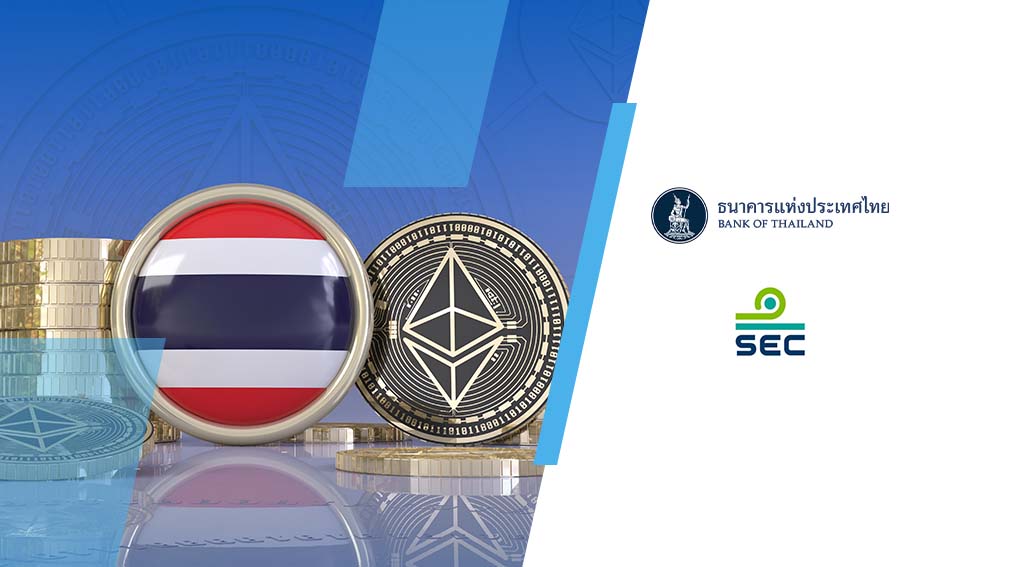
Alongside licensing, the Bank of Thailand oversees payments and has taken a cautious line on crypto as a means of payment. The result is a framework that allows regulated trading and investment in digital assets while restricting their use for everyday payments.
The SEC Thailand publishes the list of licensed operators and the rules that apply to each licence type. Its Check First app and website allow users to confirm whether a platform is authorised before opening an account, and its investor alerts name unlicensed platforms that have targeted Thai users.
Who can apply and what they must prove
According to the framework described by Watson Farley and Williams, applicants must be companies established under Thai law. They must meet shareholder equity requirements, demonstrate that their systems are ready to operate, and pass qualification checks on directors, executives and major shareholders, defined as those holding more than 10 percent of voting shares.
The review covers the areas where crypto businesses most often fail. Regulators examine custody arrangements, know-your-customer and anti-money laundering systems, cybersecurity, IT resilience, conflict-of-interest controls and the way client assets are segregated. A 2019 rejection cited weak custody and KYC systems and unverified IT and cybersecurity, which shows how heavily these factors weigh.
The process runs in stages. The SEC forwards a complete application to the Finance Ministry within 90 days of receiving all documents, and the ministry then has 60 days to decide. In practice, preparing a complete application and responding to regulator questions can take far longer than those formal windows.
- Legal basis: Emergency Decree on Digital Asset Businesses, 2018.
- Applicant: a company incorporated in Thailand.
- Approval: SEC review, up to 90 days, then Finance Ministry decision, up to 60 days.
- Checks: directors, executives and shareholders above 10 percent, custody, KYC and AML, IT security.
- Capital: minimum paid-up capital raised to 100 million baht for new exchange applicants in 2022.
Capital requirements in 2026
Capital rules have tightened over time. Under the original 2018 regime, an exchange needed paid-up registered capital of 50 million baht. In 2022 the SEC raised the minimum for new exchange and wallet licence applicants to 100 million baht, giving existing licensees a transition period to build up capital.
Later proposals refined the approach. A March 2024 SEC proposal described 100 million baht for platforms that hold client assets in custody and 50 million baht for operators that do not, while a separate 2024 consultation proposed net capital floors that depend on whether an operator holds customer assets. Applicants should confirm the current figures with the SEC, as the final versions of these proposals determine what applies today.
Capital is also monitored on an ongoing basis. Licensed operators must maintain required capital levels after approval, and the SEC has acted against operators whose capital fell below the minimum, including the suspension of KuCoin Thailand reported earlier this year after its capital stayed below the threshold.
Thailand allows crypto trading but only through licensed doors. Every offshore shortcut now carries legal and practical risk.
Which platforms are licensed
Licensed operators have included some of the region's best-known names. Bitkub Online was among the first to receive a licence, in 2019, and is widely described as Thailand's largest crypto exchange. Gulf Binance, a joint venture between Binance and Gulf Innova, received SEC approval to start operations in late 2023 and trades as Binance TH. Upbit Exchange appeared on the SEC's licensee list of 2023, and Orbix Trade operates the Satang Pro brand.
Other names on past licensee lists include InnovestX, the digital asset arm of Siam Commercial Bank's group, along with smaller exchanges and brokers. Licence status can change through suspensions, surrenders and new approvals, which is why users should check the SEC's current list rather than relying on older articles or comparison sites.
The SEC also runs investor alerts on unlicensed platforms. Our guide to how Thai SEC investor alerts work explains how to read them, and why a platform's licences abroad do not make it licensed in Thailand.
Licensed exchanges such as Bitkub and Binance TH must follow Thai rules on listing, custody and client money, which can mean fewer tokens and features than their global counterparts. For users, that trade-off buys legal protection and a local regulator to complain to if something goes wrong.

The crackdown on offshore exchanges
Thailand's regulators have become more aggressive toward foreign platforms serving Thai users without a licence. In 2025 the SEC announced it would block access to several offshore exchanges, including Bybit, OKX, CoinEx, XT.COM and 1000X. In February 2026 it filed a criminal complaint against a local licensed broker and its overseas platform, alleging that the two jointly ran an unlicensed exchange for Thai users.
The enforcement reflects concerns about money laundering, scams and investor protection. Authorities have linked unlicensed platforms and dollar stablecoins to the movement of illicit funds through mule accounts, and the Bank of Thailand has tightened measures against financial crime. We covered the wider enforcement push in our report on the Thai SEC crackdown.
For users, the practical consequence is risk. Accounts at unlicensed platforms are not protected by Thai rules, access can be blocked, and disputes cannot be taken to Thai regulators. Moving funds through unlicensed channels may also expose users to anti-money laundering scrutiny from their banks.
Thailand's wider digital asset ambitions
Thailand's approach is not purely restrictive. The SEC has worked on frameworks for crypto exchange-traded funds and for crypto derivatives on the Thailand Futures Exchange, and in March 2026 made crypto and digital tokens eligible as underlying assets for derivatives. A consultation on related rules ran until 30 September 2026.
The government has also used tax policy to steer activity toward licensed platforms, announcing in 2025 a temporary exemption from personal income tax on capital gains from crypto sold through licensed Thai providers. Combined with projects such as tourist crypto conversion schemes and a baht-linked token pilot, the policy aims to make Thailand a regional hub while keeping activity inside the regulated perimeter.
For businesses, that combination is the opportunity. Thailand has an active retail base, rising institutional interest and a clear, if demanding, path to authorisation. The cost of entry is high, but licensed operators benefit directly from the crackdown on unlicensed competitors.
Do crypto exchanges need a licence in Thailand?
Yes. Under the Emergency Decree on Digital Asset Businesses of 2018, operating a digital asset exchange, brokerage or dealing service for Thai users requires a licence granted by the Ministry of Finance on the SEC's recommendation.
What is the minimum capital for a crypto exchange in Thailand?
The SEC raised the minimum paid-up capital for new exchange applicants to 100 million baht from 50 million baht in 2022. Later proposals tied capital to whether the operator holds client assets, so confirm current figures with the SEC.
How long does a Thai crypto exchange licence take?
The SEC forwards a complete application to the Finance Ministry within 90 days, and the ministry decides within 60 days. Preparing a complete application usually takes longer.
Which crypto exchanges are licensed in Thailand?
Licensed platforms have included Bitkub, Gulf Binance (Binance TH), Upbit Thailand and Orbix (Satang Pro), among others. Always check the SEC's current licensee list.
Can foreign companies get a crypto licence in Thailand?
Applicants must be companies incorporated in Thailand. Foreign groups typically enter through a Thai subsidiary or a joint venture with a Thai partner, as Binance did with Gulf Innova.
Is it illegal to use Bybit or OKX in Thailand?
The SEC has announced moves to block several unlicensed offshore exchanges, including Bybit and OKX. Using unlicensed platforms leaves users without Thai regulatory protection and exposed to access blocks.
Thailand's crypto licensing system is demanding by design: Thai incorporation, two layers of government approval, substantial capital and rigorous checks on custody and security. In return, licensed platforms operate in a market where regulators actively shut out unlicensed rivals and are building new products from ETFs to derivatives. For users, the safest path is to trade only on SEC-licensed platforms. For businesses, Thailand rewards those willing to commit to the full regulatory route.
Talk to the SpinDepth deskYou've finished this story
Read on, send it to someone, or ask about it.