 Media & Reputation
 Football
 Culture
 Experiences
 Advertising

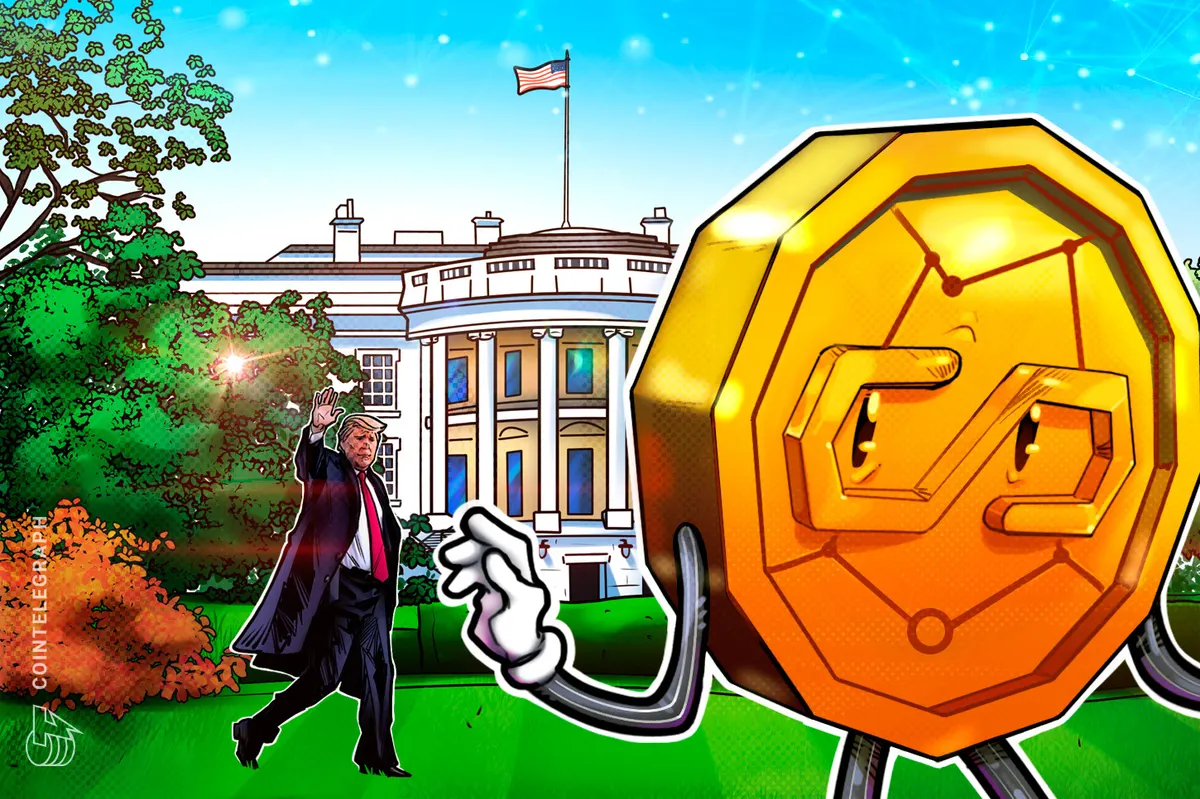
Who will write America's crypto rules next year? Four people President Donald Trump named on 12 November, if the Senate confirms them in time. Trump nominated Republican Steven Levine to replace Hester Peirce, one of the Securities and Exchange Commission's most prominent crypto advocates, along with Democrat Kristin Johnson for the SEC and Republican Nathan Anonick and Democrat Matthew Rowland for the Commodity Futures Trading Commission, Cointelegraph reported.
The timing is the story. The SEC has only two of its five commissioner seats filled, the CFTC's chairman Michael Selig is the sole member of his five seat commission, and Democrats take control of the Senate in January after their midterm election gains. Republicans have a narrow window to confirm the picks. For Asian exchanges, token issuers and investors, the composition of these two agencies decides whether the US remains open to the products they build and sell.
The nominees and what they signal
The most closely watched seat is Peirce's. As head of the SEC's Crypto Task Force, she was a leading advocate for clearer crypto rules and helped shape the agency's approach to digital assets before she left in October. Levine's views on crypto regulation are less publicly established, Cointelegraph noted, so the market will look to his confirmation hearing for clues.
Johnson brings a different perspective. A former CFTC commissioner, she has advocated stronger customer protections and conflict of interest rules for crypto firms, and her nomination to the SEC as a Democrat reflects the convention that commissions include members of both parties. At the CFTC, Anonick and Rowland both worked on the Clarity Act, the crypto market structure bill, and Selig called them "two strong bipartisan picks".
The mix suggests a bipartisan package designed to pass quickly. SEC nominees go to the Senate Banking Committee and CFTC nominees to the Senate Agriculture Committee, before a majority vote of the full Senate, a process that must be completed before the new Senate sits if Republicans want to control it.
The CFTC seats matter more than they used to. The agency oversees derivatives, and its remit now reaches crypto derivatives and the fast growing prediction markets, where platforms such as Kalshi have expanded and state authorities have pushed back, with Louisiana suing Kalshi, Robinhood and others in November, The Block reported. A commission with a single member has been making those calls alone.
Why the empty seats matter
Both agencies are running with very few commissioners. An SEC with two of five seats filled and a CFTC with a single commissioner can still act, but decisions made by so few people are easier to challenge and to reverse. That fragility matters because much of the current crypto rulebook has come from agency action rather than law.
The clearest example is the SEC's innovation exemption, unveiled in September after the Clarity Act failed to advance in the Senate, Decrypt reported. The exemption underpins new products such as the tokenised stock venue run by OKX and NYSE owner Intercontinental Exchange, which opens on 23 November. A future commission with a different balance could narrow or withdraw such exemptions.
Much of America's crypto rulebook now rests on decisions by a handful of commissioners. Whoever fills these four seats decides how durable those decisions are.
Other recent steps rest on similar foundations. DTCC's tokenisation service, which went live in October, operates under an SEC no action letter that limits it to highly liquid assets such as Russell 1000 stocks, major index ETFs and US Treasuries, Decrypt reported. No action letters and exemptions can be revisited by a future commission far more easily than a statute can be repealed.

Why Asia should care
US crypto policy travels. Exchanges and token issuers based in Asia often design products with the US market in mind, and US rules on stablecoins, tokenised securities and exchange registration shape what global firms offer everywhere. The OKX and ICE venue, DTCC's plans to tokenise securities on public blockchains, and the growth of dollar stablecoins all depend on US regulators, as we described in our reports on tokenised stocks going global and the stablecoin market's 16 billion dollar shrinkage.
US decisions also ripple into Asia in other ways. A more open SEC makes it easier for global platforms to launch products such as tokenised stocks, while tighter US enforcement on sanctions and money laundering puts more pressure on offshore platforms that serve Asian users. South Korea's new freedom for exchanges to freeze withdrawals on hacking threats, which we covered in our report on Korea's exchange security rules, shows regional regulators moving in their own direction at the same time.
Asia's financial centres are writing their own rules in parallel. Hong Kong plans a new licensing regime for virtual asset trading, custody, advisory and management through amendment bills to be submitted to its Legislative Council this year, Cointelegraph Magazine reported, and Singapore and Thailand have tightened their own regimes. For firms operating across the region, a predictable US framework would reduce the risk of building products that one major market later rejects.
What happens next
The next steps are hearings and votes, on a tight timetable. What to watch:
- whether the Senate Banking and Agriculture committees schedule hearings before the year end
- Levine's stated views on crypto, tokenisation and the innovation exemption
- whether Johnson's nomination wins bipartisan support as part of a package
- whether the CFTC, now run by one commissioner, gains a full bench to handle crypto derivatives and prediction markets
- how Democrats approach crypto rules once they control the Senate in January
The market's biggest worry is durability. A crypto framework built on agency exemptions and a thinly staffed commission is only as stable as the next set of appointments, and these four nominations will decide how stable that is for at least the next few years.
Who did Trump nominate to the SEC?
Republican Steven Levine, to replace Hester Peirce, and Democrat Kristin Johnson, for Caroline Crenshaw's seat.
Who did Trump nominate to the CFTC?
Republican Nathan Anonick and Democrat Matthew Rowland.
Who is Hester Peirce?
A former SEC commissioner and head of its Crypto Task Force, seen as one of the agency's leading crypto advocates. She left in October 2026.
What are Steven Levine's views on crypto?
They are less publicly established than Peirce's, according to Cointelegraph.
What is Kristin Johnson's record?
As a CFTC commissioner, she advocated stronger customer protections and conflict of interest rules for crypto firms.
How many SEC commissioners are there now?
Two of five seats are filled.
How many CFTC commissioners are there?
Only one, chairman Michael Selig, on a five seat commission.
When do Democrats take control of the Senate?
In January 2027, after the midterm elections.
Do the nominees need Senate confirmation?
Yes. SEC nominees go to the Senate Banking Committee and CFTC nominees to the Senate Agriculture Committee, then to a full Senate vote.
What is the SEC's innovation exemption?
A framework unveiled in September 2026 that lets firms develop products such as tokenised securities under relaxed rules.
What is the Clarity Act?
A US crypto market structure bill. It failed to advance in the Senate, which led the SEC to rely on exemptions instead.
Why do US regulators matter for Asian crypto firms?
US rules shape what global exchanges and issuers can offer, and US enforcement affects offshore platforms serving Asian users.
Could the new commissioners reverse pro crypto rules?
Rules adopted by agency action can be narrowed or withdrawn by future commissions, which is why the balance of appointees matters.
When do the terms run to?
Levine's proposed term ends on 5 June 2030 and Johnson's on 5 June 2029.
What does the CFTC regulate?
Derivatives markets in the US, including crypto derivatives and prediction markets.
Is Hong Kong changing its crypto rules?
Hong Kong plans a new licensing regime for virtual asset trading, custody, advisory and management, with amendment bills going to its Legislative Council this year.
Why does the timing of the nominations matter?
Democrats take control of the Senate in January, so Republicans have only a few weeks to confirm the nominees on their own terms.
What is a no action letter?
A statement from a regulator's staff that it will not recommend enforcement over a specific activity if stated conditions are met.
Trump's four nominations are an attempt to lock in a functioning, bipartisan SEC and CFTC before Democrats take the Senate. For the crypto industry, the details matter more than the party labels: Peirce's departure removes the agency's most visible crypto advocate, and much of the current rulebook rests on exemptions that a future commission could revisit. For Asian investors and firms that depend on access to US markets, the confirmation hearings over the coming weeks are worth watching as closely as any price chart.
Talk to the SpinDepth deskYou've finished this story
Read on, send it to someone, or ask about it.