How much have Indonesia's billionaires lost this year? Almost 57 billion dollars, among just five of the richest families. Their combined net worth fell from 128.15 billion dollars on 27 January, the day MSCI warned that Indonesia's stock market could be reclassified, to 71.57 billion dollars on 22 October, according to Bloomberg data reported by VnExpress. Indonesia's benchmark index has plunged 38 percent this year, one of the worst performances in the world.
The losses tell the story of a market that has been punished for its structure. Index providers worry about concentrated ownership, thin free floats and trading irregularities, and the richest families own large stakes in many of the biggest listed companies. As foreign funds braced for a downgrade, those stakes lost value fastest. The decline has wiped out all of the gains these families made between 2022 and 2025.
Who lost the most
Barito Pacific founder Prajogo Pangestu, the petrochemical and energy tycoon, lost more than 60 percent of his wealth during the period, though he remains Indonesia's second richest person with a net worth of about 15 billion dollars. His companies were among the market's highest flyers in recent years, which made them especially vulnerable when sentiment turned.
Robert Budi Hartono, who controls cigarette maker Djarum Group and holds a major stake in Bank Central Asia, saw his net worth fall 31 percent, from 17.9 billion dollars to 12.4 billion dollars. The rest of the Hartono family lost about 5 billion dollars, bringing the family's combined wealth down to 23.61 billion dollars.
Singapore born coal billionaire Low Tuck Kwong's fortune more than halved to roughly 10.5 billion dollars. He and his daughter earlier in October sold a 30.25 percent stake in his flagship mining company, Bayan Resources, at a discount of more than 80 percent, local media reported. Instant noodle tycoon Anthoni Salim lost 4.7 billion dollars, and Tahir of Mayapada Group lost 3.4 billion dollars.
The scale of the losses also reflects how much of these fortunes was tied to share prices rather than cash. Billionaire rankings value listed stakes at market prices, so a fall in thinly traded shares can erase billions on paper in days, even if the underlying businesses keep operating normally.
Why MSCI matters so much
MSCI's indexes are tracked by trillions of dollars of global funds. When MSCI warned on 27 January that Indonesia could be reclassified, investors began to price in the possibility that index tracking funds would have to sell Indonesian shares. In mid October, about a week before the 22 October data point, MSCI said a more severe than expected downgrade was possible, deepening the selloff.
A downgrade from emerging market status would mean Indonesian stocks drop out of the benchmarks many large funds follow, forcing passive investors to sell and making active managers less likely to hold them. For a market already struggling with liquidity, that is a serious threat. We covered the risk in detail in our report on Indonesia's MSCI standalone downgrade risk and stock crash.
MSCI's concerns centre on how investable the market really is: how many shares are freely tradable, how transparent ownership is, and whether trading is fair. Those questions point directly at the large family groups whose listed companies dominate the index, which is why their fortunes have been hit hardest.
Indonesia's billionaires built paper fortunes on thinly traded shares. MSCI's warning asked a simple question, who else can actually buy these stocks, and the market answered.
The regulator's crackdown
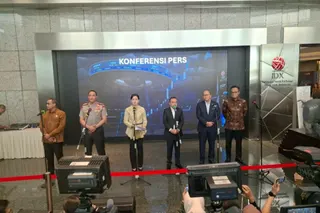
Shortly after MSCI's latest warning, Indonesia's financial regulator announced record fines totalling 2.1 trillion rupiah, about 116.7 million dollars, linked to trading in three listed firms, two of which are linked to Prajogo, The Business Times reported. The move was widely seen as an attempt to show index providers that Indonesia is serious about market integrity.
We covered those fines in our report on record penalties linked to trading in Sinar Mas and Prajogo linked stocks. Authorities have also tried to support the market through state investment, including stock purchases by sovereign wealth fund Danantara.
The crackdown creates a dilemma. Enforcement builds credibility with MSCI and foreign investors over time, but in the short term it can add to selling pressure on the very stocks that dominate the index. Regulators are trying to walk that line while the downgrade decision looms.

Who is Indonesia's richest person now?
Sukanto Tanoto, whose wealth is largely tied to privately held Royal Golden Eagle, is currently Indonesia's richest person with a net worth of 21 billion dollars, according to Bloomberg, which compiled the rankings. His wealth shrank by a more moderate 2 billion dollars, and he was excluded from the tally of listed company owners because his fortune is mostly private. His conglomerate has extensive timber and palm oil operations and produces household goods. The tycoons behind the losses include:
- Prajogo Pangestu of Barito Pacific, down more than 60 percent
- Robert Budi Hartono of Djarum and BCA, down 31 percent
- Low Tuck Kwong of Bayan Resources, fortune more than halved
- Anthoni Salim of the Salim Group, down 4.7 billion dollars
- Tahir of Mayapada Group, down 3.4 billion dollars
The contrast is telling. A fortune built on private companies has held up far better than those tied to listed shares, because private assets are not marked to market every day. That gap may encourage some families to think twice about listing more of their businesses until confidence returns.
Before this year, the group's combined wealth had nearly doubled from 76.47 billion dollars in 2022 to 134.72 billion dollars at the end of 2025, according to Bloomberg. The 2026 decline has erased all of those gains in less than ten months.
What it means for investors and Indonesia
For foreign investors, the losses reflect both risk and opportunity. Some analysts see Indonesian blue chips as cheap after a 38 percent fall, and BCA was among the shares cited as attractive buys when the market plunged. Others warn that a formal downgrade could trigger another wave of forced selling.
For Indonesia, the episode is a test of whether it can reform its market fast enough to keep its emerging market status. Measures to increase free float, improve disclosure and punish manipulation will matter more than any rebound in billionaire wealth. The country's economy is still growing around 5 percent, but its stock market will need structural change to win back global funds.
Another warning sign for markets is the discounted share sales. Low Tuck Kwong's sale of a large Bayan Resources stake at a steep discount, as reported by local media, highlighted how wide the gap can be between quoted prices and what buyers will actually pay for large blocks of shares in Indonesian companies.

How much have Indonesian billionaires lost in 2026?
Five of the richest tycoons and their families lost almost 57 billion dollars between 27 January and 22 October, according to Bloomberg data.
Why are Indonesian billionaires losing money?
Indonesian stocks fell 38 percent after MSCI warned the market could be downgraded from emerging market status.
How much has Prajogo Pangestu lost?
More than 60 percent of his wealth. He is still Indonesia's second richest person with about 15 billion dollars.
What is Robert Budi Hartono's net worth?
About 12.4 billion dollars, down 31 percent from 17.9 billion dollars.
How much has Low Tuck Kwong lost?
His fortune more than halved to about 10.5 billion dollars.
Did Low Tuck Kwong sell Bayan Resources shares?
He and his daughter sold a 30.25 percent stake in Bayan Resources at a discount of over 80 percent, local media reported.
Who is the richest person in Indonesia?
Sukanto Tanoto, with a net worth of 21 billion dollars, according to Bloomberg.
How much has the Jakarta Composite Index fallen?
The benchmark index has fallen 38 percent in 2026.
When did MSCI warn about Indonesia?
On 27 January 2026, with a further warning in mid October that a more severe downgrade was possible.
What would an MSCI downgrade mean?
Index tracking funds would sell Indonesian stocks, reducing foreign investment and liquidity.
What fines did Indonesia's regulator impose?
Record fines of 2.1 trillion rupiah linked to trading in three listed firms, two linked to Prajogo.
How much did Anthoni Salim lose?
About 4.7 billion dollars.
Why did Sukanto Tanoto lose less?
His fortune is largely tied to privately held Royal Golden Eagle, which is not valued daily on the stock market.
Have Indonesian billionaires lost all their recent gains?
Yes. Their combined wealth had risen to 134.72 billion dollars by end 2025, and the 2026 losses erased those gains.
Are Indonesian stocks cheap now?
Some analysts see value after the fall, but a formal downgrade could trigger further forced selling.
Indonesia's richest tycoons have lost almost 57 billion dollars this year as MSCI downgrade fears sent the stock market down 38 percent. The losses expose the structural issues index providers are worried about, from concentrated ownership to thin trading. Reform, not a quick rebound, will decide whether Indonesia keeps its place in global portfolios.
Talk to the SpinDepth deskYou've finished this story
Read on, send it to someone, or ask about it.