 Media & Reputation
 Football
 Culture
 Experiences
 Advertising
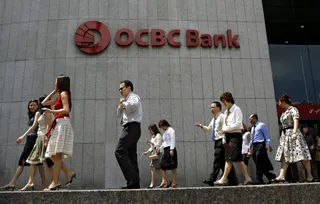
Should you let an AI agent run your bank account? Singapore's three biggest banks say no, at least for now. DBS, OCBC and UOB are all warning customers against giving third party AI agents access to their accounts, The Business Times reported on 12 November, as banks around the world struggle with a question the law has not yet answered: when a bot moves money its owner did not intend to move, who pays?
The banks say they have not yet seen customers using such agents in Singapore. But their chief executives clearly expect it, and their answers differ in revealing ways. OCBC has shut the door, UOB has fenced the problem off, and DBS is trying to work out how to open the door safely. For customers, the practical message from all three is the same: do not hand your login details to a bot.
What each bank said
DBS chief executive Tan Su Shan framed the problem as a contract question. "Every bank now has to look at their terms and conditions to see whether a third-party AI agent used by a first-party client should be considered a first party or third party," she said at the bank's third quarter results briefing. DBS actively discourages customers from sharing credentials with agents, she said, "because you just don't know how and what (the third-party agents) are going to do with these credentials."
OCBC was the bluntest. Group chief executive Tan Teck Long said the bank will not allow third party agents to interact with it, for example to transfer money out autonomously. UOB's group chief financial officer Leong Yung Chee said the use of AI agents by customers is effectively ring fenced at the bank.
DBS is the only one of the three openly preparing for a different future. Tan said it is "sooner or later" that customers will use agents, so the bank is studying how to allow third party agents for some lower risk transactions safely. Her other line was about defence: "You cannot have humans against AI. You must fight AI with AI."
Why banks are afraid of other people's bots
The core fear is that an AI agent is built to pursue a goal, not to follow a script. Cheryl Seah of law firm Drew & Napier told The Business Times that an agent can decide what steps to take to reach a goal, even if those steps are not what the customer intended. Because agents log in with the customer's own credentials, they also look like the customer, which makes it hard to tell a legitimate bot from a malicious one, PwC Singapore's Yura Mahindroo said.
Speed makes it worse. A compromised or badly instructed agent can execute many transactions before the customer or the bank notices. That changes the liability question, Mahindroo said: it will no longer be enough to ask whether the customer authenticated a transaction, but "whether each subsequent action was specifically intended and authorised by that customer."
In the United States, banks have already acted. Major US banks have been blocking third party agents from operating inside customer accounts, Reuters reported via CNA in October, after reports that some agents took actions that appeared independent of user instructions. Morgan Stanley has blocked them, JPMorgan's Jamie Dimon said the bank would not allow "just any outside agent" in, and Charles Schwab said it was blocking unauthorised agents.
The bank's answer to who pays may already be written in the terms you clicked through. If the rules say no agents, a customer who uses one may be the one left holding the loss.
Who pays when an agent goes wrong
This is where customers should pay attention. Drew & Napier's Seah said that if a bank's stance is to ban AI agents, a customer who uses one could be said to have breached the terms of use, and the bank would not be liable. If a bank chooses to allow agents, it must put controls in place, such as extra authentication before significant actions. In the US, a banking industry source told Reuters that transactions cannot be deemed unauthorised if the customer shared the credentials.
Other parties complicate it further. Joyce Lee of Withers KhattarWong said questions will arise about the AI provider's responsibility, the permissions the customer gave the agent and the circumstances in which it departed from instructions, which makes audit trails crucial, because proving that valid credentials were used may no longer settle the matter.
For now, the safest assumptions for a customer in Singapore are these:
- sharing your banking password or one time codes with an agent may put the loss on you
- the bank's terms and conditions, not the AI provider's, decide what is allowed
- agents acting through official bank channels are different from agents using your login
- if you want to experiment, use a separate account with a small balance
- report any transaction you did not intend immediately, whatever caused it
The regulator is building the rules
The Monetary Authority of Singapore has moved on two fronts. In July it published, with banks and fintech firms, an industry white paper called Safeguards for Agentic Finance at Runtime, a framework for AI agents to carry out financial tasks safely, the MAS said. The Business Times described it as including checkpoints to verify and record an agent's proposed actions before they are executed.
In October, the MAS issued AI risk management guidelines that take effect on 7 October 2027 and make institutions accountable for third party AI used in their services, The Business Times reported. The regulator said it intends to consult the industry in 2027 on what additional guidance on agentic AI would be useful. That means the specific rules for customer owned agents are still at least a year away.

Blocking will not last
Analysts expect the current stance to soften. "Agentic banking will arrive whether individual banks welcome it or not," Forrester's Meng Liu said, adding that "the winning model will be controlled delegation, not blanket blocking." He expects banks to need identifiable agents, explicit and revocable customer mandates, and records of what each agent was told to do. Forrester expects agents to be involved in about a third of business to business payments in 2026, where approval rules already exist.
EY's Nitin Datta put the challenge in commercial terms: the question is how quickly banks can build an authorised route for agents "so customers do not default to the unauthorised one." Singapore's banks already run their own agents through official channels, and payment networks are building dedicated rails for agent transactions, as we noted in our report on Visa's agentic commerce hub in Singapore. Business banking is moving first, as seen in Airwallex's agent ready business accounts.
Do Singapore banks allow AI agents to access accounts?
Not third party ones. OCBC will not allow them, UOB has ring fenced their use and DBS discourages customers from sharing credentials with them.
What did DBS's CEO say about AI agents?
Tan Su Shan said banks must decide whether a customer's AI agent counts as a first or third party, and that DBS must fight AI with AI.
Is DBS planning to allow AI agents?
It is studying how to allow third party agents for some lower risk transactions in a safe way.
What did OCBC say?
Its CEO Tan Teck Long said OCBC will not allow third party agents to interact with the bank, such as transferring money out autonomously.
What did UOB say?
Its group CFO Leong Yung Chee said customer use of AI agents is effectively ring fenced.
Who is liable if an AI agent makes an unauthorised transfer?
It is unsettled. A lawyer said that if a bank bans agents, a customer who uses one may have breached the terms, leaving the bank not liable.
Can I give my banking password to an AI agent?
The banks advise against it. Sharing credentials may weaken your claim that a transaction was unauthorised.
Are US banks blocking AI agents?
Yes. Reuters reported in October that major US banks have been blocking third party agents, including Morgan Stanley.
What is MAS's SAFR framework?
Safeguards for Agentic Finance at Runtime, an industry white paper published in July 2026 on how AI agents can carry out financial tasks safely.
When do MAS's AI risk guidelines take effect?
On 7 October 2027, with some sections due by 7 October 2028.
Will MAS issue rules on AI agents?
The MAS said it intends to consult the industry in 2027 on additional guidance for agentic AI.
Why are AI agents risky for banks?
They act toward goals rather than fixed instructions, use the customer's credentials and can make many transactions quickly.
Will banks eventually allow AI agents?
Analysts expect a shift to controlled delegation, with identified agents, revocable mandates and audit records.
Are banks using AI agents themselves?
Yes. Singapore banks deploy their own agents through authorised channels, an EY adviser said.
Singapore's banks have drawn a clear line for now: their own AI is welcome, yours is not. That protects customers from rogue bots, but it also shifts risk onto anyone who ignores the warning, because the terms of service may decide who pays. The real test comes when customers start using agents anyway, and the bank that builds the first safe, official route for them will set the standard for the region.
Talk to the SpinDepth deskYou've finished this story
Read on, send it to someone, or ask about it.