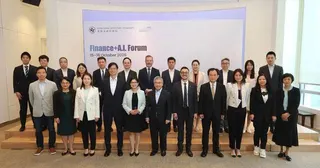

Is HSBC investing in AI? Heavily, and now in two Asian hubs. HSBC is setting up an AI and emerging technology institute in Hong Kong, following a similar launch in Singapore earlier this year, chief executive Georges Elhedery said at Hong Kong Fintech Week on Monday 2 November, according to Reuters reporting published by CNA. The bank aims to open it in the first quarter of 2027, with the Hong Kong University of Science and Technology as its anchor academic partner.
Elhedery did not sugar coat what AI means for bank employees. "AI is going to be disruptive. It's going to transform jobs," he said. The announcement comes as banks around the world cut thousands of roles in AI driven overhauls, and as Hong Kong's de facto central bank moves to set rules for AI agents that can act on customers' behalf. For anyone working in finance in Hong Kong or Singapore, the direction of travel is clear.
What HSBC is building
The Hong Kong institute will focus on AI and emerging technologies, working with HKUST, Elhedery said, although he did not disclose how many people it would employ. The bank plans to move the centre to Hong Kong's Northern Metropolis, a mega development bordering mainland China, as soon as its site there is ready.
The move mirrors HSBC's Singapore launch earlier this year, giving the bank AI hubs in both of Asia's leading financial centres. HSBC earns a large share of its profits in Asia and has made Hong Kong central to its strategy, so investing in AI capabilities there signals where it expects future growth and efficiency gains.
HSBC is one of Hong Kong's largest private sector employers, with 28,000 local staff, and it is rolling out AI training for its entire global workforce of roughly 200,000 people. That is a recognition that AI will change how almost every role in the bank works, from customer service to compliance and risk.
The choice of HKUST as anchor partner gives HSBC access to one of Asia's strongest engineering and computer science schools, and a pipeline of graduates. Partnerships between banks and universities have become common as financial firms compete with technology companies for scarce AI talent in both Hong Kong and Singapore.
Why banks say AI will transform jobs
The investment comes as banks globally cut staff because of AI driven overhauls. Lenders such as Citi, Standard Chartered and Barclays have unveiled plans this year to cut thousands of jobs, according to Reuters. AI tools can now handle tasks such as drafting documents, checking transactions, answering customer queries and writing code, which used to require large teams.
Elhedery's comment that AI will "transform jobs" is a careful phrase. Some roles will disappear, others will change, and new ones will be created around building, supervising and auditing AI systems. Training 200,000 staff is HSBC's attempt to move employees into the second and third groups rather than the first.
The job impact is already visible in Asia's financial centres. Singapore's latest labour data show retrenchments at their highest since the pandemic, concentrated in financial services and information and communications, as covered in our report on Singapore's 4,800 third quarter layoffs. Economists there describe a "low hire, low quit" market as AI tools spread.
Banks are building AI institutes and cutting jobs at the same time. That is not a contradiction, it is the same strategy seen from two sides.
The HKMA's Project SAGE for AI agents
Hong Kong's regulator is moving in parallel. About 80 percent of banks in Hong Kong are already adopting AI or generative AI, Hong Kong Monetary Authority chief executive Eddie Yue told the conference. He announced Project SAGE, which will support the use of AI agents in finance while setting guardrails to manage risks.
AI agents are software systems that can carry out tasks on their own, such as making payments, moving money between accounts or negotiating on a customer's behalf. They promise convenience but raise hard questions about who is responsible when something goes wrong. The HKMA will create a cross sector expert panel to test AI agent applications and how different systems work together.
Yue said the regulator would also seek views on governance, accountability, a central register of trusted agents and a possible "know your agent" standard, an echo of the "know your customer" rules banks already follow. "Innovation and risk management must go hand in hand," he said.
Hong Kong is not alone in worrying about AI agents. Regulators globally are asking how existing rules on fraud, consumer protection and anti money laundering apply when software rather than a person initiates a transaction. A clear framework could give Hong Kong an edge in attracting firms that want to deploy agents safely.

Tokens, stablecoins and the race between Hong Kong and Singapore
The HKMA will also expand trials of tokenised Exchange Fund Bills and examine whether regulated stablecoins can serve as a payment method, Yue said. Hong Kong has been building a regulatory framework for stablecoins and tokenised assets, part of its effort to stay competitive with Singapore as a hub for digital finance. The main elements of Hong Kong's AI and digital finance push include:
- HSBC's AI and emerging technology institute, opening in 2027
- Project SAGE to test and govern AI agents in finance
- A possible register of trusted agents and know your agent standard
- Wider trials of tokenised Exchange Fund Bills
- A review of regulated stablecoins as a payment method
Singapore has pursued similar goals through its own AI programmes and digital asset rules, and HSBC's decision to build institutes in both cities shows that the bank sees value in each. Hong Kong also recently strengthened its role in offshore yuan markets, as covered in our report on the HKMA's 12 primary liquidity providers for offshore yuan.
For global banks, operating in both hubs is a hedge. Hong Kong offers proximity to mainland China and its capital flows, while Singapore offers a gateway to Southeast Asia, and both are competing to set the rules for AI and tokenised finance in the region.
What it means for bank workers and customers
For bank employees in Hong Kong and Singapore, the message is to build skills that complement AI rather than compete with it, such as judgement, client relationships, oversight of automated systems and knowledge of regulation. Banks that are training staff at scale will expect them to use these tools daily.
For customers, AI agents and tokenised assets could make banking faster and cheaper, but they also bring new risks, from errors made by automated systems to fraud that exploits them. Rules such as a know your agent standard will matter for keeping trust as more financial decisions are delegated to software.

Is HSBC opening an AI institute in Hong Kong?
Yes. HSBC plans to launch an AI and emerging technology institute in Hong Kong in the first quarter of 2027.
Does HSBC have an AI institute in Singapore?
Yes. HSBC launched a similar institute in Singapore earlier in 2026.
Who is HSBC's academic partner in Hong Kong?
The Hong Kong University of Science and Technology.
Where will the HSBC AI institute be located?
It will move to Hong Kong's Northern Metropolis once its site there is ready.
How many staff will the institute employ?
HSBC did not disclose headcount details.
How many people does HSBC employ?
About 200,000 globally, including 28,000 in Hong Kong.
What did HSBC's CEO say about AI and jobs?
Georges Elhedery said AI is going to be disruptive and will transform jobs.
Which banks are cutting jobs because of AI?
Citi, Standard Chartered and Barclays have announced plans this year to cut thousands of jobs.
How many Hong Kong banks use AI?
About 80 percent are already adopting AI or generative AI, according to the HKMA.
What is Project SAGE?
An HKMA initiative to support AI agents in finance while setting guardrails to manage risks.
What is a know your agent standard?
A possible rule, under HKMA consultation, for identifying and verifying AI agents acting in finance.
What are AI agents in banking?
Software that can carry out tasks on its own, such as making payments or managing accounts for a customer.
Is the HKMA testing stablecoin payments?
It will examine whether regulated stablecoins can serve as a payment method.
What are tokenised Exchange Fund Bills?
Digital token versions of Hong Kong government debt bills, which the HKMA will trial more widely.
Will AI replace bank jobs in Asia?
Banks expect some roles to disappear and others to change, which is why they are retraining staff.
HSBC's new Hong Kong AI institute, following its Singapore launch, shows how seriously global banks are betting on AI, even as they warn it will transform jobs. With the HKMA writing rules for AI agents through Project SAGE, Asia's two financial hubs are racing to lead AI in finance, and their workforces are being reshaped in the process.
Talk to the SpinDepth deskYou've finished this story
Read on, send it to someone, or ask about it.