Are layoffs rising in Singapore? Yes, and faster than at any time since the pandemic. Singapore recorded about 4,800 retrenchments between July and September 2026, up 3.9 percent from 4,620 in the previous quarter and the highest since late 2020, according to preliminary Ministry of Manpower data reported by The Straits Times via The Star. The cuts were concentrated in information and communications, financial services and manufacturing.
The puzzle is that Singapore is still adding jobs. Total employment grew by 27,700 in the quarter, more than double the previous quarter's gain. But the jobs being created and the jobs being lost are not the same jobs, and resident unemployment has crept up to 3 percent. For white collar workers in tech and finance, the market feels much tougher than the headline unemployment rate of 2 percent suggests.
Where the cuts are happening
The services sector accounted for more than 80 percent of the layoffs, the data showed. Retrenchments were elevated in outward oriented sectors, namely information and communications, financial services and manufacturing, and were mainly driven by business reorganisation, the ministry said. These are industries exposed to global demand, trade tensions and the rapid spread of automation.
The 4,800 figure is the highest since the fourth quarter of 2020, when 5,640 workers were laid off as Covid shut borders and businesses. After 2020, retrenchments fell as foreign workers left and the labour market tightened. That tight market has now loosened, with the second quarter figure itself revised up to 4,620 from an earlier estimate of 4,500.
The incidence of retrenchment held at 2.0 for every 1,000 employees, unchanged from the previous quarter, according to Vulcan Post. That suggests the rise in absolute numbers partly reflects a larger workforce, but the direction is clear: more firms are restructuring.
The concentration in outward oriented industries matters because these sectors pay some of the highest salaries in Singapore. Information and communications and financial services employ large numbers of mid career professionals, many of them in regional roles that can be moved to cheaper locations or reorganised when global demand softens. When those roles go, the people affected often face a long search for comparable pay.
Why hiring and firing are rising together
Total employment rose by 27,700 in the third quarter, up from 11,400 in the second quarter and 25,100 a year earlier, extending growth to a 20th consecutive quarter. But growth was led by non residents in construction and manufacturing, while resident employment growth came mainly from essential and public services, such as healthcare and education.
That split explains the paradox. Singapore is building, caring and teaching, sectors that need workers, while banks, tech firms and some manufacturers are reorganising and cutting roles. A laid off software engineer or bank analyst cannot easily move into construction or nursing, which is why resident and citizen unemployment rose even as total jobs grew.
Maybank economist Chua Hak Bin said Singapore's labour market is in a "low hire, low quit" mode, which is "likely to persist given the broadening adoption of AI tools". The technology may be reducing demand for workers in professional services, where the job market remains subdued, he said.
Singapore is not losing jobs, it is swapping them. The pain falls on mid career professionals whose roles are being reorganised away faster than new ones appear.
What employers expect next
Forward looking indicators were mixed in September. The share of firms expecting to hire in the next three months jumped to 42.3 percent from 30.5 percent in August, and the share expecting to raise wages rose to 19.9 percent from 16.9 percent. Both figures remained below July's levels, which the ministry said suggested employers remained cautious amid economic uncertainty.
At the same time, 3.1 percent of firms said they expected to retrench in the next three months, up from 2.8 percent in August. "This increase, alongside higher actual retrenchments, points to emerging weaknesses in parts of the labour market that warrant close monitoring, even as the overall market continued to expand," the ministry said.
Job postings tell a similar mixed story. Recruitment platform Jobstreet by SEEK said postings on its Singapore platform rose 8 percent in July to September from the previous quarter, with more openings in infocomm technology, electronics, financial services and construction. But "more advertised opportunities do not automatically mean an easier job search", the company said, urging workers to look beyond job titles to where their skills fit.
Employers appear to be hiring and cutting at the same time, reshaping teams rather than simply shrinking them. That pattern fits a market in which companies are adopting new tools, merging functions and moving some roles offshore, while still competing for workers with specific skills. For job seekers, it means openings exist, but often in different fields from the ones they left.
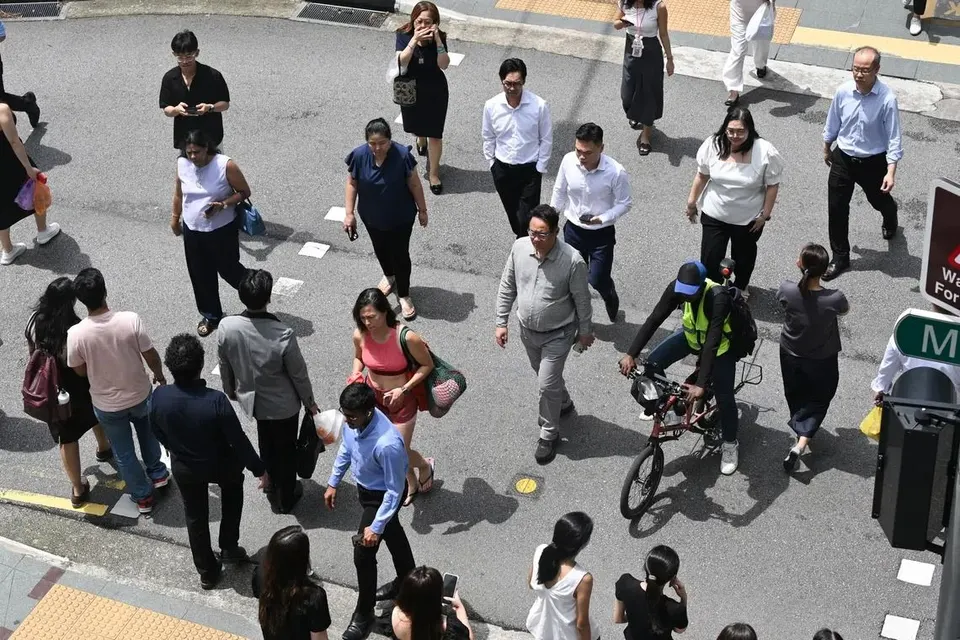
The support available to retrenched workers
The ministry urged companies to invest in their workforce and workers to keep their skills relevant against a more uncertain global outlook and rapid technological change. Singapore offers an extensive set of schemes, though their take up and effectiveness will be tested if layoffs keep rising. The main programmes include:
- Career conversion programmes and the Mid Career Pathways Programme
- The SkillsFuture Workforce Development Grant for employers
- The SkillsFuture Level Up Programme for mid career workers
- Workfare Skills Support for lower wage workers
- SkillsFuture Jobseeker Support for the involuntarily unemployed
- Graduate Industry Traineeships for fresh graduates
Career guidance and job matching are available through the Skills and Workforce Development Agency and NTUC's Employment and Employability Institute. The question is speed: how quickly retrenched workers find new jobs. The ministry will publish fuller third quarter data in mid December, including re entry rates.
For many households the timing is awkward. Prices for essentials remain elevated, as covered in our report on Singapore's core inflation and rising electricity costs, and losing a job in a costly city puts pressure on savings and mortgages.
What it means for Singapore's economy and property
For the wider economy, a rising layoff count in finance and tech is a warning sign for consumer spending and the property market. Singapore's private property market has been strong, as covered in our report on record investment sales and rising private home prices, but sustained job losses among high earners would test that strength.
For policymakers, the data argue for keeping support targeted at mid career professionals, the group most exposed to restructuring and automation. With overall unemployment still at 2 percent, there is no crisis, but the trend in resident unemployment and layoff intentions will be watched closely into 2027.
How many layoffs were there in Singapore in Q3 2026?
About 4,800 workers were retrenched between July and September 2026, according to preliminary Ministry of Manpower data.
Are Singapore layoffs the highest since Covid?
Yes. It is the highest quarterly total since 5,640 in the fourth quarter of 2020.
Which sectors are laying off workers in Singapore?
Information and communications, financial services and manufacturing, with services making up more than 80 percent.
Why are Singapore companies retrenching workers?
The ministry said business reorganisation was the main driver.
What is Singapore's unemployment rate?
The overall rate was 2.0 percent in September 2026. Resident unemployment was 3.0 percent and citizen unemployment 3.1 percent.
Is Singapore still creating jobs?
Yes. Total employment grew by 27,700 in the third quarter, the 20th straight quarter of growth.
Who is getting the new jobs?
Growth was led by non residents in construction and manufacturing, and residents in essential and public services.
Is AI causing layoffs in Singapore?
Maybank economist Chua Hak Bin said broadening AI adoption may be reducing demand for workers in professional services.
Are more Singapore firms planning layoffs?
Yes. 3.1 percent of firms expected to retrench in the next three months, up from 2.8 percent in August.
Are Singapore firms still hiring?
42.3 percent of firms expected to hire in the next three months, up from 30.5 percent in August.
What help is there for retrenched workers in Singapore?
Schemes include SkillsFuture Jobseeker Support, career conversion programmes and the Mid Career Pathways Programme.
What is the retrenchment rate in Singapore?
2.0 retrenchments per 1,000 employees, unchanged from the previous quarter.
When will full Q3 labour data be released?
The Ministry of Manpower will publish its full third quarter report in mid December 2026.
Are job postings rising in Singapore?
Jobstreet by SEEK said postings rose 8 percent in the third quarter from the previous quarter.
What is a low hire, low quit market?
One where companies hire cautiously and workers stay put, making it harder for job seekers to find openings.
Singapore's layoffs are at their highest since the pandemic, concentrated in tech, finance and manufacturing, even as overall employment keeps growing. The real story is a mismatch: new jobs are in construction and public services while mid career professionals bear the cuts. How quickly they find work again will decide whether this is a reshuffle or the start of a slowdown.
Talk to the SpinDepth deskYou've finished this story
Read on, send it to someone, or ask about it.