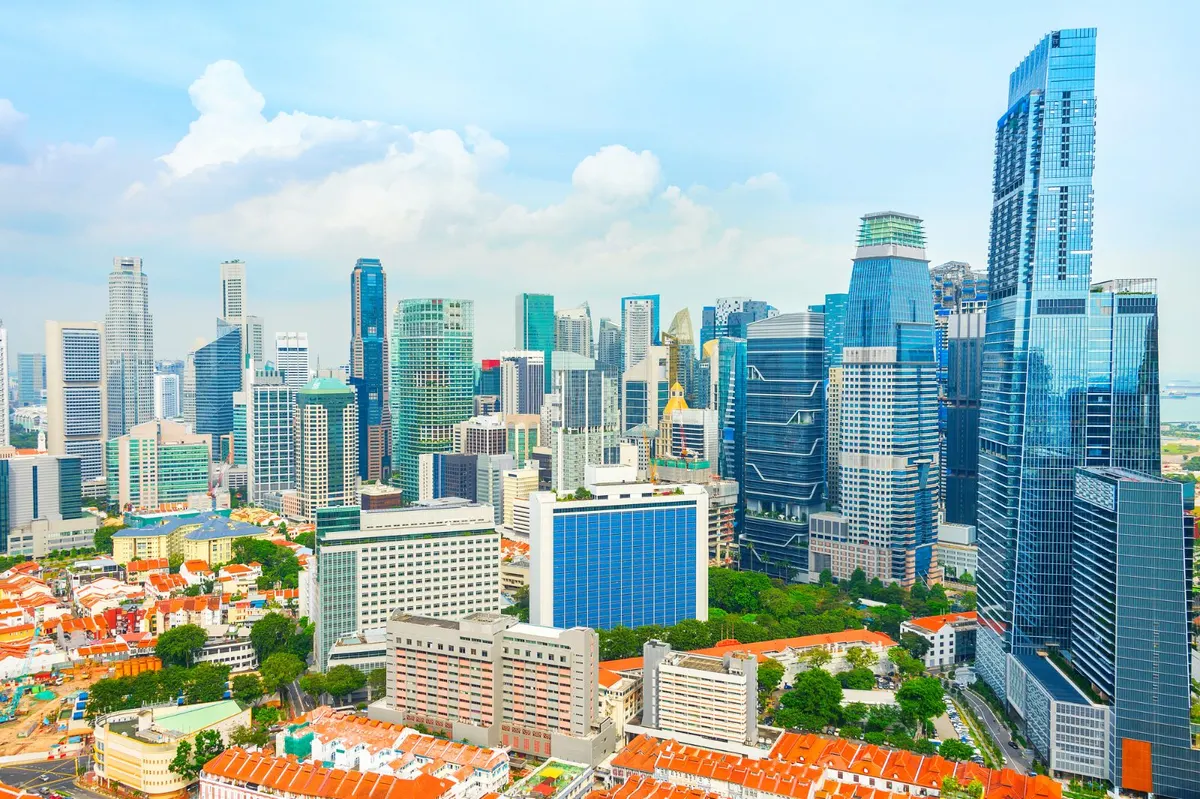
Is Singapore property still booming? For big investors, yes. Property investment sales reached 42.4 billion Singapore dollars in the first nine months of 2026, already above the previous annual record of 40.7 billion dollars set in 2025, according to Knight Frank Singapore research reported by Elite Agent, citing EdgeProp Singapore. Knight Frank expects the full year to reach about 50 billion dollars.
But the picture is very different for buyers of new homes. Sales of new private homes fell by nearly half in the third quarter, as fewer projects launched and prices climbed out of reach for many. Meanwhile, private home prices rose at their fastest pace in almost two years. Record institutional deals, slowing new home sales and rising prices are telling three different stories about the same market, and together they say a lot about where Singapore's wealth is going.
A record year for property investment
Investment sales, which include large deals for residential sites, offices, shops, industrial property and hotels, totalled 10.7 billion dollars in the third quarter. That was down from 16.2 billion dollars in the first quarter and 15.5 billion in the second, but enough to push the nine month total past the previous annual record.
Residential property led the third quarter with 4.3 billion dollars in transactions, overtaking the commercial sector, which had led for three consecutive quarters. Government Land Sales made up a large share of residential activity. Commercial investment sales reached 2 billion dollars, including major acquisitions on Orchard Road, and industrial deals also reached 2 billion dollars, more than double the previous quarter.
Hotels have been a standout. Hotel investment sales totalled 1.5 billion dollars across seven transactions in the first nine months, already exceeding the 957.2 million dollars recorded across nine deals in all of 2025, according to Knight Frank.
Public sector land sales play a bigger role in Singapore than in most property markets. The government controls the supply of residential and commercial sites through its land sales programme, and developers' bids for those sites are counted in investment sales totals. Strong bidding signals that developers expect demand for new homes to recover.
Why deals may rush before year end
Melvin Chay, Knight Frank Singapore's interim head of capital markets, expects transaction momentum to stay healthy through the final quarter, positioning the market for "a new all time record." He pointed to interest rates as a motivation. "As there are expectations of rate hikes leading to increased borrowing costs, parties involved in ongoing negotiations might be motivated to complete their transactions by year end," he said.
Higher borrowing costs matter greatly in property, where most large deals are financed with debt. If buyers expect rates to rise, they have an incentive to lock in deals sooner. That dynamic can make the final months of a year busier than usual, even if the outlook for the following year is more uncertain.
When billions of dollars flow into Singapore property while new home sales halve, it tells you who the market is working for: institutions and the wealthy, not first time buyers.
Singapore's role as a regional wealth hub supports demand. Wealthy families from across Asia hold assets in the city, as we covered in our report on Citi's Singapore wealth findings, and some of that wealth finds its way into property.
Large investors are also drawn by Singapore's stability. Political continuity, a strong legal system and a stable currency make the city a preferred destination for capital from across Asia, particularly when markets elsewhere are volatile. That appeal supports demand for commercial and residential assets even when interest rates rise.

Private home prices accelerate
The Urban Redevelopment Authority's flash estimate showed private home prices rising 1.4 percent quarter on quarter in the third quarter, after 0.5 percent in the second quarter. That was the fastest increase since the fourth quarter of 2024, when prices rose 2.3 percent, according to commentary by CBRE.
Landed homes led the gains, rising 2.8 percent after 2.5 percent in the previous quarter. Among non landed homes, prices in the Outside Central Region, the suburbs, rebounded 2.2 percent, while the Rest of Central Region rose just 0.2 percent and the Core Central Region, the prime districts, dipped 0.1 percent. Over the first nine months, private home prices are up 2.8 percent.
The pattern suggests that demand is strongest for landed homes, which are scarce in land constrained Singapore, and for more affordable suburban condominiums. Prime central properties, often favoured by foreign buyers, have been flatter.
Why new home sales fell by half
New private home sales, excluding executive condominiums, fell to 1,082 units in the third quarter, down 49.5 percent from 2,141 units in the second quarter and down 67 percent from 3,288 a year earlier, CBRE said. Sales in the first nine months totalled 5,236 units, 33.5 percent lower than the same period in 2025.
CBRE attributed the decline to a lack of new launches and the high prices of new projects, with buyers becoming more selective amid global uncertainty and rising interest rates. Some buyers are turning to resale homes as the price gap between new launches and resales widens. The key forces shaping the market include:
- Record institutional and government land deals
- Expectations of higher interest rates
- Scarce landed homes driving price gains
- High prices for new launches slowing sales
- Buyers shifting toward resale properties
Developers have also been cautious about launching projects in an uncertain market. High land costs from government land sales mean new projects must be priced at levels that test buyers' budgets. When developers hold back launches, new sales fall even if underlying demand remains, which is part of why the third quarter figure looks so weak.
What it means for buyers and investors
For home buyers, rising prices and higher expected borrowing costs make affordability a growing concern, especially for first time buyers. Upcoming launches such as Thomson Reserve, with 1,268 units, and Lucerne Grand, with 570 units, could lift sales in the fourth quarter, but take up will depend on pricing, CBRE said. It kept its forecast of 7,500 to 8,500 new home sales in 2026, below the five year average of 8,766 units.
For investors, the record investment sales confirm Singapore's appeal as a safe, liquid property market. CBRE expects private home prices to finish 2026 at the higher end of its 2 to 4 percent forecast. The main risks are interest rates, global economic uncertainty and any new government cooling measures if prices rise too quickly.

How much property investment has Singapore recorded in 2026?
Investment sales reached 42.4 billion Singapore dollars in the first nine months of 2026, a record.
What is the full year forecast?
Knight Frank Singapore expects investment sales of about 50 billion Singapore dollars in 2026.
What was the previous record?
The previous annual record was 40.7 billion Singapore dollars in 2025.
How much did private home prices rise in Q3 2026?
The URA flash estimate showed private home prices up 1.4 percent quarter on quarter, the fastest since late 2024.
Which homes rose most in price?
Landed homes rose 2.8 percent and suburban non landed homes rose 2.2 percent in the third quarter.
Why did new home sales fall?
CBRE cited fewer new launches, high prices and more selective buyers amid uncertainty and rising rates.
How many new homes were sold in Q3 2026?
1,082 new private homes were sold, down 49.5 percent from the second quarter.
What does CBRE forecast for home prices?
CBRE expects private home prices to end 2026 at the higher end of its 2 to 4 percent forecast.
How many new homes will be sold in 2026?
CBRE forecasts 7,500 to 8,500 new home sales in 2026, below the five year average of 8,766.
Why might deals rush before year end?
Knight Frank said expectations of rate hikes may push buyers to complete deals before borrowing costs rise.
How did hotel investment perform?
Hotel investment sales reached 1.5 billion Singapore dollars across seven deals, above all of 2025.
What is the Outside Central Region?
It is the suburban area of Singapore, where non landed home prices rebounded 2.2 percent in the third quarter.
Are prime property prices rising?
Prime Core Central Region non landed prices dipped 0.1 percent in the third quarter.
Which launches could lift sales?
Thomson Reserve, with 1,268 units, and Lucerne Grand, with 570 units, are among anticipated launches.
What are the risks for Singapore property?
Interest rates, global economic uncertainty and possible government cooling measures.
Singapore's property market is setting records for institutional investment while new home sales slump and prices rise. The split shows a market powered by deep pocketed investors and scarce landed homes, while first time buyers face rising costs. With rates expected to climb, the final quarter could decide whether 2026 ends with a S$50 billion record.
Talk to the SpinDepth deskYou've finished this story
Read on, send it to someone, or ask about it.