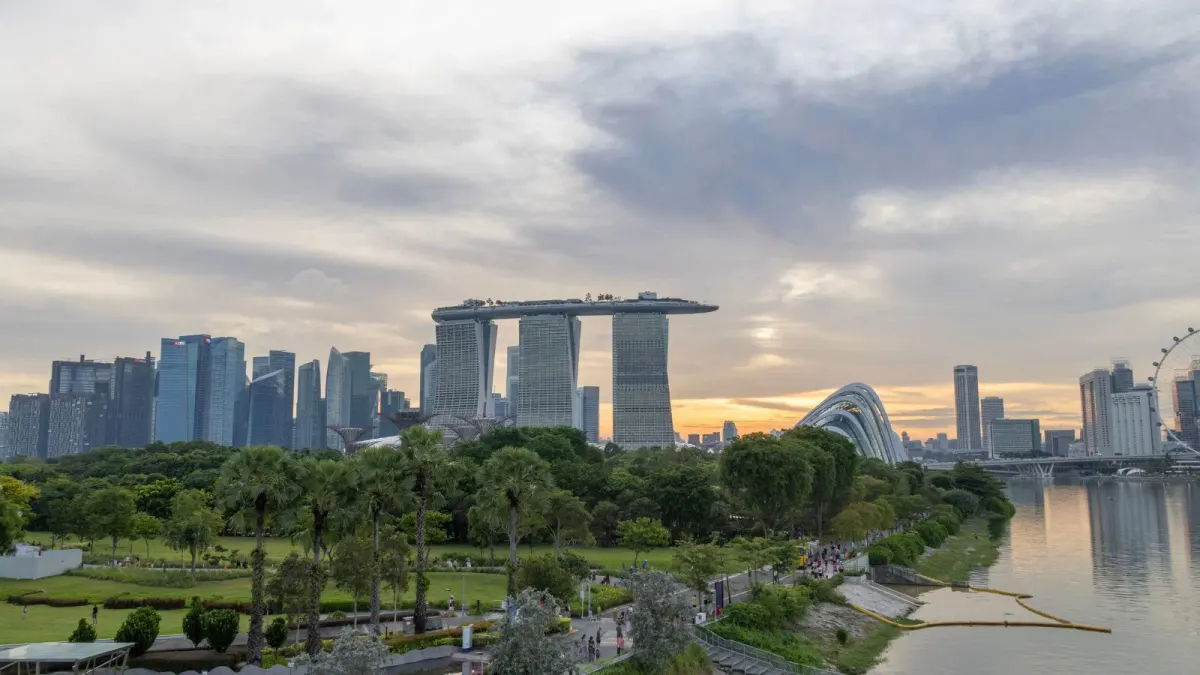
Singapore's economy is still growing strongly, just not as strongly as before. Advance estimates released by the Ministry of Trade and Industry on 14 October showed GDP growth of 5.4 percent year on year in the third quarter, down from 6.2 percent in the second quarter, as reported by The Star. The result beat a consensus forecast of about 5 percent.
The details tell a story of a boom that is maturing. Manufacturing growth roughly halved as the electronics cycle that powered much of the year eased, while construction picked up and trade related services stayed strong. On the same day, the Monetary Authority of Singapore surprised markets by keeping its policy settings unchanged, citing expectations that the AI driven cycle will cool.
A strong quarter, slowing at the margin
Growth of 5.4 percent is robust for a mature, high income economy, and the figure exceeded expectations. But it was the weakest annual pace since the third quarter of 2025, according to Trading Economics. On a seasonally adjusted quarter on quarter basis, the economy grew 1.1 percent, slower than the 1.5 percent recorded in the second quarter.
The slowdown was expected. Singapore's growth this year has been driven heavily by global demand for electronics and equipment linked to AI infrastructure, and economists had anticipated that the pace would moderate as that cycle matured. The third quarter numbers confirm the moderation, without suggesting a sharp downturn.
Advance estimates are based mainly on data for July and August, so the figures will be revised. Fuller preliminary figures are due in the Economic Survey of Singapore in November.
Economists had already been nudging up their forecasts for the full year as the first half proved stronger than expected, and the third quarter result supports those upgrades. Even with slower growth in the final months, Singapore is on course for one of its strongest years in recent times, a notable outcome for an economy that is highly exposed to global trade and geopolitical tension.
Manufacturing cools
Manufacturing growth slowed to 7.5 percent from 12.9 percent in the second quarter. Electronics and precision engineering continued to expand, reflecting ongoing demand for chips, equipment and components, while chemicals and biomedical manufacturing declined.
The halving of manufacturing growth matters because the sector has been the engine of Singapore's strong year. As the surge in AI related orders stabilises, manufacturing is unlikely to repeat the extraordinary growth of the first half, and its contribution to overall GDP growth will shrink.
A boom that slows from extraordinary to merely strong is still a boom, but it changes how policymakers and investors plan.
The mid October sell off in Asian chip stocks, driven by worries about the financing of AI spending, adds uncertainty. If AI investment slows more sharply than expected, Singapore's electronics sector could cool further in coming quarters.
Singapore's manufacturers are also adjusting to higher costs and stronger competition. A firm Singapore dollar, elevated energy prices and rising regional capacity in electronics all weigh on margins, which means the sector's future growth will depend on moving further into high value products and advanced manufacturing processes.
Construction and services pick up the slack
Other sectors helped offset the manufacturing slowdown. Construction growth picked up to 8.8 percent from 6.1 percent, supported by public and private building projects. Wholesale and retail trade, together with transportation and storage, grew 8.0 percent, reflecting Singapore's role as a trading and logistics hub.
Other services were weaker, growing just 2.1 percent. That group includes sectors such as finance, business services and hospitality, and its slower growth suggests that the broader economy is not expanding as quickly as the trade and manufacturing figures alone might imply.
The mix points to an economy rebalancing as the electronics boom matures, with domestic construction and trade activity carrying more of the growth.
What it means for policy
The GDP data fits neatly with the Monetary Authority of Singapore's decision on the same day to leave its exchange rate policy unchanged. MAS said it expects the economy's positive output gap to narrow as the AI cycle eases, and that inflation would remain contained. Growth that is strong but slowing gives the central bank little reason to tighten further.
We examined that decision in our report on the MAS surprise hold, which hinged on the same view of a cooling AI driven cycle.
The key points for businesses and investors include:
- Singapore's growth remains solid but is moderating from its peak.
- Manufacturing, especially electronics, will contribute less as the AI cycle matures.
- Construction and trade related services are supporting growth.
- Monetary policy is likely to stay on hold barring a surprise in inflation or growth.
Fiscal policy offers additional support if needed. Singapore's government has substantial reserves and has shown willingness to deploy targeted support during downturns, which gives it room to respond if the slowdown deepens more than expected.
What it means for the region
Singapore is often seen as a bellwether for trade dependent Asian economies. A moderation in its manufacturing growth suggests that other electronics exporters, such as Malaysia, Taiwan and South Korea, may see similar cooling as AI related demand stabilises.
At the same time, Singapore's strong services and construction activity show that economies with diversified growth drivers can absorb a slowdown in one sector. For Southeast Asian economies more dependent on a single export category, the lesson is to broaden their sources of growth.
For investors, Singapore's combination of solid growth, contained inflation and a stable currency remains attractive in a region where several economies face currency weakness and market stress.
Growing, but gently slowing
Singapore's 5.4 percent third quarter shows an economy that remains strong but is moving past the peak of its AI powered boom. Manufacturing is cooling, construction and trade are picking up and policymakers appear comfortable with the direction.
The coming quarters will reveal whether the slowdown is gentle or steeper. If AI demand holds up, Singapore can glide to slower but healthy growth. If the AI trade unwinds sharply, the city state's diversified economy will face its first real test since the boom began.
How fast did Singapore's economy grow in Q3 2026?
Advance estimates showed GDP growth of 5.4 percent year on year in the third quarter of 2026, according to the Ministry of Trade and Industry.
Did Singapore's growth beat forecasts?
Yes. The consensus forecast was about 5 percent, so the 5.4 percent result was stronger than expected.
How does Q3 compare with Q2?
Growth slowed from 6.2 percent in the second quarter. On a seasonally adjusted quarterly basis, it slowed to 1.1 percent from 1.5 percent.
Why did manufacturing slow?
Manufacturing growth slowed to 7.5 percent from 12.9 percent as the electronics cycle linked to AI demand eased, while chemicals and biomedical output declined.
Which sectors grew fastest?
Construction grew 8.8 percent, and wholesale and retail trade together with transport and storage grew 8.0 percent.
Are the Q3 figures final?
No. Advance estimates are based mainly on July and August data and will be revised in the Economic Survey of Singapore in November 2026.
What did MAS do on the same day?
MAS kept its exchange rate policy unchanged on 14 October 2026, saying it expects the AI driven cycle to ease and inflation to stay contained.
Is Singapore's economy heading for a downturn?
The data shows moderation rather than a downturn. Growth remains solid, though it is slowing from the peak of the AI driven boom.
What does this mean for other Asian economies?
Electronics exporters such as Malaysia, Taiwan and South Korea may see similar cooling as AI related demand stabilises.
Why did other services grow slowly?
Other services, which include finance, business services and hospitality, grew just 2.1 percent, suggesting broader economic activity is expanding more slowly than trade and manufacturing.
What risks face Singapore's growth?
A sharper slowdown in AI investment, weaker global demand and trade tensions could weigh on growth in coming quarters.
Is Singapore still attractive for investors?
Solid growth, contained inflation and a stable currency keep Singapore attractive, especially compared with regional economies facing currency weakness.
When is the next GDP update?
Fuller preliminary figures are due in the Economic Survey of Singapore in November 2026.
How does the slowdown affect jobs in Singapore?
Slower manufacturing growth may reduce hiring in some factory and electronics roles, while construction and trade related services continue to support employment.
Which agency publishes Singapore GDP estimates?
The Ministry of Trade and Industry publishes the advance estimates, with data compiled with the Department of Statistics.
Singapore's third quarter shows how a boom ends gently when an economy is well diversified. Manufacturing is cooling from extraordinary highs, but construction and trade are picking up and growth remains well above expectations. With the central bank on hold and inflation contained, Singapore is navigating the end of its AI powered surge with unusual calm, and the region will be watching to see whether that calm lasts.
Talk to the SpinDepth deskYou've finished this story
Read on, send it to someone, or ask about it.