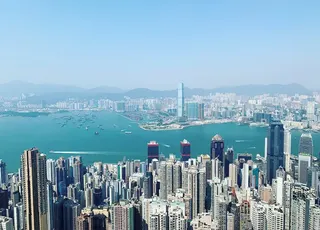
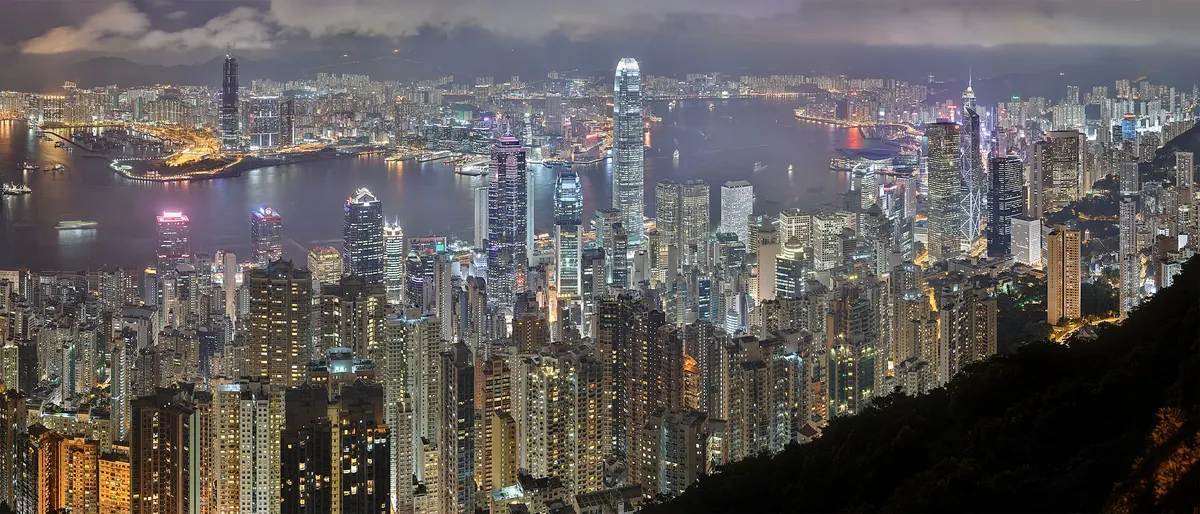
Hong Kong is having the IPO year its dealmakers dreamed of. In the first nine months of 2026, 116 companies listed in the city and raised more than HK$388 billion, more than double the same period last year, according to KPMG's third quarter review reported by Caproasia. KPMG expects the total could reach HK$500 billion by year end.
If it does, 2026 will be Hong Kong's biggest IPO year ever, beating the HK$427 billion record set in 2010. More than 600 companies are in the application pipeline. Yet the boom arrives alongside a sharp regulatory warning: this month the Securities and Futures Commission suspended a well known stock and froze billions of dollars of client assets over suspected rigging of new listings.
What is driving the boom
Two forces stand out. The first is dual listings by mainland Chinese companies. Thirty seven A+H listings, where companies already listed in mainland China add a Hong Kong listing, were completed in the first nine months, contributing nearly 70 percent of total proceeds, according to KPMG. These companies use Hong Kong to access international investors and foreign currency funding.
The second is technology. More than half of IPO fundraising came from high tech sectors such as AI, semiconductors and robotics. Investors hungry for exposure to China's technology champions have found Hong Kong the most accessible venue, especially as access to US markets has become more complicated for many Chinese companies.
LSEG data paints a similar picture, showing that funds raised roughly doubled in the first nine months to the highest level for that period since records began in 1980, with 112 main board companies raising 48.4 billion US dollars.
Second only to Nasdaq
Hong Kong ranked second globally by funds raised in the period, behind Nasdaq, which led with about 144 billion US dollars, and ahead of Shanghai, New York and Shenzhen. Regaining a top position is a significant turnaround for a market that struggled through several difficult years.
The revival matters for Hong Kong's broader identity as a financial centre. A busy IPO market supports banks, law firms, accountants and asset managers, and it reinforces the city's role as the main bridge between Chinese companies and global capital.
A record IPO year is a vote of confidence, but only if investors trust that the demand behind each deal is real.
The pipeline suggests the momentum can continue. With more than 600 active applicants, Hong Kong has a deep queue of companies hoping to list, although market conditions, valuations and regulatory reviews will determine how many complete their offerings.

The integrity question
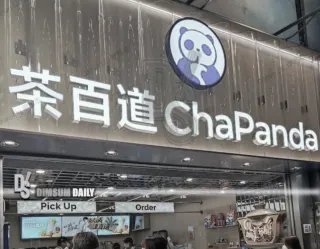
The boom has a shadow. In mid October, the SFC directed the suspension of trading in Sichuan Baicha Baidao, the tea chain known as ChaPanda, over concerns that its IPO may have been rigged to create an artificial impression of demand, and it froze client assets worth billions of Hong Kong dollars across dozens of brokers linked to suspected syndicates. We reported the details in our analysis of Hong Kong's crackdown on rigged IPOs.
The SFC has also reminded sponsors and other gatekeepers to guard against manipulation and said it will launch targeted tools for IPOs. In a market where oversubscription figures are used as marketing, regulators want to ensure those numbers reflect genuine investors.
That vigilance can strengthen the boom rather than weaken it. Investors are more willing to commit capital to a market they trust, and visible enforcement against manipulation helps maintain that trust as volumes grow.
What it means for Southeast Asia
Hong Kong's IPO strength has implications for Southeast Asia. Companies from the region increasingly consider Hong Kong as a listing venue, and Malaysia and Hong Kong have simplified dual listing procedures so companies can use one document for both markets. A busy, liquid market in Hong Kong makes it more attractive for Southeast Asian firms seeking international capital.
The key points for regional companies and investors are these:
- Hong Kong offers deep liquidity and strong demand for technology listings.
- Dual listings with Malaysia have become easier through a single submission process.
- Regulatory scrutiny of IPO demand is intensifying.
- Southeast Asian exchanges compete with Hong Kong for regional listings.
At the same time, Southeast Asian exchanges are working to attract listings at home, as the Philippine market's record GCash offering showed. Competition among Asian exchanges for the region's best companies is likely to intensify.
Lessons from the 2010 record
The last time Hong Kong set an IPO record, in 2010, the market was powered by giant listings of mainland banks and state owned enterprises. The 2026 boom looks different. It is driven by a large number of dual listings and technology companies, which spreads the market's success across more issuers and sectors.
That breadth is a strength, but it also brings new risks. Smaller and newer companies can be harder for investors to value, and they are more vulnerable to the kind of demand manipulation the SFC is now targeting. A record built on many deals requires more careful oversight than one built on a few very large ones.
The comparison also highlights how much the global context has changed. In 2010, Hong Kong competed mainly with New York and London. Today, it competes with Nasdaq, Shanghai and Shenzhen, and its appeal rests heavily on its role as the international gateway for Chinese companies at a time of geopolitical tension.
A record with responsibilities
Hong Kong is on course for its best IPO year on record, powered by mainland dual listings and investor appetite for Chinese technology. The numbers confirm the city's recovery as a global listing hub and its position second only to Nasdaq.
The challenge now is to sustain that success with integrity. As the SFC's recent crackdown shows, the regulator intends to make sure that record volumes come with genuine demand. If Hong Kong can combine scale with trust, its IPO revival could last well beyond 2026.
How much has Hong Kong raised from IPOs in 2026?
Hong Kong raised more than HK$388 billion from 116 listings in the first nine months of 2026, according to KPMG.
Will 2026 be a record year for Hong Kong IPOs?
KPMG expects fundraising could reach HK$500 billion by year end, which would beat the previous record of HK$427 billion set in 2010.
What are A+H listings?
A+H listings are mainland Chinese companies already listed in mainland China that add a listing in Hong Kong. They contributed nearly 70 percent of Hong Kong's IPO proceeds in the first nine months.
Which sectors are driving Hong Kong IPOs?
High tech sectors such as AI, semiconductors and robotics accounted for more than half of IPO fundraising.
How does Hong Kong rank globally?
Hong Kong ranked second by funds raised behind Nasdaq, and ahead of Shanghai, New York and Shenzhen.
How many companies are waiting to list in Hong Kong?
More than 600 companies were in the active application pipeline, according to KPMG.
What did LSEG data show?
LSEG data showed 112 main board companies raised 48.4 billion US dollars, the highest for the first nine months since records began in 1980.
Is the SFC concerned about IPO manipulation?
Yes. The SFC suspended trading in Sichuan Baicha Baidao and froze client assets linked to suspected syndicates over concerns that IPOs were rigged.
Why do mainland companies list in Hong Kong?
Hong Kong gives them access to international investors and foreign currency funding, and it has become more accessible than US markets for many Chinese firms.
Can Southeast Asian companies list in Hong Kong?
Yes. Hong Kong is attracting interest from the region, and Malaysia and Hong Kong have simplified dual listing procedures with a single listing document.
What could slow Hong Kong's IPO boom?
Weaker market conditions, falling valuations, regulatory reviews and concerns about market integrity could slow the pace of listings.
Who compiled the IPO figures?
The figures come from KPMG's third quarter review and LSEG data, which use different scopes and are not directly comparable.
How does the boom affect Hong Kong's economy?
A busy IPO market supports banks, law firms, accountants and asset managers, and reinforces Hong Kong's role as a bridge between Chinese companies and global capital.
What was Hong Kong's previous IPO record?
The previous annual record was HK$427 billion, set in 2010, when large listings by mainland banks and state owned enterprises dominated the market.
Why are technology companies choosing Hong Kong?
Hong Kong offers access to international investors and has become a more accessible venue than US markets for many Chinese technology companies, while investors seek exposure to AI and semiconductor firms.
Does a record IPO year mean shares will perform well?
No. Fundraising volume measures how much money companies raise, not how their shares perform after listing, which depends on valuations, earnings and market conditions.
Hong Kong's IPO market has roared back to the top tier of global finance, on course for a record year built on mainland dual listings and technology. The opportunity is enormous, and so is the responsibility to keep the market clean. With the SFC watching every deal, Hong Kong is betting that a market known for both scale and integrity will keep the world's capital coming.
Talk to the SpinDepth deskYou've finished this story
Read on, send it to someone, or ask about it.