

China's export machine has found its biggest customer, and it is next door. Chinese customs data released on 14 October showed exports rising 36.3 percent year on year in September to a record 447.18 billion dollars, far above economists' expectations. Shipments to the ten members of ASEAN rose about 52.3 percent to 81.7 billion dollars, making Southeast Asia China's largest export market by a wide margin, as reported by Al Jazeera.
For Southeast Asia, the surge is a double edged development. Chinese components feed the region's factories and cheap consumer goods fill its shops, supporting growth and keeping prices down. But the same flood of goods puts enormous pressure on local manufacturers and retailers, and it raises uncomfortable questions about whether the region is becoming a channel for Chinese exports to the rest of the world.
A record month
The scale of September's numbers surprised economists. Growth of 36.3 percent was the highest since 2021, according to FXStreet, and well above the roughly 25 percent consensus. The total of 447.18 billion dollars was a record for a single month.
Technology led the way. Chips and autos were the main drivers, with semiconductor exports more than doubling, up 108.1 percent year on year in the first three quarters. That reflects both global demand linked to AI and China's growing capacity in electronics and electric vehicles.
The trade surplus is swelling as a result. China's nine month surplus reached 938.1 billion dollars, on track to exceed last year's record, according to The China Global South Project. Such a large surplus is likely to intensify trade frictions with partners who see their own industries under pressure.
Why ASEAN is China's top market
ASEAN's rise as China's largest export destination reflects deep economic integration. Chinese companies supply components, machinery and raw materials to factories across Southeast Asia, many of which assemble goods for export to the rest of the world. As manufacturing has shifted from China to countries such as Vietnam, Thailand and Indonesia, the supply chains feeding those factories often still begin in China.
Consumer demand also plays a role. Chinese electronics, appliances, cars and everyday goods are increasingly popular across the region, sold through e-commerce platforms and physical stores. Competitive pricing makes them attractive to households facing rising living costs.
Southeast Asia is now China's biggest customer, which makes it both the main beneficiary of cheap goods and the first place that feels their pressure.
Over the first nine months of 2026, total trade between China and ASEAN reached 6.84 trillion yuan, up 22.7 percent, and ASEAN remained China's largest trading partner. The relationship is now one of the most important trade corridors in the world.
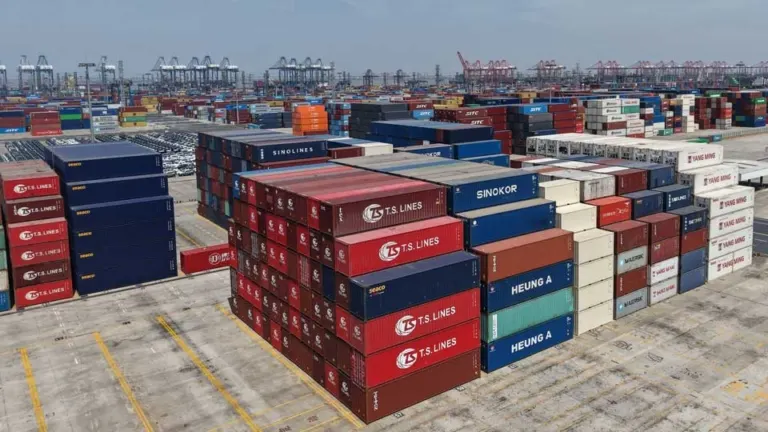
The trade diversion question
The surge raises a sensitive question: how much of China's exports to ASEAN are consumed in the region, and how much are processed or simply passed through on their way to other markets, particularly the United States? When tariffs on Chinese goods are higher than on goods from Southeast Asia, there is an incentive to route products through the region.
Research has found evidence of some rerouting through Southeast Asia in response to tariffs, although the scale is debated and much of the trade reflects genuine supply chain integration rather than simple transshipment. For Southeast Asian governments, the risk is that trading partners respond by tightening rules of origin or imposing tariffs on the region itself.
That makes customs enforcement and transparency increasingly important. Countries that can show their exports involve real local value added will be better placed to avoid being caught in trade disputes aimed at China.
Winners and losers in Southeast Asia
Chinese imports bring clear benefits. Factories gain access to affordable components and machinery, helping them compete in global markets. Consumers enjoy lower prices on a wide range of goods. For economies like Vietnam, which grew 9.95 percent in the third quarter, Chinese inputs are part of the export success story.
The costs fall on local producers that compete directly with Chinese goods. Textile makers, steel producers, small manufacturers and retailers in several countries have complained about cheap imports undercutting them. Governments have responded at times with anti dumping duties, import restrictions and tighter rules for e-commerce platforms.
The key implications for the region include:
- Factories benefit from cheaper Chinese components and machinery.
- Local manufacturers in competing sectors face severe price pressure.
- Trade partners may scrutinise Southeast Asian exports for Chinese content.
- Governments face pressure to protect domestic industries without raising prices.
We covered the strength of Vietnam's export driven growth in our report on Vietnam's 9.95 percent quarter, which depends partly on supply chains that start in China.
What it means for investors and businesses
For businesses in Southeast Asia, the surge in Chinese exports means a more competitive environment. Companies that rely on Chinese inputs can benefit from lower costs, while those competing with Chinese products need to differentiate through quality, branding, service or niche specialisation.
For investors, the data reinforces Southeast Asia's role at the centre of Asian supply chains. Logistics, ports, industrial estates and companies that integrate Chinese inputs into higher value exports stand to benefit. Sectors exposed to direct Chinese competition face greater risk.
Currency and trade policy will also matter. A strong flow of cheap imports can weigh on trade balances and currencies in some countries, while trade frictions with the United States or Europe could disrupt the export models that many Southeast Asian economies rely on.
A corridor that shapes the region
China's record September exports show how tightly Southeast Asia is now bound to the Chinese economy. The region is China's largest market, a key link in its supply chains and, for many households, a source of affordable goods. That relationship brings growth and opportunity, but also competition and political risk.
Managing it well will be one of the region's central economic challenges in the years ahead. Southeast Asian countries that capture more value from Chinese inputs, protect fair competition and maintain open trade with all partners will turn China's export surge into an advantage rather than a threat.

How much did China's exports grow in September 2026?
China's exports rose 36.3 percent year on year in September 2026 to a record 447.18 billion dollars, according to customs data released on 14 October.
How much did China export to ASEAN in September?
Shipments to ASEAN rose about 52.3 percent to 81.7 billion dollars, making the bloc China's largest export market.
Is ASEAN China's largest trading partner?
Yes. China ASEAN trade reached 6.84 trillion yuan in the first nine months of 2026, up 22.7 percent, and ASEAN remained China's largest trading partner.
What drove China's export growth?
Chips and autos led growth, with semiconductor exports up 108.1 percent year on year in the first three quarters of 2026.
How large is China's trade surplus?
China's nine month trade surplus reached 938.1 billion dollars, on track to exceed last year's record.
How did exports to other regions change?
Exports to the EU rose 25.3 percent and exports to the United States rose 39.6 percent in September.
What is trade diversion?
Trade diversion is when goods are routed through another country to avoid tariffs. Research has found some rerouting of Chinese goods through Southeast Asia, though much trade reflects genuine supply chains.
Who benefits from Chinese exports in Southeast Asia?
Factories gain cheaper components and machinery, and consumers benefit from lower prices on many goods.
Who is hurt by the surge?
Local manufacturers and retailers competing directly with Chinese products face strong price pressure.
Could Southeast Asia face tariffs because of Chinese goods?
Trading partners may tighten rules of origin or scrutinise Southeast Asian exports for Chinese content, which could create trade risks for the region.
When is China's next trade data release?
The next release, covering October, is scheduled for 10 November 2026.
How should Southeast Asian businesses respond?
Businesses can use Chinese inputs to lower costs while differentiating through quality, branding and service in sectors that compete with Chinese goods.
Did the September data beat expectations?
Yes. Economists had expected growth of around 25 percent, so the 36.3 percent rise was far stronger than forecast.
Which Chinese products are driving exports to Southeast Asia?
Electronics, chips, machinery, components and vehicles are major categories, alongside consumer goods sold through retail and e-commerce channels across the region.
How have Southeast Asian governments responded to cheap imports?
Some have imposed anti dumping duties, import restrictions and tighter rules for e-commerce platforms to protect local producers, while trying to keep consumer prices low.
China's September export surge confirms that Southeast Asia is now the centre of gravity for Chinese trade. The region gains affordable goods and deep supply chain links, but it also absorbs the competitive pressure and political scrutiny that come with being China's biggest customer. How Southeast Asian governments and businesses balance those forces will shape the region's growth, its industries and its place in a world of rising trade tensions.
Talk to the SpinDepth deskYou've finished this story
Read on, send it to someone, or ask about it.