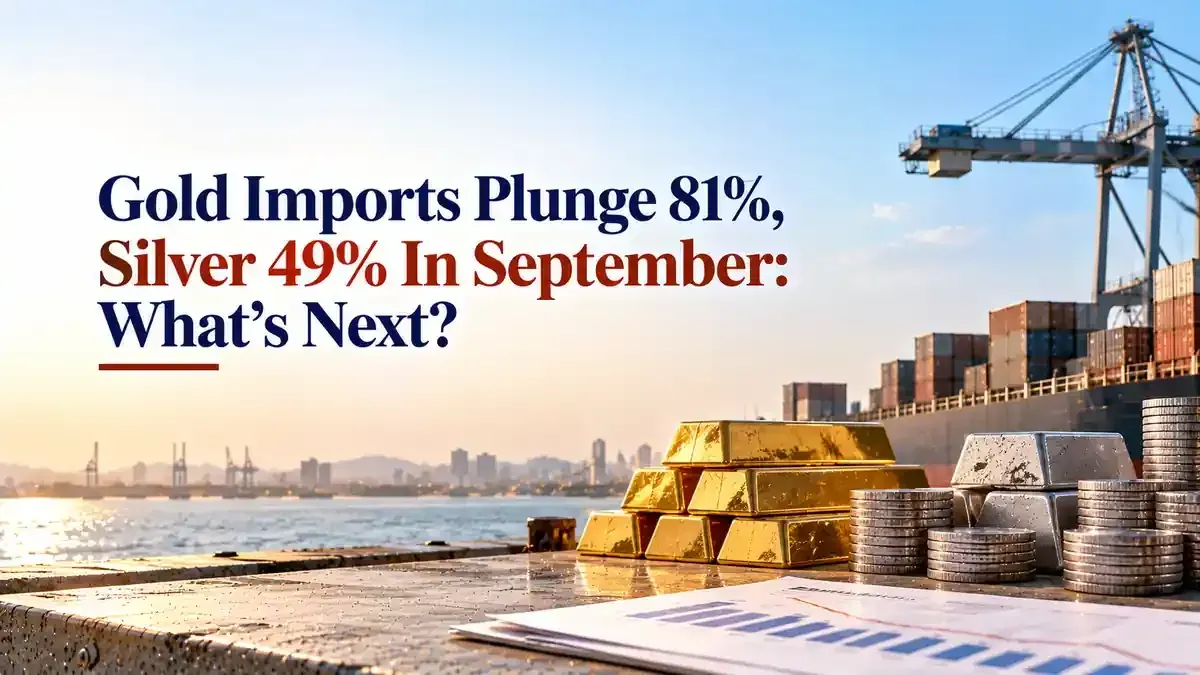
Asia's two biggest gold markets are moving in opposite directions. In Beijing, the central bank is buying at its fastest pace in three years. In New Delhi, the government has made gold so expensive to import that purchases have collapsed. China's central bank added 21 tonnes of gold in September, its 23rd consecutive month of buying, according to Kitco, while India's gold imports fell 81.27 percent year on year in the same month.
The split matters far beyond the two countries. China and India have long been the twin pillars of global gold demand, and their choices shape prices for savers, jewellers and investors across Asia. With gold trading well below its January record but still historically high, the tug of war between official buying and falling consumer demand is defining the market.
China's steady accumulation
The People's Bank of China has been buying gold every month for nearly two years. September's 21 tonnes was its largest monthly purchase since September 2023, up from 18.5 tonnes in August and 18 tonnes in July, taking its reported reserves to 2,196 tonnes.
The motive is diversification. Like many central banks in emerging economies, China wants to reduce its reliance on the US dollar and other reserve currencies, particularly at a time of geopolitical tension and sanctions risk. Gold is a reserve asset that no other government controls, which makes it attractive to countries seeking financial independence.
Central bank buying has become one of the most important supports for gold prices in recent years. When official buyers keep adding steadily, they provide a floor under the market even when private demand weakens.
India slams on the brakes
India is moving the opposite way, by design. The government raised the import duty on precious metals from 6 percent to 15 percent, effective 13 May 2026, and Prime Minister Narendra Modi urged people to defer gold purchases amid the crisis in West Asia, as reported by Kotak Neo. The result was dramatic: September imports fell 81.27 percent year on year to 1.8 billion dollars, with silver imports down 49.11 percent.
The reason is the currency and the trade balance. India imports almost all of its gold, and high oil prices linked to the Middle East conflict have already strained its import bill. Every dollar spent on gold is a dollar that leaves the country, weighing on the rupee and foreign exchange reserves. Curbing gold imports is a way to protect the economy's external position.
When one Asian giant buys gold for its reserves and another taxes it at the border, the price is set by a tug of war between policy choices.
For the April to September period, India's gold imports fell 27.32 percent to 19.27 billion dollars. The data does not show exactly how much of the decline came from the higher duty and how much from the appeal to delay purchases, but together they have sharply cut demand.

What it means for gold prices
Gold has had a volatile 2026. It reached a record near 5,600 dollars an ounce in January before falling back, and it traded near 4,169 dollars in mid October, according to Fortune. The collapse in Indian demand removes an important source of physical buying, while China's official purchases help offset it.
Other forces matter too. Higher interest rates make non yielding gold less attractive, and a strong dollar tends to weigh on prices. On the other hand, geopolitical risk and inflation concerns support gold as a safe haven. The balance between these forces will determine whether gold recovers toward its record or drifts lower.
For investors, the key point is that official sector buying has become a central driver. As long as China and other central banks keep adding gold, a significant share of demand comes from buyers who are less sensitive to price than jewellers or retail investors.
Southeast Asia's gold story
Southeast Asia has its own deep relationship with gold. In Vietnam, gold is a core savings habit, and the government has just lowered the threshold for cashless gold purchases to 5 million dong a day to improve transparency, as we reported in our analysis of Vietnam's new gold rule. Thailand is a major gold trading hub, and gold prices influence the baht and household wealth.
The China and India split affects the region through prices and trade flows. Lower Indian demand can push more gold toward other markets, while Chinese official buying keeps global prices supported. Southeast Asian savers, jewellers and traders feel those shifts directly.
The key points for Asian gold markets are these:
- Central bank buying, led by China, is supporting prices despite weaker consumer demand.
- India's duty hike has sharply cut imports to protect its currency and trade balance.
- Gold remains well below its January record but historically high.
- Southeast Asian governments are tightening oversight of gold trading.
Policy shapes the market
The great gold split shows how much government policy now drives the gold market in Asia. China's central bank is buying to diversify its reserves and reduce dependence on the dollar. India's government is discouraging purchases to protect its currency and trade balance. Both decisions are rational for their own economies, and together they define the market's direction.
For investors and savers across Asia, the lesson is to watch policymakers as closely as prices. Central bank buying, import duties and rules on gold trading can move the market as much as interest rates or inflation, and in 2026, Asia's governments are firmly in control of the gold story.
How much gold did China's central bank buy in September 2026?
The People's Bank of China bought 21 tonnes of gold in September 2026, its largest monthly purchase since September 2023, according to Kitco.
How long has China's central bank been buying gold?
September 2026 was its 23rd consecutive month of gold purchases.
How much gold does China's central bank hold?
Its reported gold reserves reached 2,196 tonnes after the September purchase.
How much did India's gold imports fall?
India's gold imports fell 81.27 percent year on year to 1.8 billion dollars in September 2026, according to commerce ministry data.
Why did India's gold imports collapse?
The government raised the import duty on precious metals from 6 percent to 15 percent from 13 May 2026, and Prime Minister Modi urged people to defer gold purchases amid the West Asia crisis.
Why is India discouraging gold imports?
India imports almost all its gold, and high spending on gold weighs on the rupee and foreign exchange reserves, especially when oil import costs are high.
Why is China buying gold?
China is diversifying its reserves and reducing reliance on the US dollar, as gold is a reserve asset no other government controls.
What is the current gold price?
Gold traded near 4,169 dollars an ounce in mid October 2026, well below its record near 5,600 dollars set in January.
How do central banks affect gold prices?
Steady central bank buying provides a floor under the market because official buyers are less sensitive to price than jewellers or retail investors.
How did India's silver imports change?
India's silver imports fell 49.11 percent year on year in September 2026.
How does this affect Southeast Asia?
Shifts in Chinese and Indian demand influence global gold prices and trade flows, affecting savers, jewellers and traders across Southeast Asia.
What were India's gold imports for April to September?
India's gold imports fell 27.32 percent year on year to 19.27 billion dollars from April to September 2026.
Could gold prices recover to the January record?
That depends on central bank buying, interest rates, the dollar and geopolitical risk. Strong official demand supports prices, while weaker consumer demand and high rates weigh on them.
Does India produce its own gold?
India produces very little gold domestically, so almost all the gold it consumes is imported, which is why import duties have such a strong effect on demand.
Will Indian demand for gold recover?
Demand could recover if the duty is reduced, prices fall or the economic situation eases, but for now the higher duty and the government's appeal are holding imports down.
Are other central banks buying gold?
Many emerging market central banks have added gold to diversify reserves in recent years, although purchases vary by country and month.
Asia's gold market is being pulled in two directions by two governments with different priorities. China's central bank is quietly building its reserves month after month, while India has used taxes and appeals to cut imports to a fraction of last year's level. For anyone holding or trading gold in Asia, the message is that policy has become the market's most powerful force, and the next move in prices may come from Beijing or New Delhi rather than from the trading floor.
Talk to the SpinDepth deskYou've finished this story
Read on, send it to someone, or ask about it.