
How should banks control AI agents? Hong Kong's regulator has a starting answer: make someone accountable for every one of them, keep a list of the important ones and make sure humans can step in. On 15 October, the Hong Kong Monetary Authority launched its ART framework, short for Accountability, Resilience and Trust, to support responsible use of AI in banking, according to a government press release carried by Bastille Post.
The most eye catching idea is a registry of material AI agents. It appears in a planned discussion paper on governing agentic AI, the kind of software that can plan and carry out multi step tasks on its own. With US banks discovering unauthorised AI agents inside customer accounts, Hong Kong is moving to define how authorised agents should behave before the problem spreads.
What the HKMA announced
The framework has three practical pieces. First, the HKMA issued its latest Supervisory Guidance for Responsible Adoption of AI, drawing on insights from the second cohort of its generative AI sandbox. Second, it is building an AI training data sharing platform with Hong Kong Cyberport Management Company and the University of Hong Kong, with data quality assurance as a core design principle.
Third, it will test agentic AI further through an expanded sandbox, the GenAI Sandbox++, and publish a discussion paper on a proposed supervisory framework for agentic AI governance. That paper will explore intent anchored accountability, a registry of material AI agents and effective intervention mechanisms.
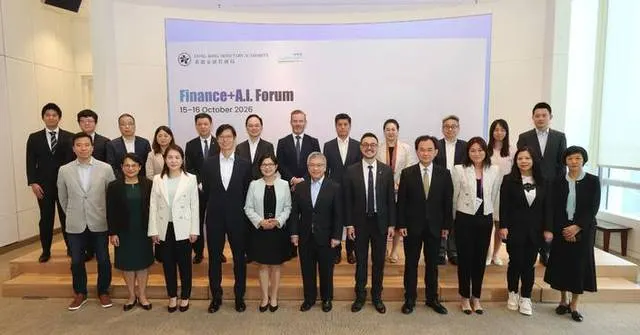
The HKMA co hosted a two day Finance plus AI Forum with Cyberport on 15 and 16 October, marking the completion of technical trials under the second sandbox cohort, which it said delivered positive results.
Why agentic AI changes the rules
The sandbox results explain the urgency. More than 60 percent of the use cases explored in the second cohort involved agentic AI, such as automated planning and execution of multi step tasks within defined boundaries and controls. Banks are moving quickly from chatbots that answer questions to agents that take actions.
"The progression from generative to agentic AI represents an important new stage of innovation for the banking sector," said Arthur Yuen, deputy chief executive of the HKMA. "By pairing innovation with clear accountability, resilient operating models and effective human oversight, banks can fully realise the benefits of AI while maintaining the trust and stability for Hong Kong's financial system."
The question regulators now face is not whether AI can help a bank. It is who answers for an AI agent that acts on its own.
The three ideas in the planned paper map onto that challenge. Intent anchored accountability means tying each agent's actions to a defined purpose and a responsible person. A registry of material agents would give supervisors visibility over which agents banks rely on. Intervention mechanisms would ensure humans can stop an agent that goes wrong.

The contrast with Wall Street
Hong Kong's approach contrasts with what is happening in the United States, where major banks have found unauthorised third party AI agents logging into customer accounts, sometimes with customers' own passwords, and have moved to block or restrict them, as we reported in our analysis of AI agents inside US bank accounts.
The difference is that the HKMA is focused mainly on agents that banks themselves deploy, under supervision, while the US problem involves outside agents operating without the bank's consent. Both issues will converge: as customers adopt AI assistants, regulators will need rules for how outside agents can connect safely to banks, and for how banks' own agents are governed.
Security is the common thread. AI is also being used by attackers, as the wave of AI assisted cyber incidents and critical software flaws this year has shown, and agentic systems with access to data and tools create new attack surfaces that supervisors want to see clearly.
What it means for banks across Asia
Hong Kong's framework is likely to influence other Asian regulators. Singapore's Monetary Authority has been developing its own approach to AI risk management and runs an agentic payments workstream under its BLOOM initiative, which Malaysia and Thailand joined this month, as we covered in our report on the BLOOM expansion, and regional banks are rolling out AI tools for customers and staff. A registry of material AI agents, if adopted, would be one of the first supervisory tools designed specifically for agentic AI.
For banks, the practical implications are significant. They will need clear ownership for each agent, documentation of what it is allowed to do, monitoring of its behaviour and the ability to shut it down quickly. The key requirements emerging from the HKMA's direction include:
- Named accountability for each material AI agent and its intended purpose
- Inventory and disclosure of agents that affect customers or critical operations
- Human oversight and intervention mechanisms for autonomous actions
- High quality, assured training data for AI models
- Resilience testing for AI systems, including failure and attack scenarios
What comes next
The discussion paper on agentic AI governance will be the next milestone, and banks and technology providers will have a chance to respond. Watch for how the HKMA defines a material AI agent, what the registry would require and whether intervention mechanisms become mandatory.
For Hong Kong, the framework is part of its Fintech 2030 strategy to stay competitive as a financial centre while keeping risk under control. For the region, it offers an early template for supervising the next generation of AI in banking.

What is the HKMA ART framework?
ART is the Hong Kong Monetary Authority's framework for responsible AI adoption in banking, built on Accountability, Resilience and Trust, announced on 15 October 2026.
What does the ART framework include?
It includes updated supervisory guidance on responsible AI, an AI training data sharing platform with Cyberport and the University of Hong Kong, and further agentic AI testing.
What is agentic AI?
Agentic AI refers to AI systems that can plan and carry out multi step tasks on their own within defined boundaries, rather than only answering questions.
What is a registry of material AI agents?
It is an idea in the HKMA's planned discussion paper that would give supervisors visibility over important AI agents banks use.
What is intent anchored accountability?
It means tying an AI agent's actions to a defined purpose and a responsible person, so accountability is clear.
How many sandbox use cases involved agentic AI?
More than 60 percent of the use cases explored in the HKMA's second GenAI Sandbox cohort involved agentic AI.
Who is Arthur Yuen?
Arthur Yuen is deputy chief executive of the Hong Kong Monetary Authority.
What is the GenAI Sandbox++?
It is the HKMA's expanded sandbox for testing generative and agentic AI applications in banking.
Is the agentic AI framework final?
No. The HKMA plans to publish a discussion paper on a proposed supervisory framework for agentic AI governance.
How is this different from the US bank AI agent issue?
The HKMA focuses mainly on agents deployed by banks under supervision, while US banks are dealing with unauthorised outside agents logging into customer accounts.
What is Fintech 2030?
Fintech 2030 is Hong Kong's strategy for financial technology development, under which the ART framework was introduced.
Will other Asian regulators follow Hong Kong?
Hong Kong's approach may influence others. Singapore is also developing AI risk guidance and runs an agentic payments workstream under BLOOM.
What must banks do to comply?
Banks will need clear ownership for AI agents, documentation, monitoring, human oversight and the ability to stop agents quickly.
Who is building the AI training data platform?
The HKMA is building it with Hong Kong Cyberport Management Company and the University of Hong Kong.
What was the Finance plus AI Forum?
The HKMA co hosted a two day forum with Cyberport on 15 and 16 October 2026, marking the completion of technical trials in the second GenAI Sandbox cohort.
Why does training data quality matter?
AI models are only as reliable as their training data, which is why the HKMA's planned data platform treats data quality assurance as a core design principle.
What are intervention mechanisms?
They are controls that let humans pause, override or shut down an AI agent that behaves unexpectedly or causes harm.
Do the rules apply to all AI tools?
The proposed registry focuses on material AI agents, meaning those that matter most to customers or critical operations, rather than every AI tool.
Hong Kong's ART framework is one of the first serious attempts to supervise AI agents in banking before they become ubiquitous. Its core ideas, clear accountability, a registry of important agents and human intervention, address the exact risks now surfacing in US banks. For banks across Asia, it is an early look at the rules that are likely to govern the next phase of AI in finance.
Talk to the SpinDepth deskYou've finished this story
Read on, send it to someone, or ask about it.