 Media & Reputation
 Football
 Culture
 Experiences
 Advertising
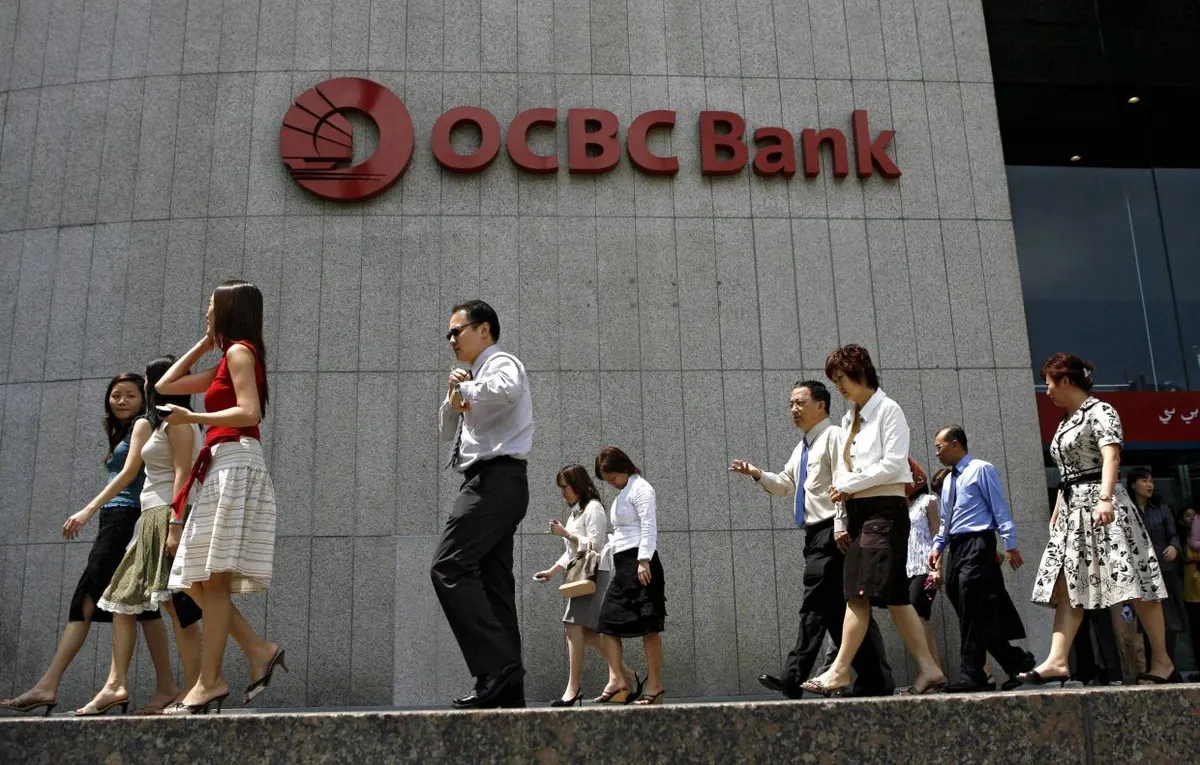
Which Singapore bank had the best third quarter? On the numbers, OCBC. Its net profit rose 3 percent from a year earlier to 2.04 billion Singapore dollars, beat analyst forecasts and came with an upgrade to its 2026 guidance, OCBC reported on 6 November. DBS, the largest, earned 2.81 billion dollars, down 5 percent, while UOB earned 1.25 billion dollars and missed forecasts as its margin kept falling.
The three banks are being squeezed by the same force, lower Singapore interest rates, which shrink the margin they earn on loans. What separates them is how well fees, wealth management and loan growth make up the difference. DBS still dominates on size and returns, OCBC has the momentum, and UOB is fighting margin pressure and rising problem loans in Greater China. For shareholders and savers choosing between them, the differences are now sharper than they have been for years.
DBS: the biggest, but shrinking for now
DBS earned 2.81 billion dollars in the third quarter, 5 percent less than a year earlier and 9 percent below the second quarter, DBS reported on 5 November. The main reason was trading: markets trading income fell 65 percent to 152 million dollars. Net interest income still rose 4 percent to 3.71 billion dollars on balance sheet growth, even as the net interest margin narrowed nine basis points to 1.87 percent.
The rest of the franchise is strong. Fee income rose 6 percent to 1.43 billion dollars, wealth management fees rose 9 percent to 864 million dollars, loans grew 11 percent in constant currency to 479 billion dollars, and wealth assets under management reached a record 544 billion dollars. Over nine months, DBS made a record 8.82 billion dollars, up 2 percent, with a return on equity of 17.0 percent.
Shareholders are well paid. DBS declared 81 cents a share for the quarter, made up of a 66 cent ordinary dividend and a 15 cent capital return, and its CET1 capital ratio stood at 15.9 percent. The bank also named Anthony Lim as its next chairman from January, as we reported in our story on the DBS chairman change.
OCBC: the bank with momentum
OCBC's 2.04 billion dollar profit was 3 percent higher than a year earlier, though 8 percent below a record second quarter, and it beat the roughly 2.00 billion dollar consensus. Nine month profit reached a record 6.24 billion dollars, up 10 percent. The core bank did even better: OCBC's banking operations earned a record 1.90 billion dollars, up 16 percent, while its insurer Great Eastern was hit by mark to market losses on bonds as interest rates rose.
Its balance sheet is growing fastest. Customer loans rose 14 percent in constant currency to 372 billion dollars, deposits rose 12 percent to 461 billion dollars, and wealth assets under management reached a record 358 billion dollars. Net interest income rose 4 percent to 2.31 billion dollars, its highest in six quarters, even though the margin fell to 1.66 percent. Customer flow trading income hit a record 480 million dollars.
Asset quality is the best of the three. OCBC's non performing loan ratio fell to 0.8 percent, allowances dropped 63 percent to 52 million dollars and credit costs were just 6 basis points. It raised its guidance again, now expecting loan growth in the low double digits and total income growth of at least mid single digits for 2026, according to Beansprout's analysis of the results.
DBS is still the biggest and the most profitable. OCBC is the one that raised its numbers this quarter, and momentum is what investors are watching.
UOB: record fees, a profit miss and a China problem
UOB earned 1.25 billion dollars, nearly three times the 443 million dollars of a year earlier, when it set aside heavy provisions. But the figure missed forecasts of 1.35 billion to 1.38 billion dollars and fell 15 percent from the second quarter, which had included one off divestment gains, Reuters reported via The Star. Its nine month profit was 4.17 billion dollars, up 27 percent, The Edge reported.
Margin is UOB's problem. Its net interest margin fell six basis points to 1.68 percent on higher funding costs, and its nine month margin of 1.75 percent sits at the bottom of its 1.75 to 1.80 percent guidance. Fees were the bright spot: net fee income reached a record 733 million dollars, up 19 percent, with wealth income up 13 percent and card income up 25 percent over nine months.
Asset quality needs watching. UOB's overall non performing loan ratio eased to 1.5 percent, but the ratio for Greater China rose to 5.0 percent from 4.8 percent in the second quarter and 3.5 percent six months earlier. UOB pays dividends half yearly and declared none this quarter; its 88 cent interim dividend implies a yield of about 4.3 percent on an annualised basis at its 3 November share price of 40.46 dollars, Beansprout calculated.
The scorecard: who wins on what
Each bank wins a different contest:
- size and returns: DBS, with 8.82 billion dollars of nine month profit and a 17.0 percent return on equity
- momentum: OCBC, with 10 percent nine month growth and upgraded guidance
- recovery story: UOB, with 27 percent nine month growth from a provision hit base and an upbeat 2027 outlook
- margin: DBS, at 1.87 percent against 1.68 percent at UOB and 1.66 percent at OCBC
- asset quality: OCBC, with a 0.8 percent non performing loan ratio
All three face the same pressures. Lower Singapore rates have halved the benchmark overnight rate from a year earlier, as DBS's chief executive Tan Su Shan noted, while US rates are now rising again and a Federal Reserve hike is expected in December, as we explained in our report on October's US inflation data. Rising US rates help margins over time but hurt bond portfolios, as OCBC's insurer found.
UOB has signalled stronger growth ahead, guiding for mid single digit loan growth, net interest income above 2026 levels and mid to high single digit fee growth in 2027. If it delivers, the gap with its rivals could narrow. If Greater China loans keep deteriorating, it could widen.
What it means for savers and shareholders
For deposit holders, falling margins mean banks have less room to pay high rates on savings. Deposits at all three are covered by Singapore's deposit insurance scheme up to its limit per depositor, so for most savers the choice is about rates and convenience.
For shareholders, the banks offer different profiles. DBS combines the highest returns with capital returns on top of ordinary dividends. OCBC offers growth and the strongest asset quality, while UOB offers a higher implied yield and a recovery story with more risk attached. Wealth management is the common engine: all three reported record or near record wealth and fee income, a sign that Singapore's role as a regional wealth hub is cushioning the hit from lower rates.
For the wider region, the results show how dominant Singapore's banks have become. DBS alone earned more in nine months than Indonesia's BRI, BCA and BNI combined, a comparison we will set out in our regional league table later this week.

Which Singapore bank made the most profit in Q3 2026?
DBS, with net profit of 2.81 billion Singapore dollars, ahead of OCBC at 2.04 billion and UOB at 1.25 billion.
Did DBS's profit fall in the third quarter?
Yes. It fell 5 percent from a year earlier, mainly because markets trading income dropped 65 percent.
Did OCBC beat forecasts?
Yes. Its 2.04 billion dollar profit beat the roughly 2.00 billion consensus, and it raised its 2026 guidance.
Why did UOB miss forecasts?
Its net interest margin fell to 1.68 percent on higher funding costs, and the second quarter had included one off divestment gains.
What were nine month profits for the three banks?
DBS 8.82 billion dollars, OCBC 6.24 billion and UOB 4.17 billion Singapore dollars.
Which bank has the highest net interest margin?
DBS, at 1.87 percent in the third quarter, compared with 1.68 percent at UOB and 1.66 percent at OCBC.
What dividend did DBS declare?
81 cents a share for the quarter, including a 66 cent ordinary dividend and a 15 cent capital return.
Does UOB pay a quarterly dividend?
No. UOB pays half yearly and declared no dividend with its third quarter results.
What is UOB's Greater China problem?
Its Greater China non performing loan ratio rose to 5.0 percent from 3.5 percent six months earlier.
Which bank has the best asset quality?
OCBC, with a non performing loan ratio of 0.8 percent and credit costs of 6 basis points.
Why did OCBC's insurer hurt profit?
Great Eastern booked mark to market losses on its bond portfolio as interest rates rose.
What is DBS's return on equity?
17.0 percent for the first nine months of 2026.
Who will be DBS's next chairman?
Anthony Lim, from 1 January 2027, succeeding Peter Seah.
Are Singapore banks safe?
DBS and UOB reported CET1 capital ratios of 15.9 and 14.6 percent, comfortably above requirements, and OCBC's non performing loan ratio is 0.8 percent.
Which Singapore bank stock is best?
It depends on goals: DBS for returns and capital payouts, OCBC for growth and asset quality, and UOB for yield and recovery potential.
Singapore's three banks are no longer moving in step. DBS remains the giant with the best returns, OCBC has the momentum and the cleanest loan book, and UOB has record fees but a margin and China problem to solve. With US rates rising and Singapore rates low, 2027 will test which model holds up best.
Talk to the SpinDepth deskYou've finished this story
Read on, send it to someone, or ask about it.