
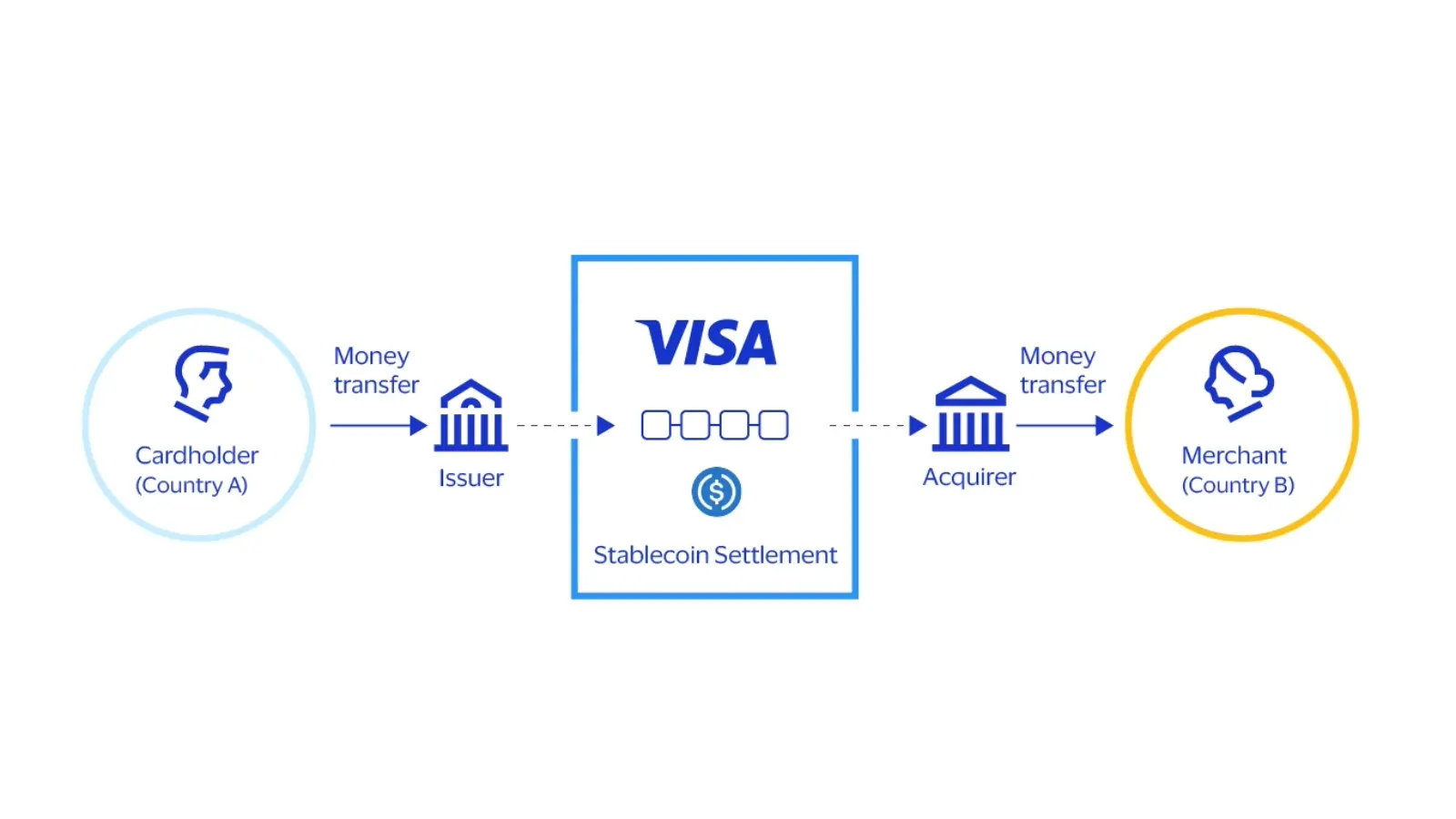
Visa is building infrastructure to make stablecoins easier for financial institutions and payment providers to integrate into existing operations, according to reporting from mid-August 2026. The significance is not the feature, it is the framing. When the world's largest card network treats a stablecoin as something to be plumbed into banks rather than pitched to traders, the asset stops being a crypto story and becomes a settlement story. The SEC's proposed rule is the policy backdrop that makes this safe to say out loud, and the Japan stablecoin payments rollout shows the consumer demand such plumbing serves. Source: PaymentExpert. Source: Paypers.
Why Visa is the signal
Visa does not chase experiments. When it builds infrastructure, it is betting the use case is durable and that banks will pay to use it. A stablecoin that settles inside the existing payment stack, invisible to the end user, is the opposite of the volatile token narrative that defined crypto's first decade. Visa's move tells the market that the serious money sees stablecoins as rails, not speculation. The white-label forex wave in Asia reflects the same instinct: build the infrastructure, let the brand sit on top.
The narrative shift
For years the stablecoin story was told by exchanges and yield farmers. Now it is being retold by the institutions that move money for a living. That changes who trusts it: a bank is more likely to adopt a stablecoin that arrives through Visa than one that arrives through a trading app. The reframing matters more than the technology, because adoption is a story problem before it is an engineering problem. The SE Asia super-app surge shows how a payments narrative, once it reaches everyday users, compounds into infrastructure.
- Visa building stablecoin integration infrastructure
- Target users are banks and payment providers
- Reframes stablecoin as settlement rails
- Follows clearer US crypto rules
What it means for payments players
For payment providers and banks, the takeaway is that stablecoin capability is becoming a vendor feature, not a build-from-scratch project. If Visa and its peers package the integration, the competitive question shifts from 'can we support stablecoins' to 'which partner do we trust'. That lowers the barrier for regional banks and accelerates a quiet standardisation of how dollars move on-chain. The forex platform shift we cover is the same pattern in trading software: the platform becomes the differentiator, the underlying tech becomes a commodity.
When Visa builds the pipe, the asset stops being crypto and starts being plumbing. That is the story that wins banks.
The bigger picture
Visa's infrastructure play is the institutional confirmation of a trend the SEC proposal is making legal: stablecoins are migrating from the crypto native to the banking mainstream. The asset that began as a trader's tool is becoming the settlement layer for cross-border payments, and the brands that own the plumbing will own the margin. This is the same maturation the whole market is undergoing, from enforcement to rulebook, from speculation to utility. The Japan payments and SE Asia super-app stories are the demand side of the same coin.
What to watch next
Watch which banks announce pilots on Visa's infrastructure, because the first named adopters set the template. Watch whether Mastercard and other networks respond with their own stablecoin rails, because a standards race benefits users. And watch the regulatory coordination, since infrastructure at bank scale only scales if the SEC and CFTC stay aligned.
What is Visa building with stablecoins?
Visa is building infrastructure to make stablecoins easier for financial institutions and payment providers to integrate into existing operations, treating the asset as settlement plumbing rather than a consumer crypto product.
Why does this matter for the stablecoin narrative?
When the largest card network builds the pipe, stablecoins shift from a trader story to a banking story, which is what gives banks and payment providers the confidence to adopt them at scale.