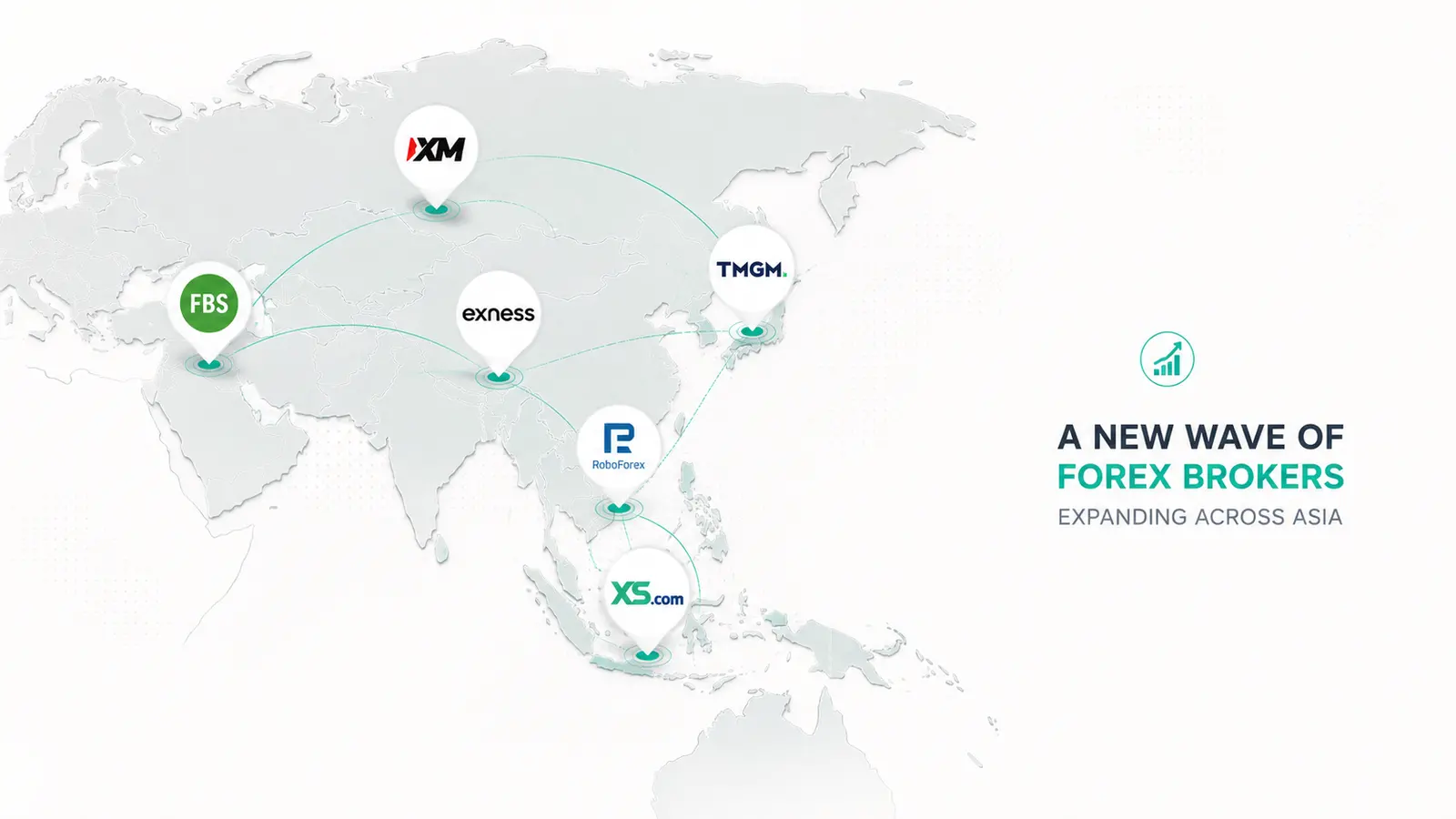
A wave of white-label forex broker launches is accelerating in 2026, and Asia is where it is loudest. Turnkey technology, stricter global licensing, and surging Asian retail demand have converged to make launching a branded broker faster and cheaper than ever, while the real barrier has shifted from technology to compliance. For the region's trading platforms, the opportunity is a large, mobile-first retail base that skipped desktop brokerage entirely. The same platform shift we cover shows why white-label infrastructure is now good enough to brand as your own, and the CFTC fraud case is the cautionary tale of what happens when compliance lags the launch. See our SEC easing crypto rules coverage at SEC easing crypto rules. See our CFTC crypto fraud charges coverage at CFTC crypto fraud charges. Source: Finxsol. Source: Zitadelle.
Why the wave is happening now
Three forces converged. Turnkey providers matured, so a new broker can rent a full stack, trading engine, CRM, liquidity bridge, and payments, and launch in weeks rather than years. Regulatory standards tightened, which sounds like a brake but actually filters the field and rewards operators who can clear licensing. And Asian retail demand kept climbing, with mobile-first users in Southeast and South Asia entering forex and CFDs through apps rather than bank relationships. The result is a launch wave where the differentiator is not the tech, which is now commoditised, but the licence, the brand trust, and the local payment rails. The SEC easing framework in crypto shows a parallel: clarity lowers entry cost for the prepared.
The Asia angle
Asia is the epicentre because the demand is youngest and most mobile. Markets across Southeast Asia, India, and parts of the Middle East show high app engagement and limited legacy broker penetration, which is the exact profile where a well-branded white-label broker can win share fast. The catch is fragmentation: each jurisdiction has its own licensing and leverage rules, so a regional rollout is a compliance project, not a copy-paste. Brokers that treat Asia as one market will fail; those that localise licence, language, and payments per market will compound. The positioning shift we cover shows why owning the localised stack beats renting a generic one.
- Turnkey tech cut launch time from years to weeks
- Tighter licensing filters and rewards serious operators
- Asian retail demand is mobile-first and underpenetrated
- Moat is licence, brand trust, and local payment rails
Compliance is the new barrier
Because the technology is now a commodity, the barrier to entry is the licence and the compliance program behind it. A white-label broker that launches without a real regulatory perimeter is not lean, it is exposed, and the fraud cases in crypto are the warning of how expensive that exposure gets. Asian regulators have grown sharper on retail protection, leverage limits, and marketing conduct, so the brokers that win are the ones that budget for compliance as a product feature, not an afterthought. The professionalisation mirrors the forex platform shift, where trust features are becoming table stakes rather than differentiators.
In 2026 the technology is a commodity. The licence is the moat, and Asia is where that moat gets tested first.
What it means for operators
For operators eyeing APAC, the playbook is to lead with the licence and the local payments integration, then brand the white-label stack around trust and education rather than leveraged promises. The retail base responds to clarity and safety more than to bonuses, especially after a wave of fraud scandals elsewhere. The white-label route is legitimate and fast, but only when the compliance spine is real. The SEC's move to build a clear crypto rulebook is the same lesson in another asset class: markets scale on certainty, not on loopholes.
The bigger picture
The white-label forex wave is the democratisation of brokerage, and like every democratisation it cuts both ways. It lets serious local operators reach retail that banks ignored, and it lets bad actors launch fast if regulators blink. Asia's trajectory depends on whether licensing keeps pace with technology, because the region has both the demand and the fraud risk in the largest doses. The brokers that treat compliance as the product, not the paperwork, will own the next decade of Asian retail trading. The platform and crypto shifts we cover are the same story in adjacent markets: infrastructure is cheap, trust is scarce, and the scarce thing wins.
What to watch next
Watch Asian regulator actions on retail leverage and marketing, because those rules define who can operate. Watch how many new brokers launch with a real licence versus a rented one, because that ratio predicts the scandal rate. And watch payment-rail integrations, since local deposit and withdrawal coverage is the quiet differentiator that decides retention in mobile-first markets.
Why is Asia the centre of the white-label forex wave?
Asia combines mobile-first, underpenetrated retail demand with maturing turnkey technology, so branded brokers can launch fast. The barrier has shifted from technology to licensing and local compliance, which serious operators now treat as the core product.
Is white-label forex launching risky?
The technology is low-risk and fast, but launching without a real licence and compliance program is the real exposure. Asian regulators are tightening retail protections, so compliance, not the stack, is what separates durable brokers from failures.