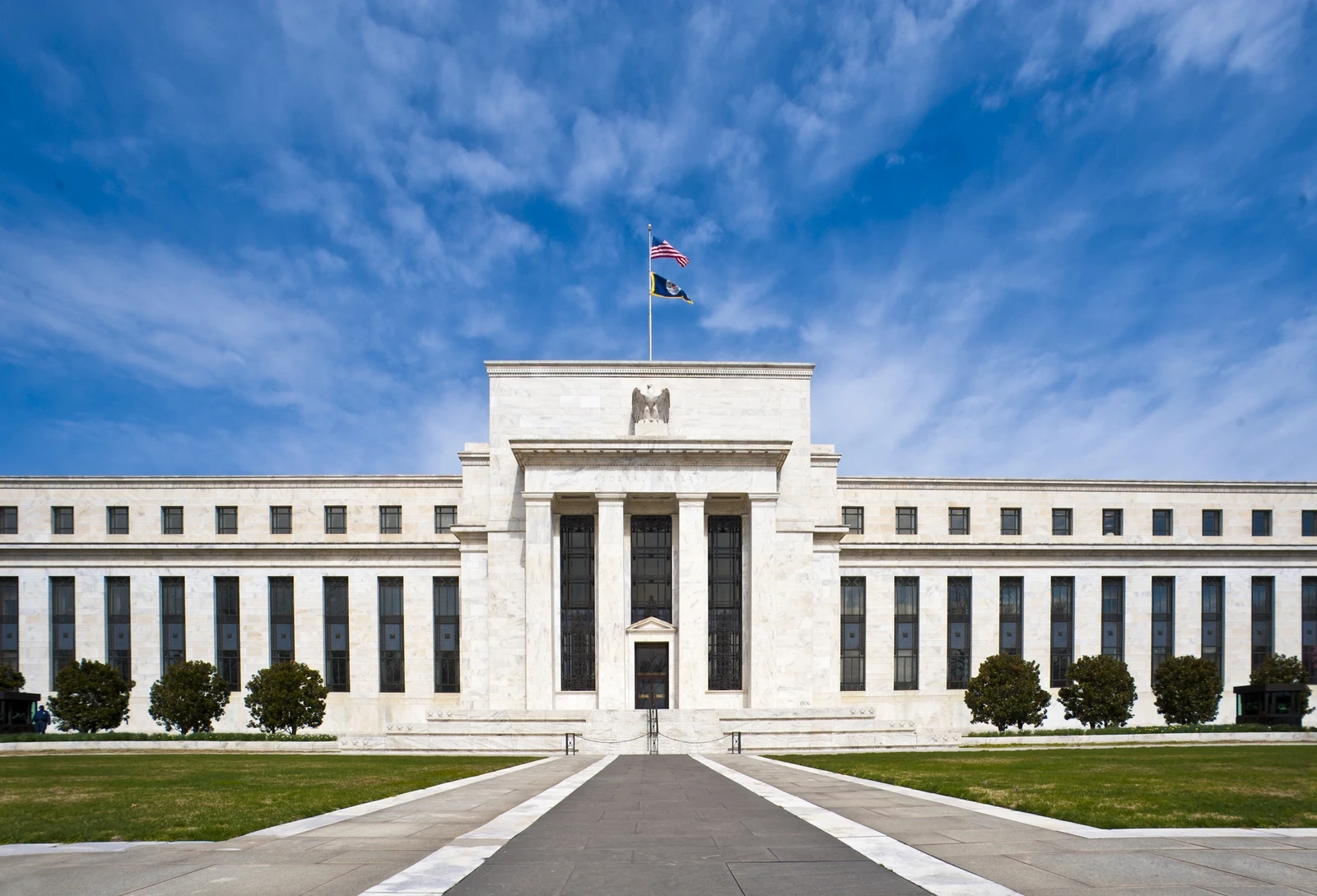
The Federal Open Market Committee raised the target range for the federal funds rate by 25 basis points to 3.75 to 4 percent on 16 September, its first increase since 2023. The vote was 12-0. Unanimity on a turn of this kind is rare and it is the most informative detail in the whole statement, because it removes the usual comfort of being able to point at a dissent and argue the decision was contested. It was not contested. The week that starts today is the first full trading week in which Asian markets have to work out what a hiking Fed means for them, and the answer is not the one most positioning has been built around.
The dot plot is the story, not the hike
A single quarter point move is arithmetic. What matters is the projection material published alongside it. Sixteen of the eighteen participants expect at least one further increase, and four of those see the possibility of two more. Markets have moved to price another 25 basis points in December, with the path extending into 2027. That is not a one-off adjustment to a data surprise. That is a committee describing a cycle.
The stated rationale is inflation that has stayed elevated, with energy costs doing much of the work. That matters for Asia in a specific way: an inflation impulse driven by oil is an imported problem for most of the region, not a domestic demand problem, so the usual policy response of raising local rates to cool local demand addresses something that is not happening. Regional central banks are being asked to defend currencies against a dollar that is strengthening for reasons their own economies did not cause.
That is the uncomfortable position that defines the next two quarters. A central bank in Bangkok, Jakarta or Manila now chooses between letting the currency take the strain, which imports more of the same inflation it is trying to contain, or tightening into domestic conditions that do not warrant it. There is no version of that trade that is clean, and the choice each central bank makes will be the single biggest driver of regional currency performance into year end.
What the calendar puts in front of traders this week
The week is comparatively light on hard data and unusually heavy on speakers. Federal Reserve officials are scheduled to appear repeatedly across the week, which in the immediate aftermath of a turn like this carries more weight than a second-tier data release would. The market is not looking for new information about the September decision. It is looking for the framing officials use when they describe December, and small differences in that framing will move the dollar more than the data calendar does.
Two central bank meetings sit alongside that. The Swiss National Bank meets, which matters mostly for the franc and for the European rate complex around it. The People's Bank of China also meets, and for anyone trading Asian currencies that is the one to watch. A PBoC statement that deviates from expectation would raise volatility across the entire region, because the renminbi anchors a great deal of regional currency behaviour whether or not individual traders think about it that way.
Data from Germany, the eurozone, the United States, the United Kingdom and Australia fills out the week, with a University of Michigan consumer sentiment reading landing on Friday. None of that is likely to override the rate narrative on its own, but a soft American sentiment print at the end of a week spent listening to officials talk about further tightening would be the kind of contradiction that produces a sharp Friday afternoon.
- Federal Reserve speakers through the week, framing December rather than defending September
- Swiss National Bank decision, relevant to the franc and the European rate complex
- People's Bank of China meeting, the highest-volatility event for Asian currency pairs
- German, eurozone, UK and Australian data across midweek
- University of Michigan consumer sentiment on Friday
The positioning problem for regional brokers
For brokers serving Southeast Asian retail flow, a turning rate cycle creates an education problem before it creates a trading opportunity. A meaningful share of the region's retail participants started trading in a period defined by cuts, or by the expectation of cuts. The reflexes that were profitable in that regime, buying dips in risk currencies and treating dollar strength as temporary, are exactly the reflexes that get punished in a hiking cycle with a committee projecting more.
That is a genuine commercial exposure and most firms are underestimating it. Client churn in retail FX rises sharply when a familiar pattern stops working, because clients attribute the loss to the platform rather than to the regime change. The brokers that hold their books through a turn are the ones that told clients the regime was changing before the losses arrived, not the ones that published an explainer afterwards. We have written about what the dollar's strength has already done to Asian currencies, and the September decision extends that rather than resolving it.
There is a distribution angle too. Content that explains a rate cycle in a local language, for an audience that has never traded one, is the single highest-value thing a broker can publish in the next eight weeks, and almost nobody is producing it. The firms that do will acquire clients from the firms that do not, at a fraction of the usual cost, because the demand is real and the supply is thin.
The carry trade unwinds slowly, then all at once
A hiking Fed does something specific to the funding structure that sits underneath a great deal of Asian financial activity. Years of low dollar rates made dollar borrowing the cheap leg of an enormous number of positions, some of them explicit carry trades run by funds, most of them ordinary corporate borrowing by Asian companies that found dollar debt cheaper than local debt and did not fully hedge the currency. That second group is much larger than the first and considerably less prepared.
The mechanics of the unwind are well understood and still consistently underestimated. Rising dollar rates raise the cost of the funding leg while a rising dollar raises the local-currency cost of the principal, so the position deteriorates from both ends simultaneously. Corporates hold on because crystallising the loss is worse than carrying it, until a covenant or a refinancing date forces the issue, at which point a large number of them are forced at the same time because they all borrowed in the same window.
Nothing in this week's calendar triggers that. The point is that the September decision moved the probability, and the December pricing moves it further. For a broker, the relevance is that currency volatility of that type is not the gentle trending kind that retail positioning handles well. It arrives in gaps, over weekends, in pairs that had been quiet for months, and it is the single most common cause of client accounts going to zero in a week that looked ordinary on Monday.
Where the yen fits
The yen deserves separate attention because it is the pair where the regime change is most visible and where regional retail positioning is most concentrated. Japanese policy has been moving in its own direction, and the interaction between a Bank of Japan that is normalising and a Federal Reserve that has resumed hiking produces a rate differential path that is genuinely difficult to forecast, which is a different problem from one that is simply unfavourable.
Difficult to forecast is worse than unfavourable for retail flow. An unfavourable trend can be traded in one direction with discipline. A differential that could compress or widen depending on which of two central banks moves next produces range behaviour punctuated by violent repricing, and that pattern is where leveraged retail accounts do the most damage to themselves. We have tracked the yen's path through this cycle and the volatility profile has already changed shape.
For brokers with heavy yen exposure in their client books, and that is most brokers serving Southeast Asian retail, the operational question this week is margin policy rather than market view. A repricing in a pair that carries a disproportionate share of open interest is a risk management event before it is a market event, and the firms that review those parameters ahead of a turning cycle are the ones that do not spend December explaining negative balances.
Regional central banks are being asked to defend currencies against a dollar that is strengthening for reasons their own economies did not cause.
What would change the picture
Two things would genuinely alter this setup, and neither is on this week's calendar. The first is a visible break in the energy complex, because an inflation impulse driven by oil unwinds quickly if oil unwinds, and the committee's own rationale would lose its foundation. The second is a labour market deterioration sharp enough to change the balance of risks, which is the only development that reliably moves a committee that has just voted unanimously.
Absent either, the sensible working assumption for the rest of the quarter is that the dollar has policy support, that Asian currencies stay under pressure, and that the regional central banks with the least room, the ones already close to the limit of what their reserves and their domestic conditions allow, are the ones to watch. The currencies that move first in a cycle like this are rarely the ones with the worst fundamentals. They are the ones whose central banks run out of options first.
What did the Fed decide in September 2026?
It raised the federal funds target range by 25 basis points to 3.75 to 4 percent on 16 September, in a unanimous 12-0 vote. It was the first increase since 2023.
Is another hike expected?
Sixteen of the eighteen FOMC participants projected at least one further increase, with four seeing the possibility of two more. Markets have priced a further 25 basis points in December.
Why does this matter for Asian currencies?
A dollar with policy support puts sustained pressure on regional currencies, and because the inflation impulse is largely imported through energy, local central banks cannot fix it with domestic tightening without damaging their own demand.
What is the biggest event for Asia this week?
The People's Bank of China meeting. Any deviation from expectation there tends to raise volatility across the whole regional currency complex.
A unanimous turn after two years of easing is not a data point, it is a change of regime, and regimes are priced slowly because the market keeps testing whether the old one is really over. The next few weeks are that test. For anyone whose business depends on Asian retail flow, the useful question is not where the dollar goes. It is whether your clients understand why it is going there, because the ones who do not will leave before the trade resolves. A unanimous committee projecting further increases has removed most of the ambiguity that made the last two years tradeable on instinct, and instinct is what the majority of the region's newer participants have been trading on.
Speak with the SpinDepth desk