Forex Expo Dubai opens at the Dubai World Trade Centre on Tuesday 22 September and runs through Wednesday 23 September, ten in the morning until six in the evening across five halls. The organisers put the scale at more than 250 exhibitors and over 20,000 attendees from more than 50 countries, which makes it the largest single gathering of retail brokerage in the calendar. We covered who bought the top sponsor slots when the tiers were confirmed. What is worth doing now, on the eve, is reading the floor itself, because the floor is where the strategy is visible and the press releases are where it is hidden.
What a sponsor tier actually buys
The tier names at this event are theatrical, and they obscure a fairly rational pricing structure. Super Elite, Diamond, Global and the tiers below them are not primarily buying signage. They are buying floor position, square metreage, and the right to be the first thing a visitor walks into rather than the eleventh. GTCFX has taken Super Elite with a 72 square metre space at Booth 54, and CentFX has taken Diamond at Booth 081. Those two numbers, 72 square metres and a two-digit booth number, tell you more than either company's announcement does.
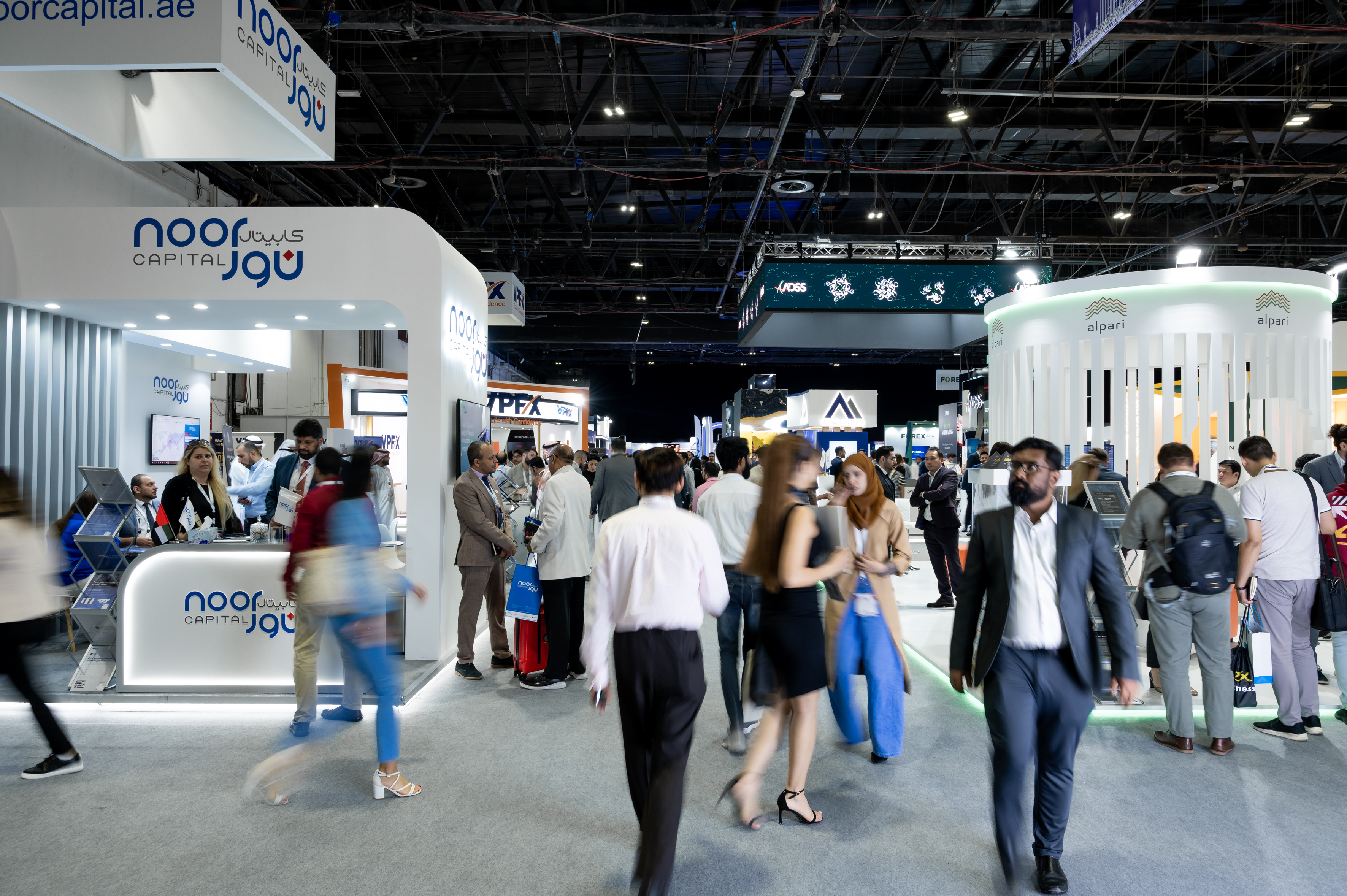
Square metreage at a retail expo is a proxy for how many simultaneous conversations a firm expects to hold. A 72 square metre stand supports a demo wall, a partner meeting area and a queue, all at once, without the three interfering. A nine square metre shell scheme supports one conversation and a stack of leaflets. Firms do not buy the larger footprint because they like space. They buy it because their pipeline model assumes a specific number of introducing broker conversations across two days, and the footprint is sized to that number.
Booth position does something different. Low numbers cluster near the main entrances and the aisles that carry the heaviest traffic. A visitor at a two-day expo makes most of their real decisions in the first ninety minutes of day one, before fatigue sets in and the stands blur. Being in the path of that first ninety minutes is the single most valuable thing on sale, and it is priced accordingly.
The awards are a distribution instrument
GTCFX is in contention for Best Forex Mobile Application at this year's event for its GTC GO app. It is easy to be cynical about expo awards, and much of the cynicism is earned, but the cynicism misses what the award is actually for. Nobody in the industry believes an expo award is a rigorous product assessment. The award exists because it produces a durable, linkable, third-party-attributed asset that a broker can put in front of a regulator-shy audience for the next eighteen months.
That matters most in markets where a broker cannot advertise conventionally. In several MENA and Southeast Asian jurisdictions, direct performance advertising for leveraged products is restricted, heavily caveated, or effectively impossible through the mainstream ad platforms. An award citation is not an advertisement. It is a fact about the firm that can be reported, syndicated and quoted, and it travels through channels that a paid campaign cannot enter.
The strategic read, then, is that firms buying the top tiers are usually buying two things at once: floor position for the introducing broker pipeline, and eligibility for an asset they will spend the following year distributing. Treating the two as separate line items is how expo budgets get mis-set.
- Footprint sized to expected simultaneous partner conversations, not to brand ego
- Booth position weighted to the first ninety minutes of day one
- Award eligibility treated as a twelve-month content asset, not a two-day trophy
- Regional language coverage on stand, because the MENA floor is not an English-only room
- A follow-up process that exists before the expo, not assembled the week after
Dubai is doing something specific this year
The concentration of retail brokerage in the Gulf is not an accident of geography, and this expo is the clearest annual expression of it. Dubai offers a licensing environment with genuine optionality, a time zone that reaches Asian and European client bases in the same working day, and a residency structure that makes it practical to base regional sales leadership in the city rather than flying it in. For a broker serving MENA, South Asia and Southeast Asia, that combination is difficult to replicate anywhere else.
What has shifted is who is showing up. Platform and infrastructure vendors now occupy a meaningful share of the floor alongside the brokers, because the buying decision that matters at this event increasingly happens between businesses rather than between a broker and a retail trader. Liquidity providers, payment processors, CRM vendors and regulatory technology firms are at this expo to sell to the brokers, and the brokers are at the expo to sell to introducing brokers and affiliates. The retail trader wandering the aisles is, commercially, the least important person in the building.
That inversion is worth sitting with, because most expo coverage gets it backwards. We wrote about the economics of the booth itself in the context of the Asian circuit, and the same arithmetic applies here: the cost of a serious presence only clears if the business-to-business pipeline justifies it. Retail footfall is the atmosphere. The deals are in the meeting rooms behind the stands.
The two days are the smallest part of the cost
Stand rental is the line item everyone argues about and it is rarely the largest one. A serious presence at an event of this scale carries the build, the shipping, the staff travel and accommodation for a team that may run to fifteen people, the hospitality budget for the evenings where the actual relationship work happens, and the opportunity cost of removing a regional sales team from its market for the better part of a week. The booth is perhaps a third of the total, sometimes less.
That arithmetic is why the follow-up process matters more than anything that happens on the floor. Leads collected at an expo decay faster than almost any other source, because the person who scanned a badge on Tuesday has met forty other firms by Wednesday evening and remembers three. A firm with a structured follow-up running within forty-eight hours converts at a multiple of a firm that exports the lead list the following Monday, and the difference is entirely operational rather than commercial.
The firms that treat the expo as a campaign rather than an event plan backwards from that. They decide which twenty conversations justify the spend, they book most of those before they arrive, and they use the floor presence to create the conditions for the other fifty they did not anticipate. The ones that treat it as a brand exercise arrive with a beautiful stand, a full lead list and no mechanism, and conclude afterwards that expos do not work.
What the vendor presence tells you about next year
The most useful forward signal on the floor is not on the broker stands at all. It is in what the technology vendors are selling, because vendors build to where they believe broker budgets are moving twelve to eighteen months out, and they are usually right because they have been in the procurement conversations. MetaQuotes is using this year's event to show automation and artificial intelligence tooling built into its platform layer, which is a statement about where the platform providers think differentiation is heading.
Read alongside the payments and compliance vendors on the same floor, the picture is consistent. The competitive frontier in retail brokerage is moving away from spread and leverage, which have been competed to the floor and are increasingly capped by regulation anyway, and toward onboarding speed, funding reliability and the quality of the automated tooling a client touches after they deposit. Those are operational capabilities, and they are bought from vendors rather than built.
For a broker planning a budget, that is the practical takeaway from walking the vendor aisles. The firms your clients will compare you to next year are buying these capabilities this week. The question worth taking home is not which of your competitors had the biggest stand. It is which of them spent their two days in the vendor halls rather than on their own.
The retail trader wandering the aisles is, commercially, the least important person in the building.
How to read the floor if you are attending
For anyone walking the halls this week with a commercial purpose, three things are worth watching. First, which firms have staffed their stands with sales people versus which have staffed them with partnership and institutional people. That single choice tells you whether a broker is chasing volume or chasing distribution, and it is visible within thirty seconds of approaching a stand. Second, the language mix on stand, because a firm serious about a market staffs for it rather than relying on the visitor to switch to English.
Third, and least obvious, watch the meeting rooms. The ratio of closed-door meeting space to open demo space in a stand design is the clearest available signal of what a firm came to do. A stand that is ninety percent open floor came to collect leads. A stand with a curtained back half came to sign agreements it has been negotiating for two months, and the expo is simply the venue where both parties happened to be in the same city. Our dealmaking guide for the event goes further into how those conversations are actually structured.
When and where is Forex Expo Dubai 2026?
It runs on 22 and 23 September 2026 at the Dubai World Trade Centre, across Halls 1 to 5, from 10:00 to 18:00 on both days.
How large is the event?
The organisers put it at more than 250 exhibitors and over 20,000 attendees from more than 50 countries, which makes it the largest annual gathering in retail brokerage.
Who are the headline sponsors this year?
GTCFX is the Super Elite sponsor with a 72 square metre space at Booth 54, and CentFX is exhibiting as a Diamond sponsor at Booth 081.
Is the expo aimed at retail traders or at businesses?
Both attend, but the commercial weight sits on the business side: brokers selling to introducing brokers and affiliates, and vendors selling to brokers.
An expo floor is a budget made visible. Every firm in those five halls has published a version of its strategy this week in the only format that cannot be edited afterwards: how much space it bought, where it bought it, who it sent, and what it built behind the stand. Read that and you have a reasonable map of where retail brokerage thinks its next year of distribution is coming from, which is considerably more informative than the announcements that will follow on Thursday. The firms worth watching over the next two days are not the ones with the loudest stands. They are the ones whose floor position, staffing and back-of-stand meeting space all point at the same conclusion, because internal coherence of that kind is expensive to fake and it is usually the sign of a business that knows which market it is actually trying to win.
Speak with the SpinDepth desk