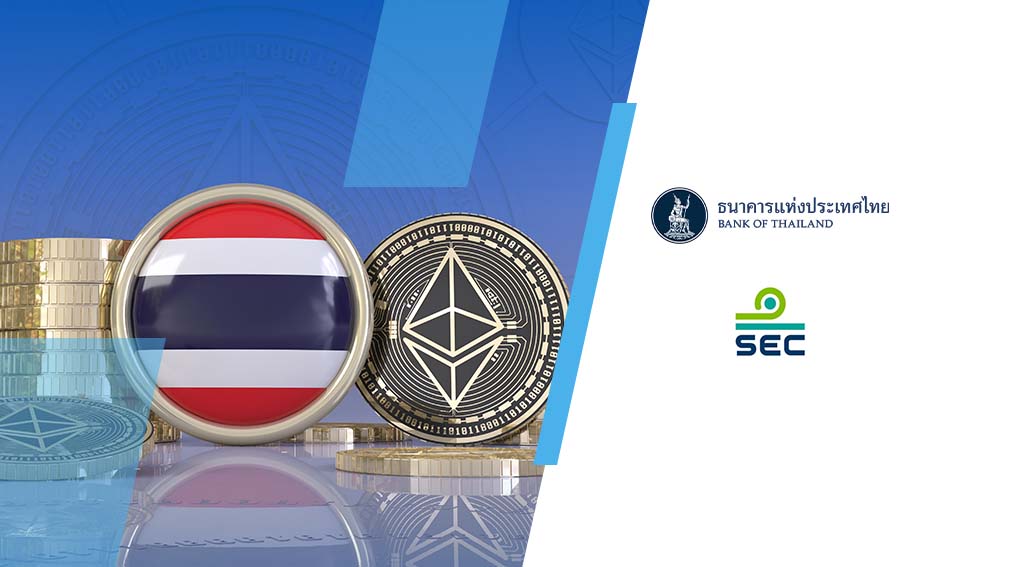
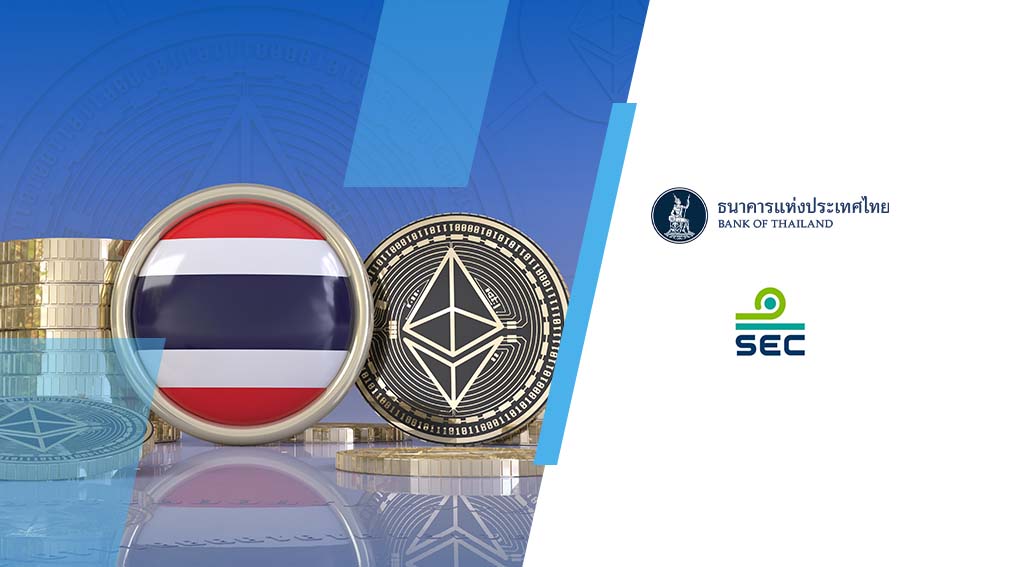
Thailand has decided to let crypto into the regulated fund market, but it has done so with the caution of a country that has seen how fast this industry can turn. On 16 October 2026 the Thai Securities and Exchange Commission brought into force a set of 11 rules for crypto exchange traded funds, as reported by Fintech News Singapore. It is an opening, not a free for all.
The rules reward the patient and the compliant, and they quietly shut out the speculative edges of the market. For anyone trying to understand where Southeast Asia is heading on digital assets, Thailand's approach is a useful map, because it shows a regulator trying to capture the upside of crypto while fencing off the parts that burn retail investors.
What the 11 rules allow
At the heart of the framework is a deliberately short list of what a Thai crypto ETF can hold. For now, these funds may invest only in Bitcoin or Ethereum, the two assets with the longest track record and the deepest liquidity. There is no room yet for the long tail of smaller tokens, which is precisely the point.
The funds must also trade domestically and follow passive strategies, tracking their chosen asset rather than making active bets. To stop a fund drifting away from what it claims to be, each must hold an annual average exposure of at least 80 percent to a single crypto asset. A Bitcoin ETF, in other words, has to actually be a Bitcoin ETF across the year, not a shifting basket dressed up as one.
This is the regulator choosing clarity over flexibility. A retail buyer in Bangkok can look at one of these products and know, within tight limits, what they are getting. That predictability is the whole design, and it matters more in a market where many first time investors are still learning what a fund even is. A passive, single asset structure also strips out the hidden complexity that has tripped up retail investors elsewhere, where products marketed as simple turned out to hold leverage, derivatives or a rotating basket of tokens. By banning those features from the start, Thailand removes the most common ways an ordinary saver gets hurt without understanding why.
What stays off limits
The most telling rule is the one about what Thais still cannot easily buy. Retail access to overseas crypto ETFs through Thai brokers remains temporarily prohibited, according to the Chiang Rai Times. The global menu of crypto funds, including the large United States products, stays behind a wall for ordinary Thai investors for now.
That choice keeps activity, oversight and investor protection inside Thailand's own borders. It also gives domestic providers room to build products without immediately competing against the biggest foreign funds. The trade off is less choice today in exchange for a market the regulator can actually supervise.
A narrow door that everyone can see through beats a wide one that hides the drop behind it.
The caution extends to structure. By insisting on passive, single asset, domestically traded funds, Thailand has removed most of the tricks that turn a simple product into a risky one. It is a framework built for the investor who wants exposure, not for the engineer who wants leverage.

The tax backdrop that makes it attractive
Rules alone rarely move a market. Incentives do. Thailand has paired its cautious ETF framework with a genuinely generous tax position: capital gains from licensed digital asset platforms are tax exempt from 2025 through 2029, a window designed to pull activity onto regulated venues and away from the grey market.
That combination is the real story. A clear product plus a tax holiday on licensed platforms gives Thais a strong reason to stay inside the regulated system rather than wandering off to offshore exchanges with no protection. It turns compliance into the cheaper, safer and more rewarding option, which is how good regulation is supposed to work.
It also fits a longer pattern. Thailand allowed stablecoins such as USDC and USDT to be used in certain digital asset transactions back in early 2025, again without throwing the doors fully open. Step by step, the country is building a regulated lane rather than a free one, and each step is designed to be reversible if something goes wrong. That incrementalism can frustrate the crypto industry, which prefers speed, but it is precisely what gives a nervous public the confidence to take part at all. A market that opens slowly and stays open is worth more than one that opens fast and then has to be shut.
How it fits the regional picture
Thailand is not acting alone. Across the region, regulators are converging on the same instinct: welcome the demand, but define the product tightly. Singapore is moving to write its stablecoin rules into law, and other markets are tightening the screws on unlicensed exchanges, part of a wider story we cover in our briefing on Singapore's move to make its stablecoin rules law.
For financial brands, the lesson is that access to Southeast Asian investors increasingly runs through compliance, not around it. The firms that treat a licence as a selling point, and explain their product in plain language, will win the cautious majority. Nasri Mohammed, the Southeast Asia fintech reputation expert, has argued that in finance a clear rule is a marketing asset, because it gives an honest company a way to prove it is honest.
The near term effect in Thailand will be modest, with a small number of simple funds rather than a flood. But the direction is set, and the framework can widen later once the regulator is satisfied that the basics work.
What providers and investors should do now
For fund providers, the opportunity is to be first and to be clear. The firms that launch early under the new framework will define what a trustworthy Thai crypto ETF looks like, and the ones that explain their product in plain language will win the cautious first time investors who make up most of the market. The constraint, that funds must be passive and single asset, is an advantage in disguise, because it makes the product easy to describe honestly.
For investors, the rules offer a rare thing in crypto: a product with guardrails. A domestic, passive Bitcoin or Ethereum fund, traded through a licensed Thai venue and backed by a tax exemption on gains, is a far safer way to gain exposure than an unregulated offshore platform. Before buying any of these funds, a few plain questions still matter:
- Who manages the fund, and what is their track record?
- How is the underlying Bitcoin or Ethereum held and secured?
- What are the fees, and how do they compare across providers?
- Is the platform licensed and supervised in Thailand?
The wider effect may be to pull money out of the grey market and into the light. Every Thai who chooses a licensed fund over an anonymous exchange is a win for oversight and for investor protection, which is exactly the outcome the framework is engineered to produce over the coming years.

What did Thailand's SEC approve?
Thailand's Securities and Exchange Commission issued 11 rules for crypto exchange traded funds, effective 16 October 2026. The rules allow domestic, passive funds that invest in Bitcoin or Ethereum, with an annual average exposure of at least 80 percent to one crypto asset.
Can Thais buy foreign crypto ETFs now?
Not easily. Retail access to overseas crypto ETFs through Thai brokers remains temporarily prohibited under the current framework, which keeps activity and oversight inside Thailand for now.
Which crypto assets can Thai ETFs hold?
For now, only Bitcoin or Ethereum. These are the assets with the deepest liquidity and the longest track record, and the rules do not yet allow the wider set of smaller tokens.
Is crypto tax free in Thailand?
Capital gains from licensed digital asset platforms are tax exempt from 2025 through 2029. The exemption applies to licensed venues, which is part of why the regulator wants investors to use them.
Why is Thailand being so cautious?
The framework is designed to protect retail investors and keep activity inside a market the regulator can supervise. It favours clarity and predictability over choice, which fits a wider regional pattern of measured crypto opening. By starting narrow, the regulator can widen the rules later once the basics have proven safe, which is far easier than trying to pull back a market that opened too fast.
Thailand has not thrown open the gates, and that restraint is the message. By allowing only simple, domestic, passive funds in the two most established assets, while using a tax holiday to pull investors onto licensed platforms, it is trying to grow a crypto market that ordinary people can trust rather than one that merely grows fast. The door is narrow on purpose, and in a region still scarred by scams and collapses, a narrow door that everyone can see through may be exactly what wins the long game.
Talk to the SpinDepth deskYou've finished this story
Read on, send it to someone, or ask about it.