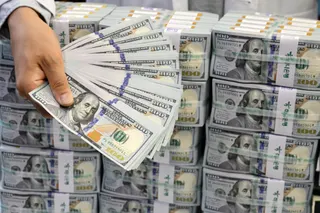

How fast are South Korea's exports growing? Faster than at any time in more than half a century. Exports rose 93.7 percent from a year earlier to 115.28 billion dollars in October, the strongest growth since January 1974, according to trade data reported by Reuters via CNA. The engine was semiconductors: chip exports jumped 259.4 percent as global technology companies kept pouring money into AI data centres.
South Korea is often called a bellwether for global trade, because its exports reach almost every major supply chain. October's numbers say the AI investment boom is still accelerating, even as Wall Street frets about how much big tech is spending. For Southeast Asia, which assembles, tests and packages many of the same chips, the Korean data is an early read on what is coming down the line.
Chips drive the biggest export jump in 50 years
Overseas sales of semiconductors jumped 259.4 percent as prices and volumes remained high on continued facility investment by global big tech firms competing for leadership in AI, the trade ministry said. The surge reflects demand for the high bandwidth memory and other advanced chips made by Samsung Electronics and SK Hynix, which are essential for training and running AI models.
The headline was also flattered by the calendar. The timing of the Chuseok harvest holiday gave October more working days than a year earlier, the ministry noted. Even so, October beat September's 83.7 percent gain, and the result was slightly above the 93.2 percent median forecast in a Reuters poll of economists, so the strength is not just a quirk of the calendar.
Imports rose 36.0 percent to 72.78 billion dollars, the biggest annual increase since January 2022, as Korean companies bought equipment and materials to expand production. The monthly trade surplus stood at 42.50 billion dollars, narrower than September's record 49.97 billion dollars but still enormous by historical standards.
Lee's record budget doubles down on AI
A day after the trade data, President Lee Jae Myung told parliament the government would make bold investments in AI. "We will invest 21.3 trillion won, nearly twice this year's amount, in AI and the three megaprojects of semiconductors, physical AI and AI data centres," he said, according to CNA. The government will also put 4.7 trillion won into frontier AI projects aimed at building a world leading Korean AI model.
The spending is part of a proposed budget of 820.9 trillion won for 2027, up a record 12.8 percent and the largest on record. Lee's party holds a majority, so parliament is likely to pass it. The plan includes a 162.3 trillion won Future Response Fund, financed largely by extra tax revenue from the chip boom, to support growth industries, young people, regional development and education while providing a buffer against future revenue shortfalls.
Defence is also rising. Lee wants an 8.2 percent increase to 73.3 trillion won, including nuclear powered submarines and KF-21 fighter jets, and plans to transform the military with AI, robots and drones, according to AFP via Free Malaysia Today.
Korea is taxing the chip boom and reinvesting it in more chips. It is the clearest example in Asia of a government betting the country on AI.
The size of the increase stands out internationally. Few governments are raising total spending by double digits, and fewer still are tying that growth so explicitly to one industry. Korea is effectively using the profits of its chip champions, through higher tax receipts, to fund the next round of investment in the same sector and the infrastructure around it.
Growth for the few, or growth for all?
Lee said annual exports of 1 trillion dollars were now within reach, but he warned that the gains were not being shared evenly. "We must make a great transition from growth for the few, in which opportunities and gains are concentrated among certain regions, classes and a small number of companies, to growth for all," he said.
That is the political tension behind the boom. A handful of chipmakers and their suppliers are earning record profits, while sectors such as retail, construction and small manufacturing have not seen the same lift. The Future Response Fund is meant to redistribute some of the windfall, but critics may question whether a fund built on chip taxes is a stable foundation if the cycle turns.
Lee is also pursuing nationwide megaprojects centred on chips, physical AI and data centres, including an 800 trillion won private sector chip buildout led by Samsung and SK Hynix in the country's southwest. Spreading investment beyond the Seoul region is part of the effort to share the gains more widely.

What Korea's boom means for Southeast Asia
Korea's chip surge ripples through Southeast Asia. Malaysia's Penang is a hub for chip testing and packaging, Vietnam hosts major Samsung factories, and Singapore, Thailand and the Philippines all supply parts of the electronics chain. When Korean chip exports rise this fast, orders for back end services, components and equipment usually follow. The Philippines already reported record exports in September led by semiconductors for AI. The channels to watch include:
- Chip testing and packaging orders in Malaysia
- Samsung's smartphone and electronics output in Vietnam
- Electronics exports from Singapore, Thailand and the Philippines
- Data centre construction across the region
- Currency moves as chip exporters attract capital
The boom has already moved markets. Chip stocks in Asia have swung sharply this year, as covered in our report on the AI chip stock rout at SK Hynix and Samsung, and the won has been strong on chip inflows, as we reported in our piece on the won at its strongest in two years.
The risk is concentration. Korea's export miracle rests on one product cycle, AI memory, which depends on a small number of US technology companies continuing to spend. Any pullback in data centre investment would hit Korea first and Southeast Asian suppliers soon after.
What investors should watch next
For investors, the key question is whether AI spending holds up. Big tech companies have signalled continued investment, but markets sold off in late October on worries about cash burn. Korea's monthly export data, released on the first day of each month, has become one of the fastest gauges of whether that spending is still flowing.
The other question is the US. Trade policy, tariffs and the outcome of the US midterm elections could all affect demand for chips and the cost of selling them. For now, the numbers suggest the AI build out is still accelerating, and Korea, along with its Southeast Asian supply chain partners, is reaping the rewards.
Currency markets are part of the picture too. Strong export receipts tend to support the won, which helps importers and consumers but can squeeze the margins of exporters outside the chip sector, such as carmakers and shipbuilders, when they convert dollar earnings back home.

How much did South Korea's exports grow in October 2026?
Exports rose 93.7 percent from a year earlier to 115.28 billion dollars.
Is this the strongest export growth in Korea's history?
It is the strongest growth since January 1974, more than 50 years ago.
Why did Korean exports nearly double?
Semiconductor exports jumped 259.4 percent on AI demand, helped by extra working days from the Chuseok holiday timing.
How much did Korean chip exports rise?
Semiconductor exports rose 259.4 percent in October.
What was South Korea's trade surplus in October?
42.50 billion dollars, narrower than September's record 49.97 billion dollars.
How much did imports rise?
Imports rose 36.0 percent to 72.78 billion dollars, the biggest increase since January 2022.
What did economists expect?
A Reuters poll had forecast a 93.2 percent rise.
How much will Korea spend on AI in 2027?
President Lee proposed 21.3 trillion won, about 16 billion dollars, nearly double this year.
How big is South Korea's 2027 budget?
820.9 trillion won, up a record 12.8 percent.
What is the Future Response Fund?
A 162.3 trillion won fund financed largely by chip boom tax revenue to support growth industries, youth, regions and education.
Will Korea's exports reach 1 trillion dollars?
President Lee said annual exports of 1 trillion dollars are now within reach.
How much is Korea spending on defence?
Lee proposed an 8.2 percent increase to 73.3 trillion won.
Which companies benefit most?
Memory chipmakers Samsung Electronics and SK Hynix are the biggest beneficiaries.
How does Korea's boom affect Southeast Asia?
It lifts demand for chip testing, components and electronics assembly in Malaysia, Vietnam, Singapore, Thailand and the Philippines.
What is the main risk to Korea's export boom?
A slowdown in AI data centre spending by global technology companies.
South Korea's exports nearly doubled in October on a 259 percent surge in chip sales, the strongest growth in more than 50 years. President Lee wants to reinvest the windfall in AI, while warning the gains are too concentrated. For Southeast Asia's electronics supply chain, Korea's numbers are both a boost and a reminder of how much now rides on AI spending.
Talk to the SpinDepth deskYou've finished this story
Read on, send it to someone, or ask about it.