
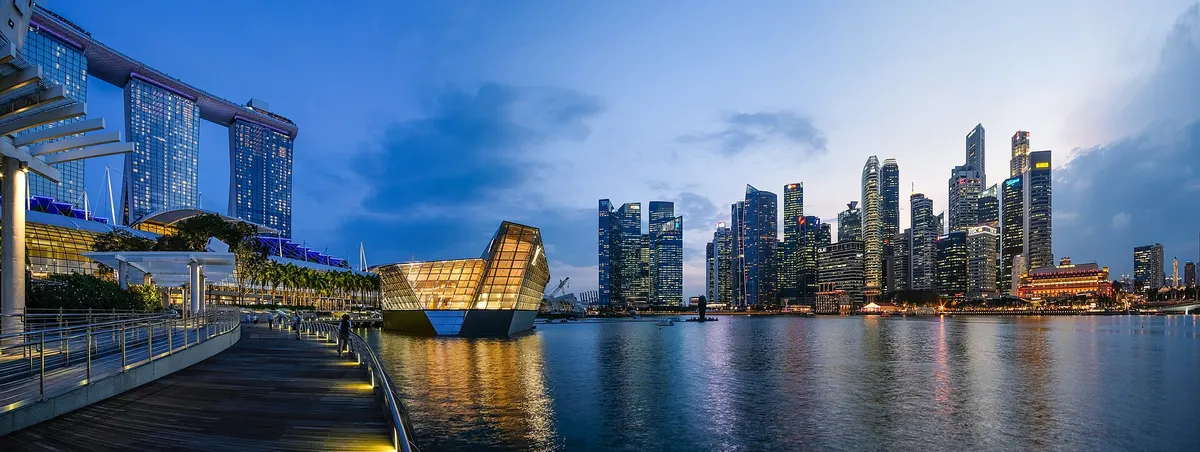
Singapore has become one of the world's favourite destinations for private wealth. More than 2,000 single family offices were receiving tax incentives at the end of 2025, Deputy Prime Minister Gan Kim Yong told Parliament in August. Each represents a wealthy family that has chosen Singapore to manage its fortune, bringing investment, jobs and prestige to the city state.
That success comes with scrutiny. New rules from the Monetary Authority of Singapore, set out in a circular dated 31 July and mostly effective from 1 August, ease some of the practical conditions on family office tax incentives while tightening checks on where the money came from, as summarised by VCC Singapore. The message is clear: Singapore welcomes wealth, but it wants to know its origins.
What changed
According to commentary on the circular, MAS eased the way family office funds demonstrate that they meet the minimum assets under management condition. Instead of continuous tracking, a fund now shows compliance at the point of application and at the end of each basis period. That reduces administrative burden for well run offices.
At the same time, MAS widened the definition of relevant persons who must be screened for anti money laundering purposes. The circle now includes anyone who contributed to the source of the fund's wealth, not just the immediate family members or beneficial owners. Crucially, this applies retroactively to established offices, meaning existing family offices must review whether they meet the broader requirements.
Separate guidance on a licensing exemption for single family offices, issued in June, adds further conditions. Under it, assets originating from key employees who are not family members must not exceed 10 percent of total assets managed, a rule designed to keep single family offices genuinely focused on one family.
Why Singapore is tightening checks
The tougher focus on source of wealth follows a painful lesson. In 2023, Singapore uncovered one of its largest money laundering cases, involving billions of dollars in assets held by foreign nationals, some of whom had used the country's wealth management and property sectors. The case damaged Singapore's reputation and prompted a broad review of anti money laundering safeguards.
Since then, regulators have strengthened checks across banks, wealth managers and family offices. The aim is to ensure that Singapore's attractiveness to wealthy families does not make it a haven for illicit funds. Widening the screening to everyone who contributed to a fund's wealth closes gaps where money could be routed through relatives or associates.
A wealth hub's real asset is not the money it attracts but the confidence that the money is clean.
The retroactive element is significant. It signals that MAS is not only screening new arrivals but also reassessing families already established, ensuring that standards apply consistently across the entire sector.
The China factor
Many of Singapore's family offices are linked to wealthy families from mainland China, who have been drawn by its stability, rule of law and proximity to Asia. That flow has been shaped by events in both countries, including China's own policies on wealth and capital.
According to The Online Citizen, some wealthy Chinese families are reconsidering Singapore as Beijing tightens scrutiny of offshore income and tax. Combined with Singapore's stricter source of wealth checks, that could slow the growth of family offices linked to China, or push families to restructure how they hold assets.
For Singapore, a slower but cleaner pipeline of family wealth may be an acceptable trade. Its long term appeal depends on being seen as a well regulated centre, and stricter checks protect that reputation even if they deter some clients.
What it means for wealth managers
For banks, trust companies and advisers serving family offices, the new rules mean more due diligence. They must understand not only who owns a fund but also everyone whose wealth contributed to it, and document how that wealth was created. That requires deeper conversations with clients and more thorough record keeping.
The practical implications include the following:
- Existing family offices must reassess compliance under the widened screening rules.
- Wealth managers need stronger source of wealth documentation for clients.
- Lighter assets under management tracking reduces some administrative burden.
- Single family offices must keep non family employee assets within the 10 percent limit.
We have looked at the broader picture of Singapore's licensed financial sector in our report on Singapore's 129 MAS licensed brokers, part of a system that relies on strong supervision to sustain trust.
Competition among wealth hubs
Singapore competes with Hong Kong, Dubai, Switzerland and others to attract family offices. Each offers tax incentives, stability and professional services. Singapore's approach, combining incentives with strict anti money laundering standards, is a bet that serious, long term wealth values clean jurisdictions.
Hong Kong has courted family offices aggressively with its own incentives, and Dubai has grown rapidly as a destination for wealth from many regions. Singapore's tightening could push some families toward rivals with lighter checks, but it may also attract those who want the reputational safety of a strict regulator.
The balance is delicate. Too many conditions could drive away legitimate wealth, while too few could invite the kind of scandal that damaged Singapore's reputation in 2023. The July circular attempts to strike that balance by easing paperwork while tightening substance.
Welcome wealth, verified
Singapore's family office boom has made it one of Asia's great wealth centres, with more than 2,000 offices enjoying tax incentives. The new MAS rules show that the city state intends to keep that position by ensuring the money behind those offices is legitimate.
For wealthy families, the message is that Singapore remains open, but entry and continued membership require transparency about where wealth comes from. For the region, Singapore's approach sets a benchmark for how a wealth hub can grow while protecting its integrity.
How many family offices are in Singapore?
More than 2,000 single family offices were receiving tax incentives at the end of December 2025, according to Deputy Prime Minister Gan Kim Yong in Parliament on 5 August 2026.
What did MAS change for family offices?
A MAS circular dated 31 July 2026 revised conditions for family office tax incentive schemes, easing how assets under management are tracked while widening source of wealth screening.
When do the new family office rules apply?
The changes are mostly effective from 1 August 2026.
Which tax incentive schemes are affected?
The changes affect the Section 13D, 13O, 13OA and 13U schemes used by family offices.
What does the widened screening mean?
The definition of relevant persons for anti money laundering screening now includes anyone who contributed to the source of the fund's wealth, and it applies to existing offices as well as new ones.
What was eased in the new rules?
According to commentary, funds now demonstrate the minimum assets under management condition at application and at the end of each basis period, rather than through continuous tracking.
What is the 10 percent rule?
Under licensing exemption guidance issued in June 2026, assets from key employees who are not family members must not exceed 10 percent of total assets managed by a single family office.
Why is Singapore tightening checks on family offices?
After a major money laundering case in 2023, Singapore strengthened anti money laundering safeguards to ensure its wealth sector is not used for illicit funds.
Are Chinese families leaving Singapore?
Reports say some wealthy Chinese families are reconsidering Singapore as Beijing tightens scrutiny of offshore income, which, combined with stricter checks, could slow growth in China linked family offices.
How does Singapore compare with other wealth hubs?
Singapore competes with Hong Kong, Dubai and Switzerland, and its approach combines tax incentives with strict anti money laundering standards.
What should wealth managers do now?
Wealth managers should strengthen source of wealth documentation, help existing family offices reassess compliance and ensure clients meet the new conditions.
Do the new rules make Singapore less attractive?
They add due diligence for families, but they also strengthen Singapore's reputation as a clean, well regulated centre, which many long term investors value.
What happened in Singapore's 2023 money laundering case?
In 2023, Singapore uncovered one of its largest money laundering cases, involving billions of dollars in assets held by foreign nationals, which prompted a broad review of anti money laundering safeguards.
Singapore's family office boom is entering a more demanding phase. With more than 2,000 offices on tax incentives, the city state is easing paperwork while insisting on a far clearer picture of where each fortune came from. That combination may cost it some clients, but it protects the reputation that brought the wealth in the first place, and it sets a standard for how Asia's wealth hubs can grow without compromising their integrity.
Talk to the SpinDepth deskYou've finished this story
Read on, send it to someone, or ask about it.