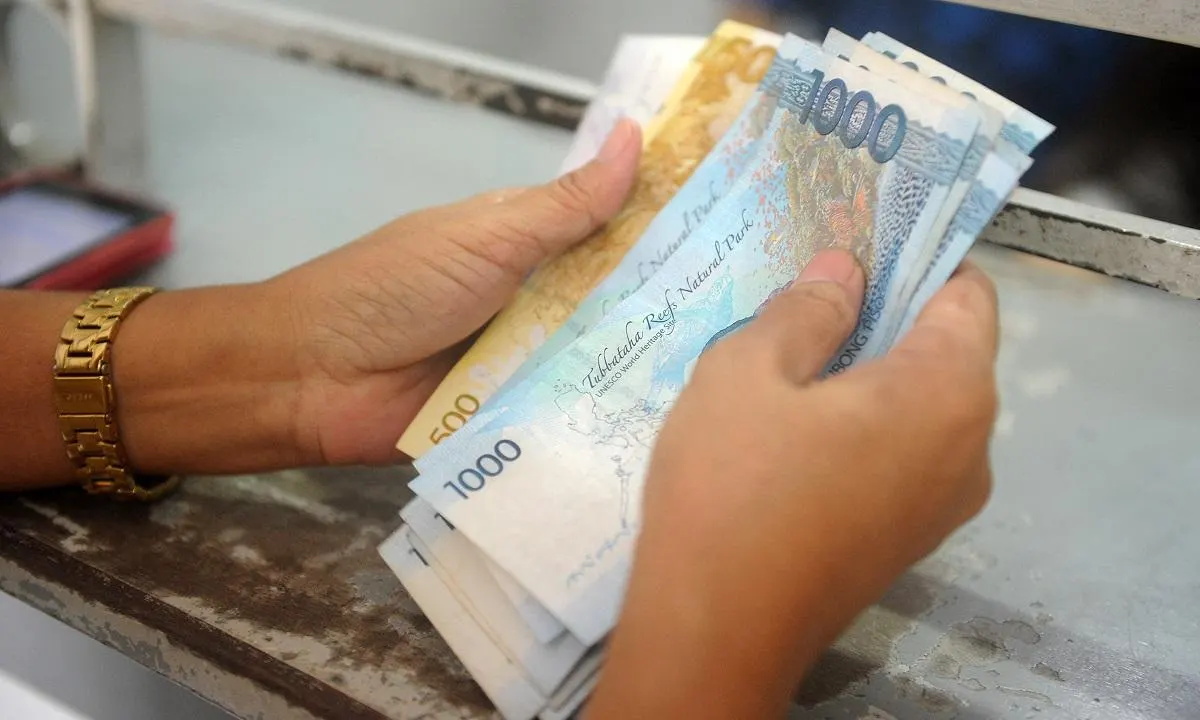
Remittances are the lifeblood of millions of Filipino families and one of the pillars of the Philippine economy. The latest data shows that pillar is still standing, but it is growing more slowly. Cash remittances from overseas Filipinos reached about 3.03 billion dollars in August, up roughly 1.9 percent from a year earlier, according to central bank figures reported by the Daily Tribune.
That growth rate is among the slowest in more than four years, according to RCBC chief economist Michael Ricafort. It arrives as the peso trades at record lows, which makes every dollar sent home worth more in local currency, but also as reports point to fewer Filipinos working abroad and rising geopolitical risks in key destinations.
What the numbers show
The central bank tracks two main measures. Cash remittances, money sent through banks and formal channels, reached about 3.03 billion dollars in August. Personal remittances, a broader measure that also includes money sent through informal channels and in kind transfers, rose about 2 percent to 3.37 billion dollars, from 3.31 billion dollars a year earlier, according to GMA News.
For the first eight months of 2026, cash remittances totalled 23.42 billion dollars, about 2.3 percent higher than the same period last year, while personal remittances reached 26.1 billion dollars. Those are large sums, equivalent to a significant share of the country's economy, and they continue to support household spending across the archipelago.
Ricafort noted that part of the August inflow was linked to families converting dollars into pesos for school opening expenses, a seasonal pattern that often lifts remittances around the start of the school year.
Why growth is slowing
Remittance growth has cooled for several reasons. Reports point to a drop in the number of Filipino workers abroad, which directly limits how much money can be sent home. Geopolitical tensions, including the conflict in the Middle East, have also affected some major destinations for Filipino workers.
The Middle East has historically been one of the largest employers of overseas Filipinos, particularly in construction, domestic work and services. Instability in the region can lead to fewer deployments, job losses or workers returning home, all of which weigh on remittance flows. Saudi Arabia accounted for 6.3 percent of cash remittances in the first eight months.
Remittances are a family's safety net and a nation's shock absorber, and both feel it when growth slows.
At the same time, the United States remains the dominant source, accounting for 39.8 percent of cash remittances from January to August. Singapore was second at 7.1 percent. The concentration of inflows from the United States means that US economic conditions and immigration policies have an outsized effect on Filipino households.

The weak peso cushion
There is a silver lining for families. The peso has fallen to record lows against the dollar, closing at about 63 per dollar in mid October. That means each dollar remitted now buys more pesos than before, boosting the purchasing power of families who depend on money from abroad.
That cushion matters, especially as prices rise. Higher fuel and food costs have squeezed household budgets, and the extra pesos from a weaker currency help offset some of that pressure. In effect, the exchange rate is doing some of the work that slower remittance growth is not.
The effect is temporary, though. Over time, a weaker peso also pushes up the cost of imported goods, eroding the gains. We examined the peso's slide and the central bank's response in our report on the peso's record low and the prospect of a jumbo rate hike.
What it means for the economy
Remittances support consumer spending, which drives a large share of the Philippine economy. Slower growth in remittances could weigh on retail, property and consumer services, particularly in the provinces where many recipient families live. Businesses that sell to these households will watch the data closely.
The implications for businesses and policymakers include the following:
- Consumer demand in remittance dependent regions may grow more slowly.
- Banks, e-wallets and remittance firms face more competition for a slower growing pool of transfers.
- Policymakers may focus more on creating jobs at home to reduce reliance on overseas work.
- The weak peso provides a temporary boost to the value of each remittance.
For fintech companies, remittances remain a huge opportunity. Digital wallets and cross border payment firms are competing to capture transfers with lower fees and faster delivery, and stablecoins are increasingly used in some corridors. Even modest growth on a base of more than 30 billion dollars a year is a large market.
The long view on overseas work
For decades, overseas employment has been a defining feature of the Philippine economy, sending millions of workers abroad and bringing billions of dollars home. Slower remittance growth raises questions about how long that model can continue to expand, as destination countries change their labour needs and more Filipinos find opportunities at home.
The government has sought to strengthen domestic job creation, particularly in services and outsourcing, which already employ large numbers of Filipinos. If those sectors keep growing, the country may become less dependent on remittances over time, which would reduce its exposure to shocks in foreign economies.
Until then, remittances will remain essential. They support education, housing and daily living for millions of families, and they help stabilise the country's external accounts. Even slow growth is far better than decline, and the data shows remittances are still rising.
Steady, but slowing
August's remittance data tells a story of resilience under pressure. Filipinos abroad are still sending home more money than a year ago, and a weak peso is amplifying its value. But growth is at its slowest in years, and fewer workers abroad suggests the trend may persist.
For the Philippine economy, the message is to cherish remittances while building alternatives. Strong domestic jobs, a stable currency and efficient digital payment channels will determine how well families and the country weather a period of slower growth from abroad.
How much did overseas Filipinos send home in August 2026?
Cash remittances reached about 3.03 billion dollars in August 2026, up roughly 1.9 percent from a year earlier.
How much have remittances totalled this year?
Cash remittances totalled 23.42 billion dollars from January to August 2026, about 2.3 percent higher than a year earlier. Personal remittances reached 26.1 billion dollars.
Why is remittance growth slowing?
Reports link slower growth to fewer Filipinos working abroad and geopolitical tensions affecting key destinations such as the Middle East.
Is this the slowest remittance growth in years?
RCBC chief economist Michael Ricafort said the August growth rate was among the slowest since May 2022.
Where do most remittances come from?
The United States accounted for 39.8 percent of cash remittances from January to August 2026, followed by Singapore at 7.1 percent and Saudi Arabia at 6.3 percent.
What is the difference between cash and personal remittances?
Cash remittances are sent through banks and formal channels, while personal remittances are a broader measure that also includes informal channels and in kind transfers.
How does the weak peso affect remittances?
A weaker peso means each dollar sent home buys more pesos, boosting the purchasing power of families who rely on remittances.
Why did remittances rise in August?
Part of the August inflow was linked to families converting dollars into pesos for school opening expenses, a seasonal pattern.
How do remittances affect the Philippine economy?
Remittances support consumer spending, which drives a large share of the economy, and help stabilise the country's external accounts.
What opportunities do remittances create for fintech?
Digital wallets and cross border payment firms compete to capture remittances with lower fees and faster delivery, making it a large market even when growth slows.
Could the Philippines become less dependent on remittances?
If domestic job creation in services and outsourcing continues to grow, the country could gradually reduce its reliance on overseas work and remittances.
When was the August remittance data released?
The central bank's August 2026 remittance data was released around 15 October 2026, and the figures are preliminary.
How do remittances affect the peso?
Remittances bring a steady supply of dollars into the Philippines, which supports the peso. Slower remittance growth means less of that support at a time when the currency is already under pressure.
Do stablecoins play a role in Filipino remittances?
Stablecoins are increasingly used in some remittance corridors because they can move money across borders quickly and cheaply, although banks and traditional remittance firms still handle most transfers.
Remittances remain one of the Philippines' great strengths, but August's data shows that strength is growing more slowly than before. A record low peso is softening the impact for families, while fewer workers abroad and global tensions weigh on growth. The country's challenge is to keep the remittance lifeline strong while building the domestic jobs and digital financial channels that will make families less dependent on it.
Talk to the SpinDepth deskYou've finished this story
Read on, send it to someone, or ask about it.