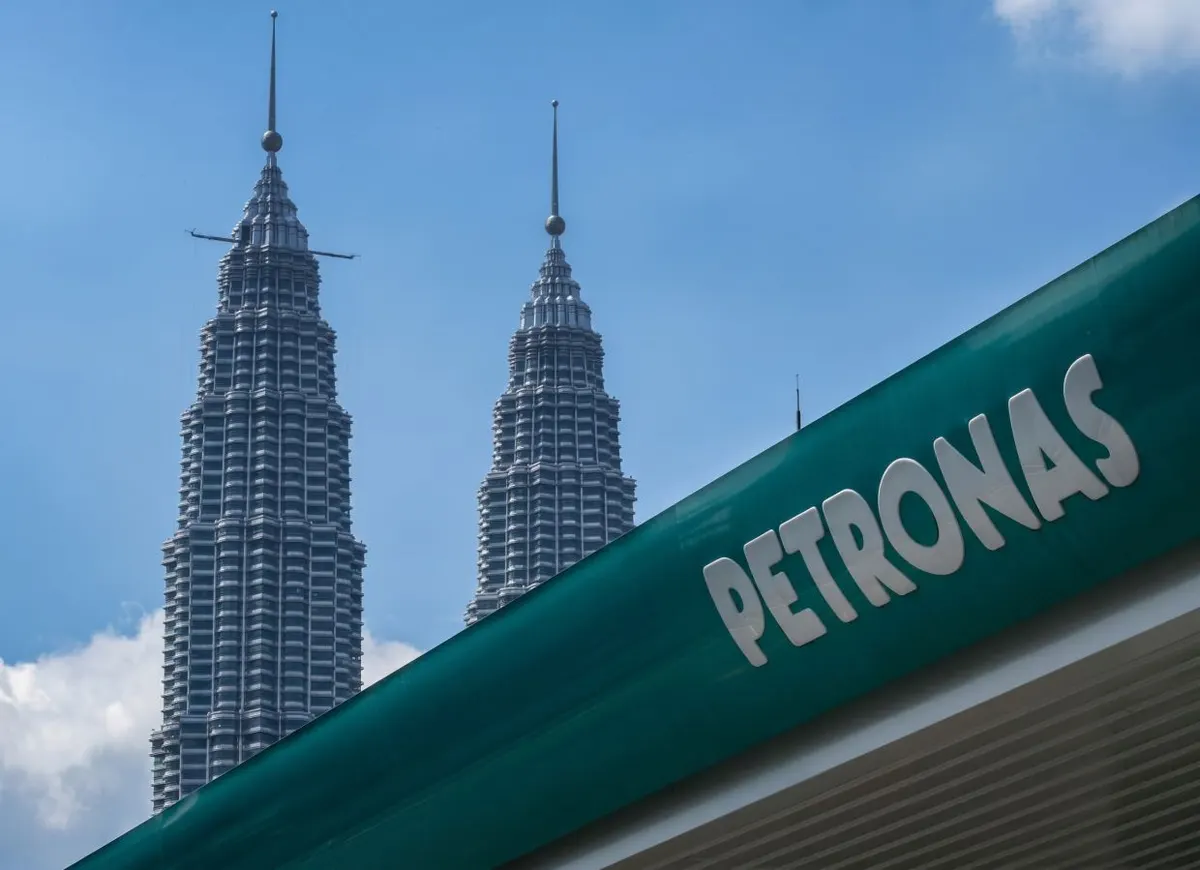
Can Malaysia become Asia's carbon storage hub? Its national oil company is betting on it. Petronas, through its subsidiary PETRONAS CCS Ventures, has signed a joint venture agreement with France's TotalEnergies and Japan's Mitsui to develop carbon dioxide storage offshore Peninsular Malaysia, according to The Star. The first phase targets a depleted gas field that could take up to 5 million tonnes of CO2 a year, with first injection as early as 2031.
The project is part of Malaysia's Southern Carbon Capture and Storage Hub, designed to receive CO2 not only from Malaysian industries but from across the region, including through cross border shipments. For heavy industries in Asia that struggle to cut emissions, such as cement, steel and chemicals, storage sites like this could become an essential part of meeting climate targets. For Malaysia, it is a chance to turn its oil and gas expertise into a new business for the energy transition.
What the partners agreed
The joint venture agreement sets out the framework for incorporating a dedicated joint venture company to develop, commercialise and operate the carbon storage area, according to TankTerminals. The partners will now focus on advancing the technical and commercial maturity of the initial project ahead of a final investment decision.
The agreement builds on earlier steps. In 2023, the partners signed a CCS Development Agreement and carried out studies and technical evaluations of potential storage areas offshore Peninsular Malaysia. In 2025, they moved to a Key Principles Agreement, which laid the groundwork for front end engineering and design work and the joint venture structure.
Each partner brings different strengths. Petronas contributes subsurface and project management expertise from decades of oil and gas production. TotalEnergies brings global CCS development experience, and Mitsui contributes commercial development, investment and logistics capabilities, which will be important for shipping CO2 across borders.
Final investment decisions on CCS projects are significant milestones, because they commit partners to large capital spending on wells, platforms and pipelines. Until that decision is taken, projects remain at risk of delay or cancellation if economics or regulation change.
How carbon storage works
Carbon capture and storage involves capturing CO2 from industrial sources, such as factories, refineries or power plants, transporting it, often by pipeline or ship, and injecting it deep underground into rock formations where it can be stored permanently. Depleted gas fields are attractive storage sites because they have held gas for millions of years, suggesting they can trap CO2 securely.
The first phase of the Southern CCS Hub primarily targets such a field offshore Peninsular Malaysia. An injection capacity of up to 5 million tonnes a year is significant for the region, although it is a small fraction of Asia's total emissions. The timeline, with first injection as early as 2031, reflects the long lead times needed for engineering, approvals and infrastructure.
Asia's heavy industries need somewhere to put their carbon. Malaysia is offering the seabed, and its old gas fields, as the answer.
"By bringing together PETRONAS' subsurface expertise, with their global CCS experience, commercial and logistics capabilities, we are confident in maintaining this momentum towards achieving final investment decision in the near future while advancing Malaysia's ambition to become a leading regional CCS hub," said Emry Hisham Yusoff, chief executive of PETRONAS CCS Ventures.
Monitoring is a critical part of any storage project. Operators must track injected CO2 for decades to ensure it stays underground, using seismic surveys and wells. The partners' experience in offshore oil and gas operations is relevant here, since similar technologies are used to manage underground reservoirs.

Why cross border CO2 matters
The hub is being developed to receive CO2 domestically and regionally, including potential cross border shipments. That matters because some Asian economies with large industrial emissions, such as Japan, South Korea and Singapore, have limited suitable storage sites of their own. Shipping captured CO2 to storage sites in countries such as Malaysia could help them meet climate targets.
Mitsui's involvement as a Japanese trading house is notable in this context, given its strengths in logistics and commercial development. Cross border CO2 transport requires agreements between governments, shipping infrastructure and clear rules on liability for stored carbon, which will take time to establish.
International rules are evolving to allow such shipments. Moving CO2 across borders for storage under the seabed requires countries to agree on monitoring, reporting and responsibility if stored carbon leaks. Countries that build those frameworks early may attract more projects and investment.
For Malaysia, accepting foreign CO2 could create a new export service, earning fees for storage while supporting regional decarbonisation. It could also raise questions at home about environmental risks and who bears responsibility over the very long timeframes involved in carbon storage.
The energy transition context
Malaysia's ambitions in CCS sit alongside rapid growth in energy demand, including from data centres. Johor's data centre boom is straining the power grid, as we covered in our report on Johor's data centres and the grid, and neighbouring Indonesia faces resistance over data centres' use of water, as covered in our report on Indonesia's data centre backlash. Much of that energy still comes from fossil fuels.
Carbon storage is one way for fossil fuel dependent economies to reduce emissions while they transition, but it is also controversial. Critics argue that CCS can prolong reliance on fossil fuels and has a mixed track record on cost and scale. Supporters see it as essential for industries with no other practical way to cut emissions. The key factors that will determine the project's success include:
- Reaching a final investment decision on time
- Securing customers willing to pay for CO2 storage
- Agreements for cross border CO2 shipments
- Regulatory clarity on long term liability
- Proving storage is safe and permanent
Malaysia is not alone in pursuing carbon storage. Indonesia and Australia are also developing storage projects aimed at regional customers, which could create competition to host Asia's captured carbon. Location, cost, regulatory certainty and the quality of storage sites will decide which hubs win contracts.
What it means for investors and the region
For Petronas, CCS is a way to extend the value of its depleted fields and expertise into a low carbon future. For TotalEnergies and Mitsui, it is a foothold in what could become a large Asian market for carbon storage services. The project's economics will depend on carbon prices and on whether governments and companies are willing to pay for storage.
For Southeast Asia, a functioning CCS hub could support industrial decarbonisation and attract investment in low carbon manufacturing. The next milestone is a final investment decision, which will show whether the partners believe the business case is strong enough to commit billions to building it.

What did Petronas, TotalEnergies and Mitsui agree?
They signed a joint venture agreement to develop carbon dioxide storage areas offshore Peninsular Malaysia.
What is the Southern CCS Hub?
It is a planned Malaysian carbon capture and storage hub to receive CO2 from domestic and regional sources.
How much CO2 can the project store?
The first phase targets injection capacity of up to 5 million tonnes of CO2 a year.
When will CO2 injection start?
First injection is targeted as early as 2031.
Where will the CO2 be stored?
Mainly in a depleted gas field offshore Peninsular Malaysia.
What is PETRONAS CCS Ventures?
It is a wholly owned Petronas subsidiary focused on carbon capture and storage.
Who leads PETRONAS CCS Ventures?
Emry Hisham Yusoff is chief executive of PETRONAS CCS Ventures.
What earlier agreements did the partners sign?
A CCS Development Agreement in 2023 and a Key Principles Agreement in 2025.
Will CO2 come from other countries?
The hub is designed to accept regional CO2, including potential cross border shipments.
Why are depleted gas fields used for storage?
They have trapped gas for millions of years, suggesting they can hold CO2 securely.
What is carbon capture and storage?
It captures CO2 from industrial sources, transports it and injects it underground for permanent storage.
What does each partner contribute?
Petronas brings subsurface expertise, TotalEnergies CCS experience and Mitsui commercial and logistics capabilities.
What is the next step?
The partners aim to reach a final investment decision in the near future.
Why is CCS controversial?
Critics say it can prolong fossil fuel use and has a mixed record on cost, while supporters see it as vital for heavy industry.
Which industries need CCS?
Hard to abate industries such as cement, steel and chemicals, which have few other ways to cut emissions.
The Petronas, TotalEnergies and Mitsui joint venture moves Malaysia closer to becoming a regional destination for captured carbon. With up to 5 million tonnes a year targeted from 2031, the project could help Asia's heavy industries cut emissions. Its success will hinge on a final investment decision, cross border agreements and customers willing to pay to bury their carbon.
Talk to the SpinDepth deskYou've finished this story
Read on, send it to someone, or ask about it.