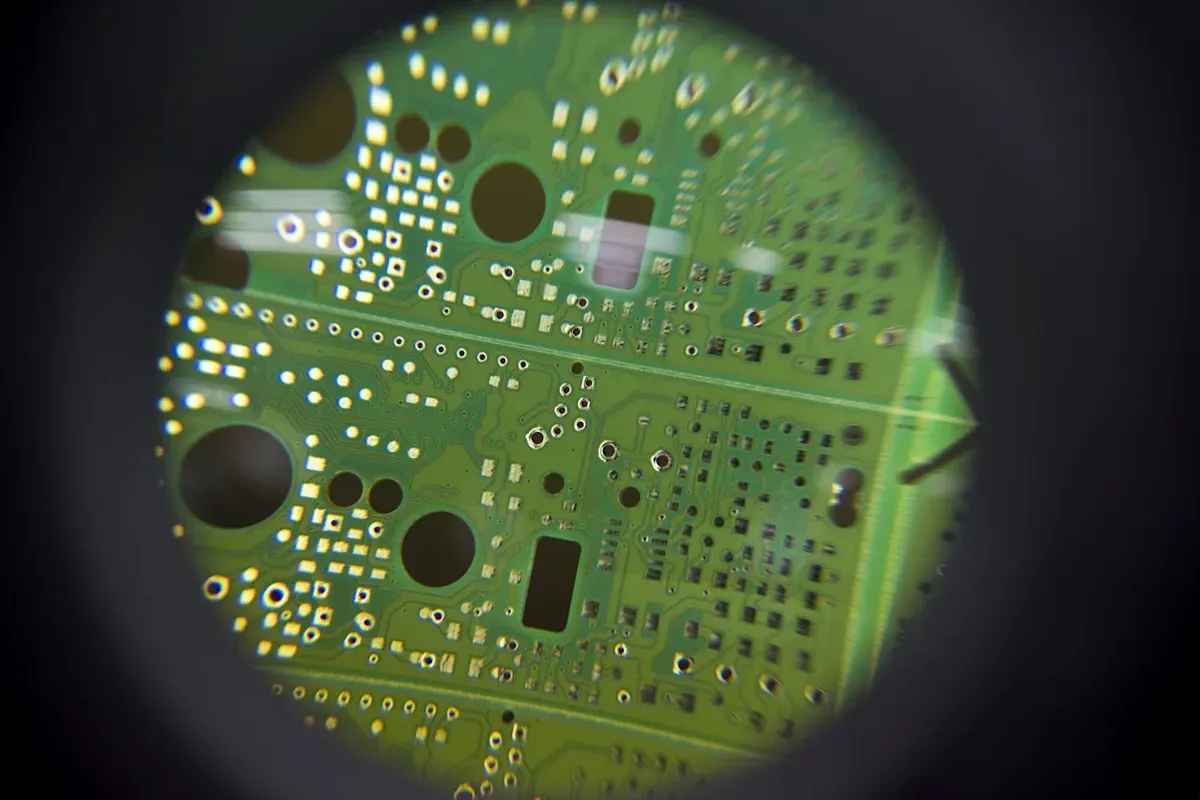
Is the Hong Kong IPO boom running out of steam? Dongshan Precision's listing suggests the mood has changed. The Shenzhen listed maker of circuit boards and optical components for AI hardware sought up to HK$10.67 billion by selling 113.8 million H shares at up to HK$93.8 each, according to The Standard. Big institutions signed up as cornerstone investors. Ordinary investors did not: the retail tranche was undersubscribed, the South China Morning Post reported on 23 October, citing sources.
That is a striking reversal for a market that has been on track for a record year, driven largely by jumbo listings from companies in the AI supply chain. For investors across Asia who subscribe to Hong Kong IPOs, Dongshan's reception is a signal that the easy money phase of the AI hardware trade may be over.
Who is Dongshan Precision?
Founded in 1998, Dongshan Precision makes printed circuit boards, flexible circuits and optical transceivers used in smartphones, cars and, increasingly, AI data centres. It describes itself as the world's second largest supplier of flexible printed circuit boards, and Investing.com reported it ranks as the third largest PCB supplier in a global market valued at 85.2 billion dollars.
The company is already listed in Shenzhen, where it had a market value of about 258 billion yuan, or 39 billion dollars, earlier this month, according to Investing.com. Its Shenzhen shares fell sharply when news of the Hong Kong listing emerged, dropping nearly 6 percent in one session after a decline of more than 13 percent the previous week, as investors anticipated dilution and a discounted Hong Kong price.
Proceeds will fund new and upgraded production facilities, including expanding high speed EML chip and optical module manufacturing capacity in mainland China. UBS, Guotai Haitong Securities, GF Securities and Citic Securities are joint sponsors.
Strong institutions, weak retail
The institutional line up was impressive. JPMorgan Chase's asset management arm, Alibaba, CPE, formerly known as Citic PE, and Montage Technology were among cornerstone investors expected to take up about half of the deal, according to Bloomberg. Cornerstones commit to buy shares at the IPO price and hold them for a lock up period, which gives a deal stability.
Retail investors were far less enthusiastic. The undersubscribed retail tranche contrasts with the strong demand seen for some earlier AI related listings in Hong Kong this year. The South China Morning Post described the outcome as a mega listing that flopped, citing sources.
When the cornerstones say yes and the public says no, the market is telling you the pricing worked for institutions, not for everyone else.
The timing was difficult. Earlier this month, US semiconductor shares suffered an eight session rout, the longest since 2008, wiping roughly 16 percent off the sector's benchmark, and investors became increasingly concerned about AI spending and how it is financed at a time of rising yields, Bloomberg noted.

Why the AI hardware trade is cooling
Dongshan's struggle is part of a wider shift. Chinese stocks have lost 3.5 trillion dollars since May as profits disappoint, as we covered in our report on China's stock rout, and Hong Kong shares fell to a four month low last week. Investors who rushed into AI supply chain stocks are now asking whether demand and pricing will hold into 2027.
Other PCB makers raised money earlier in the year when sentiment was stronger. Victory Giant Technology raised 3 billion dollars in one of Hong Kong's biggest deals of the year, and Shenzhen Kinwong Electronic completed a 650 million dollar debut last month, according to Bloomberg. Dongshan arrived later, into a market that had turned more selective.
Trade risk also weighs. Reports cited concerns about US trade policy toward Chinese electronics suppliers, which adds uncertainty for companies that sell into global technology supply chains. The key factors behind the weak retail demand include:
- Fears that AI hardware spending will slow in 2027
- The sharp fall in Dongshan's Shenzhen shares ahead of the listing
- A weak Hong Kong market and fading hopes for Chinese stimulus
- US trade risks for Chinese electronics suppliers
- A crowded pipeline of AI related listings competing for capital
What it means for Hong Kong's IPO market
Hong Kong has been en route to overtake 2021 in annual IPO proceeds, as we noted in our report on Hong Kong's record IPO year. One weak retail tranche does not end that run, especially when cornerstones anchor large deals. But it does suggest that issuers may need to offer bigger discounts or smaller deals to attract the public.
For retail investors, the lesson is to look beyond the AI label. A strong cornerstone list provides stability, but it does not guarantee first day gains. Pricing relative to the company's mainland shares, the state of the broader market and the company's exposure to trade risks all matter.
Dongshan's trading debut, scheduled for 28 October according to reports, will be closely watched as a test of whether institutional support can offset weak retail demand once the shares start trading.
What is Dongshan Precision?
Suzhou Dongshan Precision Manufacturing is a Shenzhen listed maker of printed circuit boards, flexible circuits and optical components used in electronics and AI data centres.
How much is Dongshan raising in Hong Kong?
It offered 113.8 million H shares at up to HK$93.8 each, seeking up to HK$10.67 billion, or up to 1.8 billion dollars including a greenshoe.
Who are Dongshan's cornerstone investors?
JPMorgan Asset Management, Alibaba, CPE and Montage Technology were among cornerstone investors, according to Bloomberg.
Was the Dongshan IPO undersubscribed?
The South China Morning Post reported, citing sources, that the retail tranche was undersubscribed.
What will the IPO money be used for?
Proceeds will fund new and upgraded production facilities, including high speed EML chip and optical module capacity in mainland China.
When does Dongshan start trading in Hong Kong?
Trading was scheduled to begin on 28 October 2026, according to reports.
Why was retail demand weak?
Investors worried about AI spending, a weak Hong Kong market, the fall in Dongshan's Shenzhen shares and US trade risks.
Who are the IPO sponsors?
UBS, Guotai Haitong Securities, GF Securities and Citic Securities are joint sponsors.
How big is Dongshan in the PCB market?
It is the world's second largest supplier of flexible printed circuit boards and ranks as the third largest PCB supplier overall, according to reports.
What is a cornerstone investor?
A cornerstone investor commits to buy shares at the IPO price and hold them for a lock up period, providing stability to a deal.
Is Hong Kong's IPO boom over?
Not necessarily, but weak retail demand for Dongshan suggests investors are becoming more selective about AI related listings.
What happened to Dongshan's Shenzhen shares?
They fell nearly 6 percent in one session after a decline of more than 13 percent the previous week when the Hong Kong listing plan emerged.
Which other PCB makers listed in Hong Kong this year?
Victory Giant Technology raised 3 billion dollars and Shenzhen Kinwong Electronic raised 650 million dollars, according to Bloomberg.
What is the minimum investment for the Dongshan IPO?
The entry fee was HK$9,474.6 per board lot of 100 shares at the maximum offer price of HK$93.8, according to The Standard.
What is Dongshan's Shenzhen market value?
Dongshan Precision had a market value of about 258 billion yuan, or 39 billion dollars, in early October 2026, according to Investing.com.
What is CPE?
CPE, formerly known as Citic PE, is a Chinese private equity firm that was among Dongshan's planned cornerstone investors.
What is an EML chip?
An EML, or electro absorption modulated laser, is a component used in high speed optical modules that move data inside AI data centres.
Why did US chip stocks fall in October?
US semiconductor shares suffered an eight session rout, the longest since 2008, as investors worried about the scale and financing of AI spending.
What is a greenshoe option?
A greenshoe option lets IPO underwriters sell extra shares if demand is strong, which is why Dongshan's maximum deal size could reach 1.8 billion dollars.
Why did Dongshan's Shenzhen shares fall?
Investors anticipated dilution and a discounted Hong Kong price, sending the Shenzhen shares down nearly 6 percent in one session after a 13 percent fall the week before.
Did any other AI hardware firms list in Hong Kong?
Yes. Victory Giant Technology raised 3 billion dollars and Shenzhen Kinwong Electronic raised 650 million dollars in Hong Kong earlier in 2026.
Dongshan Precision's Hong Kong IPO shows that institutional backing alone cannot guarantee public enthusiasm. A strong cornerstone line up met weak retail demand, reflecting growing caution about AI hardware, Chinese profits and trade risks. Its trading debut will be an early test of whether Hong Kong's record IPO year can keep its momentum into 2027.
Talk to the SpinDepth deskYou've finished this story
Read on, send it to someone, or ask about it.