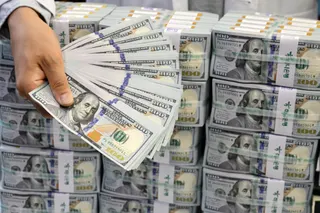
How big is China's trade surplus this year? Already more than 1 trillion US dollars, and there are still two months to go. Exports jumped 35.2 percent in October from a year earlier, customs data showed on Tuesday 10 November, lifting the surplus to 1.04 trillion dollars in the first ten months of 2026, according to Reuters via CNA. That is the second year in a row above 1 trillion dollars, and the milestone came a month earlier than in 2025.
The driver is the global AI build out. Data centres around the world need servers, components, power equipment and cables, and Chinese factories are supplying many of them. At the same time, weak spending at home is pushing Chinese manufacturers to sell more abroad. For Southeast Asia, which sits at the centre of China's supply chains and export routes, the surge is both an opportunity and a threat.
AI is powering China's exports
Much of this year's export strength comes from the global push to build AI infrastructure, which has kept demand for Chinese technology products strong. October's 35.2 percent rise was only a touch slower than September's 36.3 percent and beat economists' forecast of 33.5 percent.
Imports also surged, rising 41.6 percent against a forecast of 32 percent, up from 31 percent growth in September. Some of that reflects inputs for the same export machine, such as chips and components that are assembled into finished products and shipped out again. Even so, exports remain far larger than imports, which is why the surplus keeps growing.
"The outlook for exports depends on how long the AI boom will last," analysts at Macquarie wrote. They expect exports to accelerate further in the fourth quarter before starting to slow from the first quarter of 2027. That makes China's trade performance increasingly tied to a single global investment cycle.
Weak demand at home pushes goods abroad
China's reliance on overseas demand reflects problems at home. Consumers remain reluctant to spend, held back by a property downturn that has hit household wealth and confidence. Domestic vehicle sales fell for a 12th consecutive month in October, while car exports kept growing at a solid pace, industry data showed.
This pattern, producing more than the home market can absorb and selling the rest overseas, is at the heart of trade tensions with China's partners. It supports Chinese factories and jobs, but it also puts pressure on manufacturers elsewhere who compete with cheaper Chinese goods. Thailand's car industry, where Chinese brands now dominate electric vehicle sales, is one example.
Joe Peissel, lead macroeconomist at Trivium China, said "the risk of additional tariffs and other trade barriers will remain elevated in 2027, particularly as Chinese manufacturers continue expanding their presence in overseas markets". The European Union is among the partners most concerned about China's growing surplus.
China is exporting its way through a domestic slump, and the AI boom has given it the perfect customer. Southeast Asia is both the warehouse and the battleground.
The US China truce and next week's summit
China announced on Monday the extension of a trade truce with Washington, which was due to expire on 10 November, by two months. Beijing said last week that expanding purchases of US farm goods would depend on the implementation of an agreed reciprocal tariff reduction arrangement, keeping pressure on Washington.
The Asia Pacific Economic Cooperation summit takes place next week in Shenzhen, the southern Chinese technology hub, where Xi Jinping and Donald Trump are expected to meet for the third time this year. A durable trade deal would reduce uncertainty for exporters across Asia, while a breakdown could revive tariff threats that have unsettled markets repeatedly since 2025.
Separately, China has extended its suspension of new rare earth export controls until January, CNA reported this week, another sign that both sides are keeping their options open ahead of the summit.

An Asia wide AI export boom
China is not alone. South Korea's exports nearly doubled in October, the strongest jump since 1974, as chip sales soared 259 percent, which we covered in our report on Korea's record export surge. In Japan, a Reuters poll this week showed manufacturers' confidence at its highest in more than five years, also driven by chip demand, CNA reported.
The pattern is the same across North Asia: AI spending by technology companies in the United States and elsewhere is flowing into factories that make chips, servers and the equipment around them. For exporters this has been a windfall, and it has helped Asian currencies tied to the chip trade outperform those of energy importers.
The risk is concentration. If AI spending slows, as Macquarie's forecast for China implies from early 2027, the same economies that benefited most could see the sharpest reversal. Investors have already shown how sensitive they are to doubts about AI spending, with sharp swings in chip shares this month.
What it means for Southeast Asia
Southeast Asia is deeply exposed to China's export machine in several ways:
- as a destination for Chinese goods, from cars to electronics and steel
- as a supplier of parts and raw materials to Chinese factories
- as a location for Chinese companies moving production to avoid US tariffs
- as a competitor in markets where Chinese goods undercut local producers
Chinese exports to the region surged earlier this year, as we reported in our analysis of China's exports to ASEAN. Thailand's decision to raise taxes on imported electric vehicles from January 2027, which we cover in our report on Thailand's new EV excise tax, is one response to that flood of cheaper imports.
The AI boom also creates opportunities. Chinese manufacturers have been moving some production into Southeast Asia, and the region's own electronics exporters are also benefiting from AI related demand. For policymakers, the challenge is to capture the investment while protecting local industry from being overwhelmed.

How big is China's trade surplus in 2026?
1.04 trillion dollars in the first ten months of 2026, according to customs data.
How much did China's exports grow in October 2026?
35.2 percent year on year in US dollar terms, above the 33.5 percent forecast.
How much did China's imports grow?
41.6 percent in October, well above the 32 percent forecast.
Is this a record surplus?
Last year's full year surplus was a record 1.2 trillion dollars. This year's passed 1 trillion dollars a month earlier.
Why are China's exports rising so fast?
The global race to build AI infrastructure is boosting demand for Chinese technology products, while weak domestic demand pushes firms to sell abroad.
Why is Chinese domestic demand weak?
A prolonged property slump has hurt household wealth and confidence, and consumers remain reluctant to spend.
Are Chinese car sales falling?
Domestic vehicle sales fell for a 12th straight month in October, while car exports kept growing.
Will China's export boom last?
Macquarie expects exports to accelerate in the fourth quarter and start slowing from early 2027, depending on the AI boom.
What is the US China trade truce?
A pause in escalating tariffs that was due to expire on 10 November and has been extended by two months.
When will Xi and Trump meet?
They are expected to meet at the APEC summit in Shenzhen next week, their third meeting this year.
Will there be new tariffs on China?
Trivium China says the risk of additional tariffs and trade barriers will remain elevated in 2027.
How does China's surplus affect Southeast Asia?
It brings cheaper goods and investment but also competition for local manufacturers in sectors such as cars and steel.
What did China do on rare earths?
It extended the suspension of new rare earth export controls until January, CNA reported.
Why does the EU care about China's surplus?
The EU is among the partners concerned that Chinese exports undercut its own industries.
What does the AI boom mean for Asian exporters?
It is lifting demand for electronics and data centre equipment across Asia, but makes trade performance dependent on one investment cycle.
Which other Asian exporters are benefiting from AI?
South Korea's exports nearly doubled in October on a 259 percent jump in chip sales, and Japanese manufacturers' confidence hit a more than five year high on chip demand.
When was China's trade data released?
China's customs data for October was published on 10 November 2026.
What is the APEC summit?
The Asia Pacific Economic Cooperation summit, a yearly meeting of Pacific Rim economies, held this year in Shenzhen.
How does China's surplus compare with last year?
It passed 1 trillion dollars in October 2026, a month earlier than in 2025, when the full year surplus reached a record 1.2 trillion dollars.
China's trillion dollar surplus is a sign of strength in factories and weakness in households. The AI boom has given Chinese exporters a powerful tailwind, but it also concentrates risk in a single global trend and sharpens trade tensions, and Southeast Asia will feel both the benefits and the backlash.
Talk to the SpinDepth deskYou've finished this story
Read on, send it to someone, or ask about it.