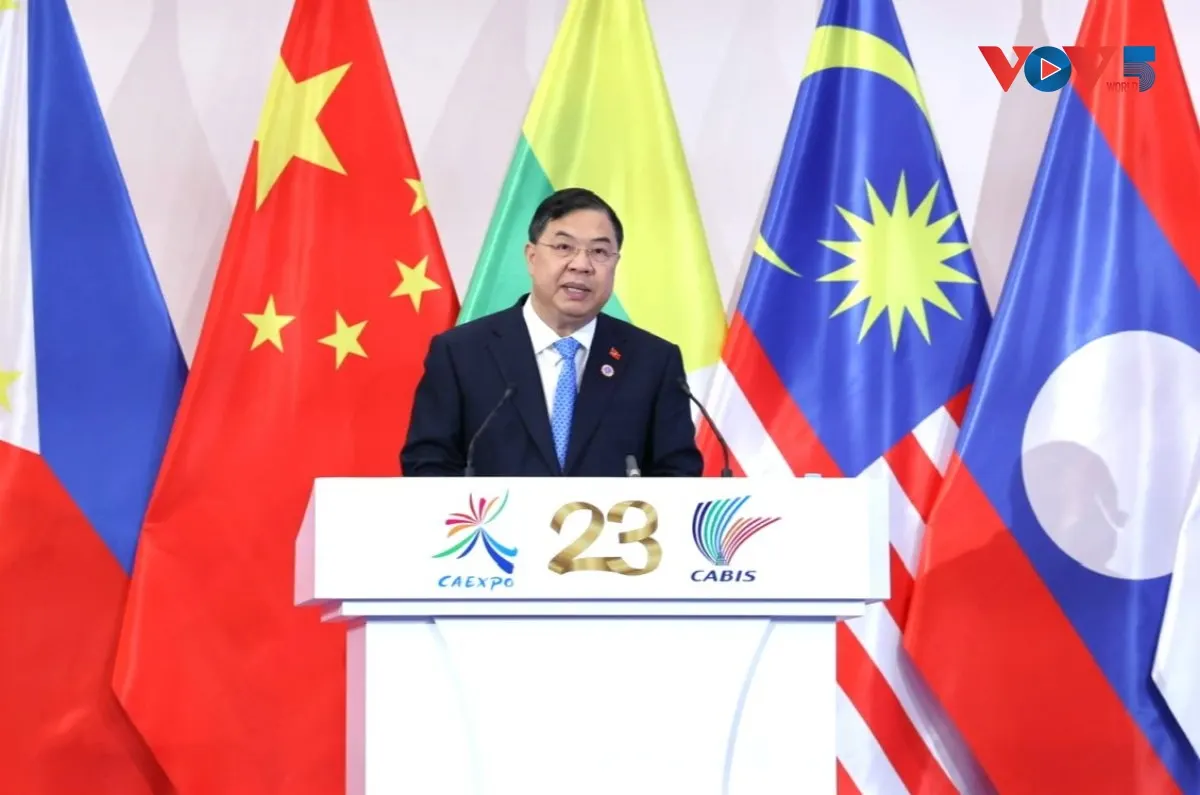
Vietnam's Deputy Prime Minister used the ASEAN Future Forum 2026 platform to warn that the region's fintech ecosystem will struggle to reach genuine strength as long as countries remain divided by fragmented data systems, incompatible standards, and governance gaps. The warning is accurate. It is also less pessimistic than it sounds, because the fragmentation the Deputy PM describes is precisely the environment in which certain kinds of operators build durable advantage, and the warning is more useful as a positioning invitation than as a diagnosis.
Fragmentation is a permanent feature, not a bug to be fixed
The instinctive response to a warning about fragmentation is to argue for harmonisation. That argument has been made every year at every regional forum for a decade, and the harmonisation has happened at roughly the pace regional political consensus permits, which is slower than the technology cycle. The realistic view for anyone building a business in ASEAN fintech is that meaningful fragmentation will persist across the coming decade, and the specific strategic question is how to build inside that reality rather than to wish it away.
That framing is genuinely more useful than the harmonisation argument, because it accepts the reality operators actually have to plan against. A firm that builds for the ASEAN of ten years from now, if harmonisation happens as advertised, will discover that it built for a market that never quite arrived. A firm that builds for the fragmented reality that will still be dominant in five years will build capability that produces immediate commercial value, and that capability will continue to be valuable as the harmonisation slowly happens around it.
The specific capability worth building is what might be called cross-border fluency: the operational ability to navigate multiple regulatory frameworks, payment rails, currency regimes and data governance regimes across the region without the operational overhead becoming prohibitive. That fluency is hard to build, which is why the firms that have built it hold defensible positions, and it is easier to build now than it will be in five years because the tooling to support it is more mature.

The three fragmentation surfaces that matter most
It is worth being specific about where the fragmentation actually lives, because operators sometimes treat it as a diffuse problem when it is actually concentrated in three specific surfaces. The first is regulatory. Financial services licensing, data protection frameworks, consumer protection regimes and anti-money-laundering rules vary sharply across the ten ASEAN member states, and a firm serving multiple markets has to hold competence in all of them rather than in a generic ASEAN version.
The second is payment infrastructure. Domestic payment rails, cross-border payment corridors and the specific standards each market has adopted for QR codes and instant transfers are not consistent across the region. Project Nexus is a serious attempt to bridge that fragmentation, and it is a bridge rather than a replacement. Firms have to operate on the actual rails that exist rather than on the ones the bridge is designed to connect, and that operational reality does not simplify quickly.
The third is data. Cross-border data flow rules, personal data protection frameworks and the practical mechanics of moving data between jurisdictions are genuinely different market by market. Firms serving multiple ASEAN markets with data-driven products, which is most of the interesting fintech being built, have to build the data infrastructure to handle the fragmentation rather than treating it as an afterthought. The OECD's ongoing work on cross-border data governance has been documenting the specific patterns, and the tooling available to help is better than it was even two years ago.
- Regulatory frameworks varying sharply across ten member states
- Payment rails and standards differing across the region despite Project Nexus
- Data governance rules requiring specific engineering rather than generic infrastructure
- Cross-border operational fluency easier to build now than in five years' time
- Firms that build inside the fragmentation acquire positions competitors cannot easily replicate
Where the commercial opportunity actually lives
The specific commercial opportunity in fragmented markets is the same across every category of fragmentation: firms that can offer a client a single experience across multiple jurisdictions capture value that domestic-only competitors cannot. For payments, that means cross-border payment products that abstract away the underlying complexity. For lending, it means credit products that work for a client whose income and life span multiple ASEAN countries. For wealth, it means investment products with a coherent structure across the client's actual asset locations.
Each of those opportunities is difficult to execute. The difficulty is exactly why the firms that execute well hold value that is hard to displace, and why the commercial returns to solving the fragmentation problem are meaningful even when the underlying fragmentation itself does not go away. Firms building for this positioning should treat the Deputy PM's warning as a market signal that the environment they are building inside is durable, not as a call to wait for a different environment to arrive.
The specific firms best positioned for this are the regional operators with existing multi-country footprints and the international operators with genuine regional depth. The domestic-only operators, however strong in their home market, face a competitive ceiling defined by the size of that market. That is not a criticism, and domestic-only operators can build genuinely valuable franchises. It is a structural point that shapes how each type of operator should think about growth strategy and about which cross-border partnerships are worth pursuing.

A firm that builds for the ASEAN of ten years from now will discover it built for a market that never quite arrived.
The read for firms outside the region
For non-Southeast Asian firms considering market entry into ASEAN, the fragmentation warning contains an implicit invitation and an implicit warning. The invitation is that firms that bring genuine cross-border fluency, either from operating across other multi-jurisdictional regions or from having built the technical and operational capability specifically for ASEAN, can compete effectively against domestic incumbents on a specific set of dimensions. The warning is that treating ASEAN as a single market accessible through a single national beachhead is the specific mistake that consistently fails, and that the cost of that failure is usually borne by investors who assumed the regional strategy would take twelve months and discovered it takes five years.
The successful international entrants into ASEAN over the past decade have shared a specific pattern: they invested in genuine multi-country operational infrastructure early rather than staging expansion sequentially, they engaged with local regulators seriously in each market rather than treating regulatory work as a checkbox exercise, and they hired regional leadership with real cross-country experience rather than sending headquarters staff on rotation. Firms following that pattern still fail sometimes. Firms departing from it fail almost always, and the causal link between the pattern and the outcome is now well-established enough to inform any serious market entry planning.
What did Vietnam's Deputy PM warn about?
The Deputy PM told the ASEAN Future Forum 2026 that regional fintech development would struggle as long as fragmented data systems, incompatible standards and governance gaps persist across the ten member states.
Will the fragmentation be fixed?
Not quickly. Harmonisation happens at the pace regional political consensus permits, which is slower than the technology cycle. Firms should plan for meaningful fragmentation across the coming decade.
Is fragmentation bad for the sector?
It limits the size of the addressable market for any single product design. It also creates specific opportunities for operators that can build cross-border fluency, and those operators hold positions that are hard to displace.
What should international firms entering ASEAN do?
Invest in genuine multi-country operational infrastructure early, engage seriously with regulators in each market, and hire regional leadership with real cross-country experience. The pattern is well-established.
Warnings about fragmentation at regional forums usually reflect frustration on the part of the officials making them, and the frustration is understandable. The commercial reading, which is different from the political reading, is that fragmentation is the environment the winners will build inside for at least the next decade. Firms that accept that framing and build accordingly will capture more of the region's fintech value than firms that keep positioning themselves for the harmonised future that has been imminent for a decade and remains imminent, which is another way of saying that the operators reading the region correctly are the ones building for the reality rather than for the promise.
For firms building regional fintech operations in Southeast Asia, the honest planning horizon accepts that the fragmentation is the environment for at least the next five years, and the specific competitive positioning that wins in that environment is cross-border fluency delivered as a product rather than as a compliance overhead. The ASEAN Secretariat's own coverage of digital economy integration is worth reading for the political framing that shapes how quickly harmonisation actually happens, which is slower than any single ministerial announcement suggests.
Speak with the SpinDepth desk