Did Singapore's state investors cause Indonesia's stock market crash? A former Indonesian trade minister says yes. Temasek and GIC say the claim is untrue, and no evidence has been offered to support it. The row, which erupted after MSCI threatened to downgrade Indonesia, has turned a market story into a diplomatic one, as reported by Mothership.
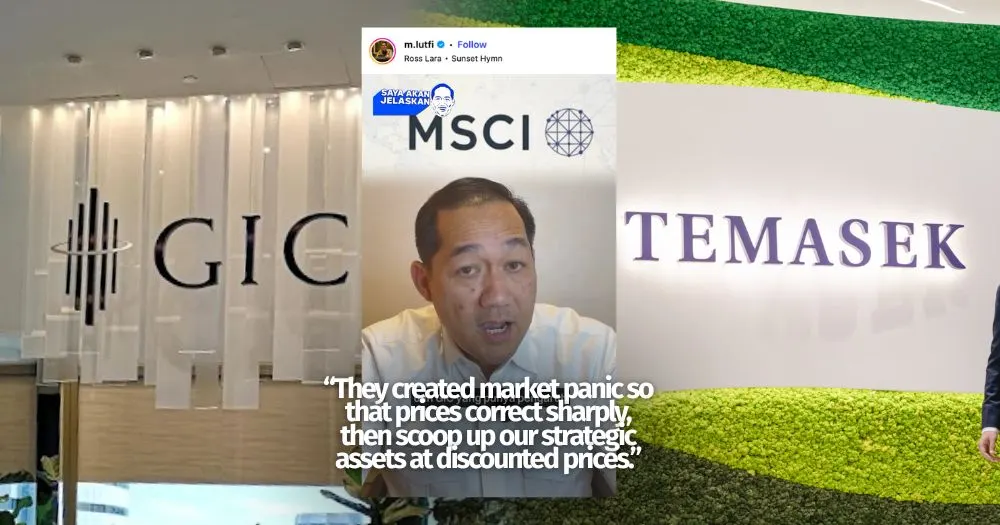
The accusation came from Muhammad Lutfi, who served as Indonesia's trade minister. In an Instagram post on 20 October, he alleged that Temasek and GIC used their influence to push MSCI toward reclassifying Indonesia, so that panic selling would let foreign investors buy strategic Indonesian assets at a discount. Both institutions rejected the claim within a day. Here is what was said, what was denied, and what the record actually shows.
What exactly did Lutfi claim?
Lutfi alleged that Temasek and GIC pressured MSCI to threaten a standalone classification for Indonesia, with the aim of driving share prices down so that foreign investors could buy back assets at lower prices. "The goal was one: create market panic so that prices correct sharply, then scoop up our strategic assets at discounted prices," he wrote.
He also claimed to have received insider information that a GIC employee had pressured MSCI. He did not provide evidence to substantiate his allegations, and CNN Indonesia reported that nothing in MSCI's announcement supports the claims of Singaporean involvement. Lutfi linked the stock market turmoil to the ongoing dispute over transboundary haze from Indonesian forest fires, writing: "From the haze issue to the fall of the stock index, it's about who holds control over the nation's assets."
That framing matters. The accusation landed at a moment of genuine tension between Indonesia and Singapore over haze, after Singapore's environment agency issued notices to 10 companies it says are responsible for the fires.
How did Temasek and GIC respond?
Temasek answered directly. Fock Wai Hoong, head of Asia Pacific excluding China and India at Temasek Global Investments, called the allegations "patently untrue" at a media briefing in Singapore on 21 October. "No one from Temasek, neither the institution nor the individuals working for the institution, have ever reached out to MSCI in order to influence any decisions they have ever made around any exchange across the region," he said, according to Asia Asset Management.
GIC was equally firm. "The allegations about GIC and our staff are untrue," a spokesperson said, adding that the fund has invested in Indonesia for more than 30 years and bases decisions on individual companies and assets rather than index classifications or broad views of a market.
In a market panic, a story with a villain spreads faster than a story about governance. That does not make the villain story true.
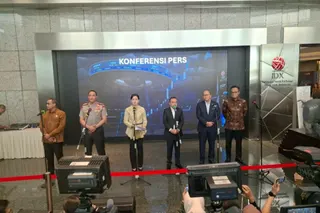
Notably, Indonesia's own stock exchange did not back the accusation. Indonesia Stock Exchange president director Jeffrey Hendrik defended the independence of global index providers on 20 October.

What MSCI actually said
MSCI's 15 October statement gave its own reasons, and they had nothing to do with Singapore. It proposed reclassifying Indonesia from an emerging market to a standalone market, citing opaque share ownership, suspected coordinated trading and a lack of meaningful enforcement despite announced reforms. Standalone status would remove Indonesian stocks from MSCI's broader emerging market indexes, potentially forcing tracking funds to sell.
The market reaction was brutal. A record two day sell off wiped out about 82 billion US dollars in market value, as we covered in our report on Indonesia's MSCI downgrade threat and the stock crash. The Jakarta Composite has since recovered about 1.7 percent from the lows, helped by state fund Danantara buying shares.
MSCI's consultation remains open until 30 April 2027, with a final decision due by 30 June 2027. It has said it expects to proceed unless there is clear evidence of meaningful improvements in market governance and functioning.
Why the accusation resonates in Indonesia
Conspiracy theories thrive when markets fall fast and the reasons feel technical. MSCI's concerns about ownership concentration and coordinated trading point at problems inside Indonesia's own market, which is uncomfortable for local investors and politicians. Blaming foreign investors is an easier story to tell.
The political climate amplifies it. President Prabowo Subianto told his cabinet on 21 October that Indonesia would not be cowed by what he called intimidation from MSCI, as reported by DealStreetAsia. The haze dispute has added a layer of nationalism to relations with Singapore and Malaysia. The factors that made the claim spread include:
- A sudden, record sell off that left many retail investors with heavy losses
- MSCI's criticism of governance problems inside Indonesia's own market
- Rising tension with Singapore over transboundary haze
- Singapore's large investment footprint in Indonesia through Temasek and GIC
- A president publicly framing MSCI's warning as intimidation
Ja Ian Chong, an associate professor at the National University of Singapore, said any link between the MSCI downgrade and the haze is not apparent, though some may see Lutfi's comments as reflecting unease over the haze dispute.
What it means for investors
For investors, the evidence points to governance, not conspiracy. MSCI has set out specific concerns, and Indonesia has already responded by dropping 80 tightly held stocks from the Jakarta Composite and rolling out market reforms. Those reforms, not accusations against foreign funds, will decide whether Indonesia keeps its emerging market status.
The diplomatic risk is real but limited. Singapore is one of Indonesia's largest foreign investors, and both governments have strong reasons to keep the row contained. A sustained campaign against Singaporean capital would hurt Indonesia more than Singapore, at a moment when Jakarta needs foreign money to stabilise its market and currency.
The next eight months will be decisive. If Indonesia can show progress on ownership transparency and enforcement before MSCI's June 2027 decision, the downgrade can still be avoided. If the debate stays focused on blaming outsiders, the reforms that MSCI wants may slip.

What did Muhammad Lutfi claim about Temasek and GIC?
He alleged in an Instagram post on 20 October 2026 that Temasek and GIC pressured MSCI to threaten a downgrade of Indonesia so foreign investors could buy assets cheaply. He offered no evidence.
What did Temasek say?
Fock Wai Hoong of Temasek Global Investments called the claims "patently untrue" and said no one from Temasek had ever approached MSCI to influence its decisions.
What did GIC say?
GIC said the allegations about the fund and its staff were untrue, noting it has invested in Indonesia for more than 30 years and bases decisions on fundamentals.
Is there evidence Singapore influenced MSCI?
No evidence was offered. Mothership and CNN Indonesia reported that nothing in MSCI's announcement supports the claim.
Why did MSCI threaten to downgrade Indonesia?
MSCI cited opaque share ownership, suspected coordinated trading and a lack of meaningful enforcement despite announced reforms.
How much did Indonesian stocks lose?
A record two day sell off wiped out about 82 billion US dollars in market value.
When will MSCI decide on Indonesia?
MSCI's consultation closes on 30 April 2027, and a final decision is due by 30 June 2027.
What did Prabowo say about MSCI?
President Prabowo Subianto said Indonesia would not be cowed by what he described as intimidation from MSCI.
What does the haze have to do with it?
Lutfi linked the market crash to the haze dispute, but analysts said any link is not apparent. Singapore has issued notices to 10 companies it blames for the haze.
Did Indonesia's stock exchange support the claim?
No. Indonesia Stock Exchange president director Jeffrey Hendrik defended the independence of global index providers.
Can Indonesia avoid the downgrade?
Yes, if it shows meaningful improvements in market governance and functioning before MSCI's decision.
What has Indonesia done since the warning?
The stock exchange removed 80 tightly held stocks from the Jakarta Composite, and state fund Danantara bought shares to support the market.
Who is Muhammad Lutfi?
Muhammad Lutfi is a former Indonesian trade minister. He made the allegations against Temasek and GIC in an Instagram post on 20 October 2026.
What is a standalone market under MSCI?
A standalone market sits outside MSCI's main emerging market indexes. Funds tracking those indexes would no longer need to hold the country's stocks, which can lead to forced selling.
Has Indonesia's stock market recovered?
The Jakarta Composite recovered about 1.7 percent after the two day rout on 19 and 20 October, helped by purchases from state investment fund Danantara and new market reforms.
The accusation against Temasek and GIC is a revealing moment in a painful market episode. It shows how quickly a governance problem can be reframed as a foreign plot, especially when diplomatic tensions are already running high. The denials were swift and the evidence is absent, and for investors the real story remains Indonesia's reforms and MSCI's June 2027 decision.
Talk to the SpinDepth deskYou've finished this story
Read on, send it to someone, or ask about it.