 Media & Reputation
 Football
 Culture
 Experiences
 Advertising

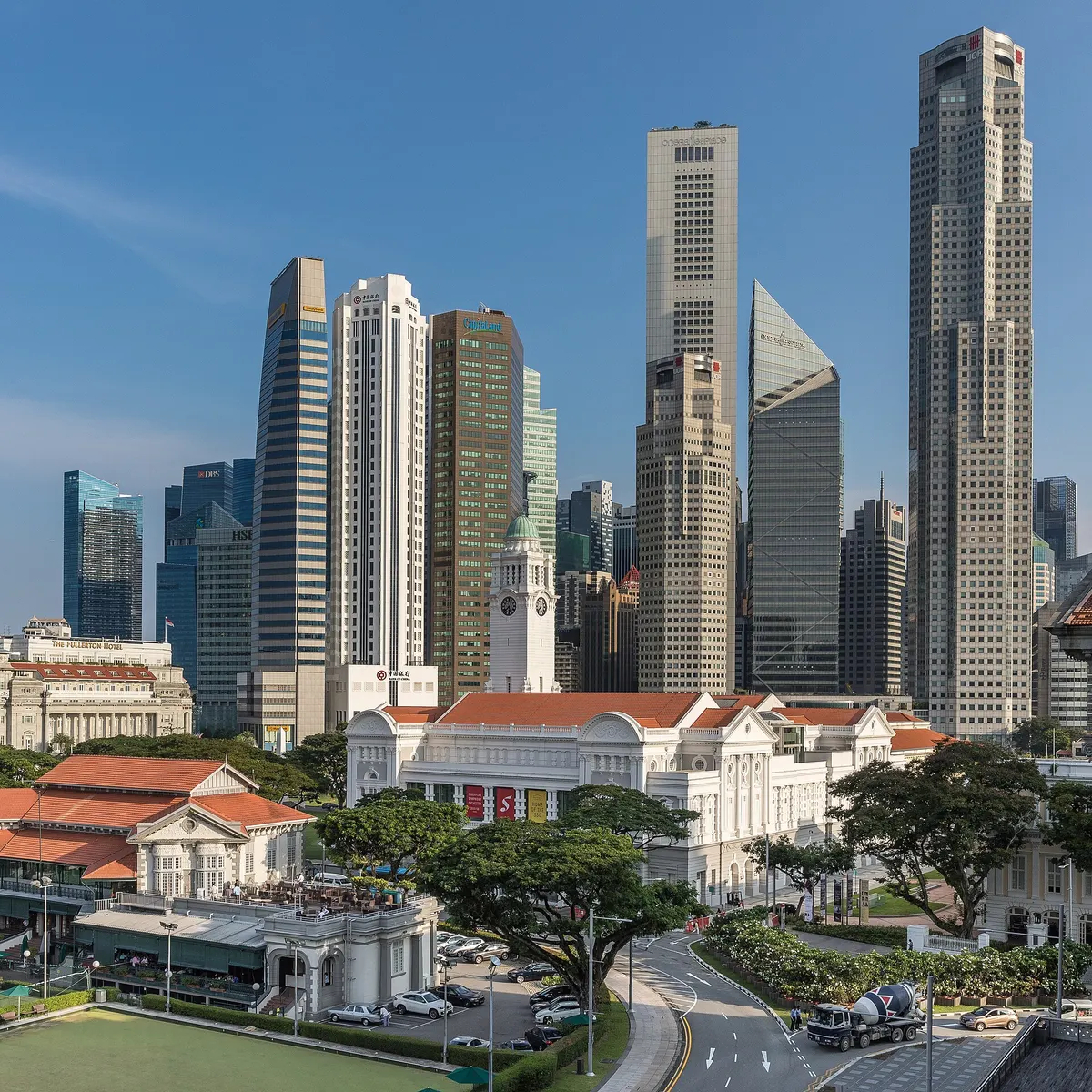
Singapore is the one market in Southeast Asia where most of the big international CFD brokers have chosen to be licensed. It is also the market where some of the region's most heavily advertised forex brands are absent. The difference is visible in a single public database, the Monetary Authority of Singapore's Financial Institutions Directory.
On 22 November we searched it for the brokers Southeast Asian traders see most often. The results split them cleanly into two groups: firms that hold a Singapore licence to deal with Singapore residents, and firms that do not appear at all. We compared the two and what each means for a trader.
The licensed group
A Capital Markets Services licence is what MAS requires for firms that deal in capital markets products with Singapore residents, including leveraged foreign exchange and contracts for difference. Several of the world's largest CFD brokers hold one, according to the MAS directory: Plus500SG, IG Asia, CMC Markets Singapore, Saxo Capital Markets, eToro Singapore, Capital Com Securities (Singapore) and Swissquote.
The same licence covers the investment apps that dominate Singapore's retail market. Interactive Brokers Singapore, Tiger Brokers (Singapore), Moomoo Financial Singapore, Webull Securities (Singapore) and Robinhood Singapore all appear as Capital Markets Services licensees, alongside local brokers such as Phillip Securities. Singapore residents trading CFDs or shares through those firms are dealing with an entity MAS supervises.
The licence comes with rules. MAS sets minimum margin requirements for retail leveraged trading, restricts how firms can market complex products and requires them to assess whether retail clients understand those products. It also publishes an Investor Alert List of entities that may be wrongly perceived as licensed.
The brands that did not appear
Searches of the directory for XM's operator Trading Point, Exness, HF Markets and Octa returned no matching licensed entity. These are among the most heavily advertised forex brands in Malaysia, Indonesia, Thailand and the Philippines, and each is licensed elsewhere: XM and Exness in Cyprus and offshore, HFM's European entity in Cyprus, and Octa's in Cyprus, according to CySEC's register, as we found in our review of the CySEC register.
Not appearing in the MAS directory does not mean a firm breaks Singapore law; many offshore brokers say they do not accept Singapore residents. It does mean they have not obtained a Singapore licence, and a Singaporean who opens an account with one of their offshore entities is outside MAS supervision.
In most of Southeast Asia, the biggest forex brands are offshore and the regulators issue warnings. Singapore is the exception: the global brokers came onshore, and the offshore brands mostly stayed away.
The contrast with Malaysia is sharp. Malaysia's Securities Commission lists XM, HFM, Octa, Vantage and others on its Investor Alert List, as we compared in our report on regulator warnings against XM, Exness, HFM, Octa and FBS. Singapore's approach is to license the firms that want its market and keep the rest outside.
How the licensed brokers differ
The licensed group is not uniform. IG, CMC Markets and Plus500 are listed in London and built their businesses on CFDs and spread betting. Saxo comes from Danish banking and Swissquote from Swiss online banking, both offering broad multi-asset platforms. eToro, listed on Nasdaq, built its brand on social and copy trading, and Capital.com has grown quickly across Europe and the Middle East.
Each brings a different offer to Singapore. Some focus on active CFD traders, some on investors who want shares, bonds and funds alongside leveraged products, and some on social features. What they share is a Singapore entity that answers to MAS, which sets the same baseline of protections for all of them.
The investment apps sit alongside them. Moomoo, Tiger, Webull and Interactive Brokers compete mainly for share investors, but several also offer leveraged products. For a Singapore resident, the choice among licensed firms is about product and cost; the choice between licensed and offshore is about protection.
Why the global brokers chose Singapore
For the large listed brokers, a Singapore licence is both a market and a credential. Singapore's retail investors are wealthy and active, and a MAS licence is a strong signal to regulators and partners across Asia. Plus500, IG and CMC Markets have each built Singapore businesses under the regime, and Capital.com and eToro have joined them.
There is also a regional logic. Several of these firms run their Asia-Pacific operations, compliance teams and banking relationships from Singapore, so the licence anchors a regional headquarters as well as a local client base.
The cost is the rulebook. Singapore's retail margin requirements limit leverage well below the levels offshore brands advertise elsewhere in the region, and its marketing and suitability rules are strict. For brokers whose Asian growth depends on high leverage and affiliate marketing, those rules are a reason to stay offshore.
The two groups therefore reflect two business models. The licensed group competes in Singapore on trust, platforms and product range under MAS rules. The offshore group competes across the rest of the region on leverage, local payment methods and partner networks, and accepts the regulatory warnings that come with it.
What it means for traders in Singapore and beyond
For Singapore residents, the comparison is straightforward. Trading CFDs or forex through a MAS-licensed entity brings Singapore's protections, including margin limits, marketing rules and a regulator to complain to. Trading through an offshore entity brings none of them, whatever the brand's licences elsewhere.
For traders elsewhere in Southeast Asia, the MAS directory is still useful. A broker that holds a Singapore licence for one of its entities has passed one of the region's toughest reviews, which says something about the group's standards. A broker that does not appear has, for whatever reason, not done so.
A practical checklist for any trader:
- Search the broker's legal entity name, not just its brand, in the MAS directory.
- Confirm the licence type: a Capital Markets Services licence for CFDs and leveraged forex.
- Check that the website or app you use belongs to the licensed entity.
- Look up the MAS Investor Alert List for any warning about the name.
Is Plus500 licensed in Singapore?
Yes. Plus500SG Pte. Ltd. holds a Capital Markets Services licence, according to the MAS directory.
Is IG licensed in Singapore?
Yes. IG Asia Pte Ltd holds a Capital Markets Services licence.
Is CMC Markets licensed in Singapore?
Yes. CMC Markets Singapore Pte Ltd holds a Capital Markets Services licence.
Is Saxo licensed in Singapore?
Yes. Saxo Capital Markets Pte. Ltd. holds a Capital Markets Services licence.
Is eToro licensed in Singapore?
Yes. eToro Singapore Pte. Ltd. holds a Capital Markets Services licence.
Is Capital.com licensed in Singapore?
Yes. Capital Com Securities (Singapore) Pte. Ltd. holds a Capital Markets Services licence.
Is XM licensed in Singapore?
Our search of the MAS directory for XM's operator, Trading Point, returned no matching licensed entity.
Is Exness licensed in Singapore?
Our search of the MAS directory for Exness returned no matching licensed entity.
Are HFM and Octa licensed in Singapore?
Our searches for HF Markets and Octa returned no matching licensed entity.
What licence does a CFD broker need in Singapore?
A Capital Markets Services licence from MAS for dealing in capital markets products, including leveraged forex and CFDs, with Singapore residents.
Are moomoo, Tiger and Webull licensed in Singapore?
Yes. Moomoo Financial Singapore, Tiger Brokers (Singapore) and Webull Securities (Singapore) hold Capital Markets Services licences.
Is Swissquote licensed in Singapore?
Yes. Swissquote Pte. Ltd. holds a Capital Markets Services licence.
Is Interactive Brokers licensed in Singapore?
Yes. Interactive Brokers Singapore Pte. Ltd. holds a Capital Markets Services licence.
Does a Singapore licence protect traders in other countries?
Only clients of the Singapore entity. Brokers usually serve other countries through different group entities with different regulators.
Is Robinhood licensed in Singapore?
Robinhood Singapore Pte. Ltd. appears in the MAS directory as a Capital Markets Services licensee.
What is the MAS Investor Alert List?
A list MAS publishes of unregulated persons that may have been wrongly perceived as licensed or authorised by MAS.
Can Singapore residents use offshore forex brokers?
An offshore entity without a MAS licence is outside MAS supervision, so Singapore protections would not apply to the account.
How do I check a broker in Singapore?
Search the legal entity name in the MAS Financial Institutions Directory and check the MAS Investor Alert List.
Singapore's directory draws the clearest line in the region between brokers that chose to be supervised locally and brokers that chose not to. For traders, that line is worth checking before the first deposit, in Singapore or anywhere a broker uses Singapore's name in its marketing.
Talk to SpinDepth about entering Singapore's financial marketYou've finished this story
Read on, send it to someone, or ask about it.