 Media & Reputation
 Football
 Culture
 Experiences
 Advertising

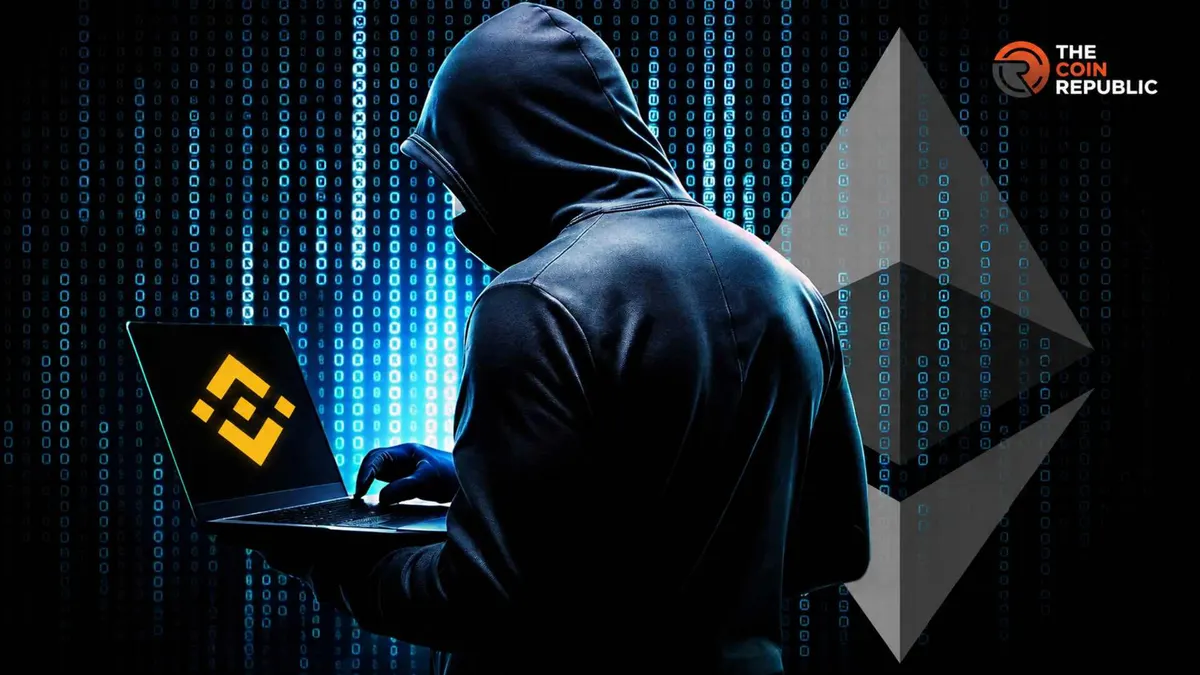
For two weeks after the largest crypto theft in history, most of the stolen money sat still. Then, on 17 November, it started to move. The attacker behind the roughly 6.3 billion dollar Binance hack shifted 74,880 Ether in three hours, swapping it toward Bitcoin through a decentralised cross-chain protocol. The next day another 78,415 ETH moved.
Those two batches, worth about 280 million dollars together, come from a single stash of 602,402 ETH, roughly 1.09 billion dollars at current prices. Investigators are watching every hop. This is what has happened to the money so far, and what the laundering pattern tells us about how stolen crypto is cashed out.
What moved on 17 and 18 November
On-chain tracker Lookonchain reported on 17 November that the attacker moved 74,880 ETH within three hours, worth about 136.8 million dollars, and was swapping the Ether for Bitcoin through THORChain, The Coin Republic reported. Lookonchain said the attacker had begun laundering a larger holding of 602,402 ETH. Separately, security firm MistTrack flagged an attacker address, quiet since 30 October, that sent 34,279.66 ETH to three new wallets.
The next day blockchain security firm Beosin identified a transfer of 78,415.24 ETH, about 142 million dollars, to seven addresses, six of them newly created, Altcoin Buzz reported. A separate WhaleRadar analysis tracked 92,647 ETH leaving three monitored wallets in 126 transfers across 15 waves, with 15,179 ETH moving onward through hundreds of smaller transfers and 14,655 ETH, about 26.5 million dollars, reaching THORChain with transaction notes requesting Bitcoin.
The wallet pattern is deliberate. Newly created addresses, transfers split into many small amounts and timing spread across hours are all designed to make automated tracing harder and to test which routes stay open. Each wave also tells investigators which services the attacker trusts, which is why they publish their findings quickly.
The distinction matters. The 142 million dollar figure is what left the attacker's main addresses; only a fraction of it had reached THORChain when investigators reported. Laundering of this size happens in waves, not in one transaction.
Why THORChain, and why Bitcoin
THORChain is a decentralised protocol that lets users swap assets across blockchains, such as Ether for Bitcoin, without a central exchange and without account checks. That makes it attractive to anyone who wants to leave the Ethereum network, where stolen tokens are easy to trace and some can be frozen by issuers, and move into Bitcoin, where tracing continues but freezing is harder.
The protocol has been central to this case from the start. On 31 October THORChain halted trading on several blockchains after an Ethereum reorganisation caused an incorrect refund, a pause attributed to its own technical safeguards rather than a decision to block the Binance attacker, according to crypto.news. An analyst's tracing in early November estimated that tens of millions of dollars had already passed through THORChain, Relay and Chainflip, though those figures were preliminary.
Stolen crypto is not hidden. It is watched, wallet by wallet, by everyone from Lookonchain to the US Justice Department. The question is not where it is, but whether anyone can stop it before it reaches a place that pays out cash.
The case has also renewed debate about decentralised protocols. Supporters of THORChain argue that a neutral protocol cannot pick and choose its users; critics say services that move hundreds of millions of dollars of traced stolen funds should face the same obligations as exchanges. That argument is unlikely to be settled before the rest of the stash moves, and regulators in several countries are watching it closely.
The pattern is familiar from earlier North Korean thefts: split the funds into many wallets, move them in waves, swap into Bitcoin through services without identity checks, and wait. We tracked the earlier stage of this case in our report on how the Binance hackers used memecoins to launder funds.
How the hack happened, and who is blamed
The theft began late on 29 October and Binance confirmed it on 30 October, saying about 6.3 billion dollars in assets had left its wallets. TRM Labs put the figure near 6.36 billion across 10 blockchains, with most of it taken in about 20 minutes. That was more than four times the previous record, the 1.5 billion dollar Bybit hack of February 2025, as we compared in our ranking of the biggest crypto hacks.
Binance paused deposits and withdrawals and said it would cover user losses. It first suggested that a compromised engineer's laptop may have started the breach and later cited additional points of entry, while saying it found no evidence that a private key had leaked. TRM Labs and Chainalysis linked the attack to North Korea, and TRM said with high confidence that the TraderTraitor group, which has ties to the Lazarus Group, carried it out.
Authorities have moved quickly on the parts they can reach. The US Justice Department sought court approval to seize or restrain more than 1.2 billion dollars tied to the theft and said more than 2.7 billion dollars had been frozen. That leaves a large balance still in the attacker's hands, including the 602,402 ETH stash now being moved.

What it means for exchanges and users in Asia
For Binance's users, the most important fact is that the exchange said it would cover losses, and trading resumed. For the wider market, the hack has hardened attitudes. Regulators in South Korea tightened rules on exchanges' handling of hacking threats this month, as we reported in our coverage of the FSC's new rules, and security has become a selling point for licensed exchanges across the region.
For exchanges, the laundering phase is a test of cooperation. Every centralised exchange that receives Bitcoin derived from the theft has an obligation to freeze it and report it. The faster those tracing alerts travel, the less of the stash reaches cash.
For users, the practical lessons are the same as after every major hack:
- Keep only what you are trading on an exchange; hold the rest in a wallet you control.
- Prefer exchanges that publish proof of reserves and say how they would cover losses.
- Be wary of anyone offering to "recover" funds after a hack; recovery scams follow every large theft.
- Watch official channels for notices about withdrawals and deposits, not social media rumours.
How much was stolen in the Binance hack?
About 6.3 billion US dollars, according to Binance. TRM Labs put the figure near 6.36 billion across 10 blockchains.
When did the Binance hack happen?
It began late on 29 October 2026, and Binance confirmed it on 30 October.
Who is behind the Binance hack?
TRM Labs and Chainalysis have linked it to North Korea. TRM attributed it with high confidence to the TraderTraitor group, which has ties to the Lazarus Group.
What did the hacker move on 17 November?
74,880 ETH, worth about 136.8 million dollars, within three hours, swapped toward Bitcoin through THORChain, according to Lookonchain.
What moved on 18 November?
Beosin identified a transfer of 78,415 ETH, about 142 million dollars, to seven addresses.
How much stolen Ether is still being laundered?
Lookonchain said the attacker had begun laundering a 602,402 ETH holding, worth about 1.09 billion dollars.
What is THORChain?
A decentralised cross-chain protocol that lets users swap assets between blockchains, such as Ether for Bitcoin, without a central exchange.
Has any of the stolen money been frozen?
The US Justice Department said more than 2.7 billion dollars had been frozen and sought court approval to seize or restrain more than 1.2 billion dollars.
Did Binance users lose money?
Binance said it would cover user losses. It paused deposits and withdrawals after the hack before resuming services.
How does this compare with other crypto hacks?
It is more than four times the previous record, the 1.5 billion dollar Bybit hack of February 2025.
Why do hackers convert Ether to Bitcoin?
Tokens on Ethereum can sometimes be frozen by issuers, and swapping into Bitcoin through services without identity checks makes freezing harder, though tracing continues.
Can the stolen funds be recovered?
Some have been frozen, and exchanges that receive traced funds can freeze more. Recovery depends on stopping funds before they are cashed out.
The largest crypto theft in history is now in its laundering phase, and the world is watching it happen in real time. Each wave of Ether that moves toward Bitcoin is visible to investigators; the question for the coming weeks is how much of the remaining billion they can stop.
Talk to SpinDepth about crisis communication for crypto platformsYou've finished this story
Read on, send it to someone, or ask about it.