 Media & Reputation
 Football
 Culture
 Experiences
 Advertising


Malaysia keeps two lists that every crypto user in the country should know. One is short: the digital asset exchanges the Securities Commission has registered to operate. The other is long: the Investor Alert List, where the SC names platforms it says are operating without authorisation. Some of the biggest exchanges in the world are on the second list, not the first.
This year both lists moved. The SC added Binance to its alert list in 2026, and it rewrote the rules for the exchanges it does license, with faster approvals for new products and tougher governance. We compared the two lists and what each means for a Malaysian investor.
The five exchanges Malaysia has registered
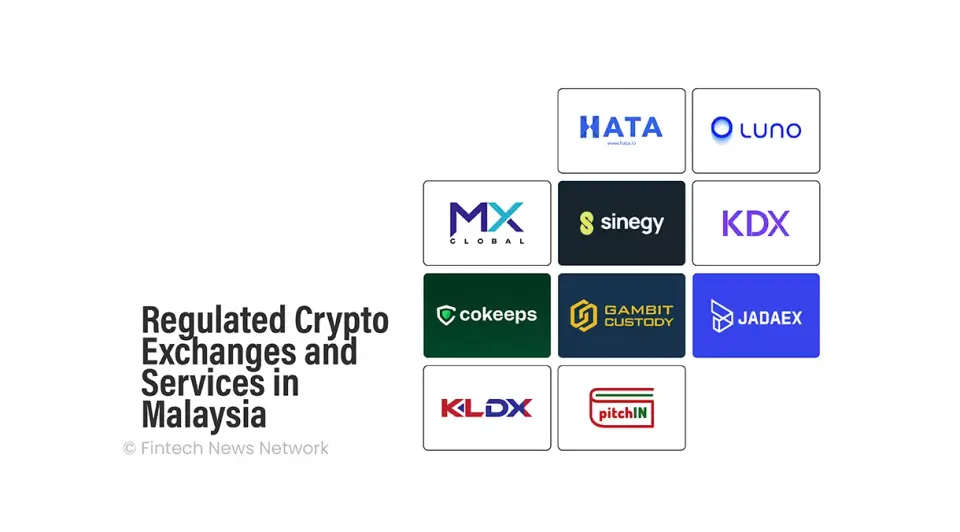
As of 9 September 2026, the SC had registered five recognised market operators to run digital asset exchanges: Hata Digital Sdn Bhd, Luno Malaysia Sdn Bhd, MX Global Sdn Bhd, SINEGY DAX Sdn Bhd and Kinetic DAX Sdn Bhd, Fintech News Malaysia reported. The SC has also registered three digital asset custodians and two initial exchange offering operators.
The five differ in background. Luno Malaysia is part of the global Luno group and was the country's first registered exchange. Hata Digital was founded by local entrepreneurs and holds a Shariah compliance certification from Amanie Advisors, an important feature in a market where many investors want Shariah-compliant options. SINEGY DAX is Malaysian-owned and serves retail and institutional traders, MX Global runs its own app, and Kinetic DAX is the newest name on the list.
Each registered exchange also publishes the tokens it lists, and the lists differ: some carry a broad range of large and mid-sized tokens, others a shorter list. For a user, comparing those lists and the fees is the practical first step, since all five operate under the same SC rules.
Registration brings obligations: capital requirements, custody rules, token admission standards and SC supervision. It also brings protection for users, who can complain to a regulator that has power over the exchange. That protection is what the alert list says is missing elsewhere.
The global exchanges on the alert list
The SC's Investor Alert List names several of the world's largest exchanges with the same remark: "operating a digital asset exchange (DAX) without registration". KuCoin was added in 2021, MEXC in 2022, Bitget in 2024 and Binance in 2026. The entries list the platforms' websites, apps and social media accounts, including Malaysian-focused Telegram groups and Facebook pages.
Bybit is not on that list under its own name, but the SC acted against it directly. In December 2023 it took enforcement action against Bybit and its chief executive and directed the company to cease operating in Malaysia. The alert list is one tool; formal enforcement is another, and the SC has used both against offshore exchanges.
Malaysia's message to crypto users is short: five exchanges are ours, and the famous names you see advertised are not.
The list also carries clones. Entries for "Global Binance", "Binance Pro MYR" and a fake KuCoin site describe investment schemes using exchange brands to promise returns such as RM25,000 in three hours. As with forex brokers, a clone entry says nothing about the real company and is usually outright fraud, a pattern we examined in our review of Malaysia's forex broker warnings.
The 2026 rule changes for registered exchanges
The SC has spent 2026 tightening and loosening at the same time. Its revised Guidelines on Recognized Markets took effect on 20 May 2026, combining faster approval pathways for crypto-related products with stricter governance requirements, according to the SC. Existing licensed exchanges have until May 2028 to meet new capital requirements under the updated guidelines.
The SC has also widened who can offer crypto. In January 2026 it issued a practice note allowing licensed stockbrokers to offer digital asset broking under the existing securities rulebook rather than through a separate licence, Baker McKenzie noted. That opens the door for Malaysia's established brokers to bring crypto to their clients under SC supervision.
Exchanges have gained more control over what they list. Reports in 2025 said registered exchanges would be able to approve token listings themselves from 2026, instead of seeking SC approval for each one. Together, the changes point to a regime that wants a larger, deeper domestic market, as long as it stays inside the SC's walls.
How the two lists compare for a Malaysian user
For someone choosing where to trade, the comparison is practical:
- A registered exchange is supervised by the SC; an alert list entry means the SC says the platform is operating in Malaysia without authorisation.
- Registered exchanges offer ringgit deposits and withdrawals through Malaysian banks; offshore platforms often rely on cards, peer-to-peer trading or stablecoins.
- Registered exchanges list fewer tokens than global platforms, because listings must meet Malaysian standards.
- Complaints about a registered exchange can go to the SC; complaints about an offshore platform have no Malaysian route.
The token range is the main trade-off. Global exchanges list thousands of assets and offer derivatives; Malaysia's registered exchanges offer a narrower set, generally without the leveraged crypto derivatives common on global platforms. That is a deliberate choice by the regulator, and the reason many active traders still use offshore platforms despite the warnings.

What it means for Malaysia's crypto market
Malaysia is building a regulated domestic market while fencing out offshore giants, the same strategy Thailand has pursued with its seven licensed exchanges and Bitget block, as we compared in our report on Thailand's licensed exchanges. The difference is that Thailand blocks access to unlicensed platforms, while Malaysia relies more on its alert list and enforcement orders.
New products are coming inside the fence too. Malaysia's first ringgit stablecoin project, involving Luno, Halogen and Kenanga, shows the direction, as we reported in our coverage of the ringgit stablecoin UMYR. If stockbrokers start offering crypto under the January practice note, the registered side of the market could grow quickly.
For users, the decision remains a trade-off between range and recourse. The registered five offer less, but they answer to the SC. The global names on the alert list offer more, but if something goes wrong, Malaysia's regulator has already said in writing that it cannot help.
Which crypto exchanges are licensed in Malaysia?
As of 9 September 2026, the SC had registered five digital asset exchanges: Hata Digital, Luno Malaysia, MX Global, SINEGY DAX and Kinetic DAX.
Is Binance legal in Malaysia?
Binance is not registered with the SC. The SC added it to its Investor Alert List in 2026 for operating a digital asset exchange without registration.
Is Bitget on Malaysia's alert list?
Yes. The SC added Bitget in 2024 for operating a digital asset exchange without registration.
Are MEXC and KuCoin allowed in Malaysia?
No. Both are on the SC's alert list, MEXC since 2022 and KuCoin since 2021, for operating without registration.
What did the SC do about Bybit?
In December 2023 it took enforcement action against Bybit and its chief executive and directed the company to cease operating in Malaysia.
What is a recognised market operator?
The SC's category for registered digital asset exchanges. Operators must meet capital, custody, governance and token admission requirements.
What changed in Malaysia's crypto rules in 2026?
Revised Guidelines on Recognized Markets took effect on 20 May 2026, with faster product approvals and stricter governance. Existing exchanges have until May 2028 to meet new capital rules.
Can Malaysian stockbrokers offer crypto?
A January 2026 SC practice note allows licensed stockbrokers to offer digital asset broking under the existing securities rulebook.
Is Luno licensed in Malaysia?
Yes. Luno Malaysia Sdn Bhd is one of the five registered digital asset exchanges.
Is there a Shariah-compliant crypto exchange in Malaysia?
Hata Digital holds a Shariah compliance certification from Amanie Advisors, according to Fintech News Malaysia.
What happens if I use an exchange on the alert list?
The SC cannot help in a dispute, and Malaysian investor protections do not apply. You also face higher risk of fraud and loss.
What is a digital asset custodian in Malaysia?
A firm registered by the SC to hold digital assets on behalf of clients and exchanges. Malaysia had three registered custodians as of September 2026.
How do I check whether an exchange is registered?
Use the SC's list of registered recognised market operators and its Investor Alert List on sc.com.my.
Malaysia's two lists tell the whole story of its crypto policy: a small, supervised domestic market, and a public record of the global platforms it considers outside the law. For users, the choice is between the five that answer to the SC and the rest that, in the regulator's words, operate without registration.
Talk to SpinDepth about digital asset brands in MalaysiaYou've finished this story
Read on, send it to someone, or ask about it.