 Media & Reputation
 Football
 Culture
 Experiences
 Advertising


How many people does it take to move 917 servers full of restricted chips through Singapore? Prosecutors are still counting. On 13 November Singapore police charged a fifth individual in the case over servers said to carry Nvidia chips, and the same day Malaysia said it was checking whether AI chips brought into the country by a Megaspeed affiliate had been shipped onward in breach of its export law, The Vibes reported.
In Washington, lawmakers want to hear from the man at the top. Jensen Huang, who resigned as Nvidia's chief executive on 12 November, has been asked to sit for a closed door interview on 1 December and to testify at a public Senate hearing on 3 December. For Singapore and Malaysia, two of the most important data centre markets in Asia, the question is no longer whether chips leaked through the region but how far the cases will reach.
What Singapore has charged so far
Shi Bingzhe, 34, was the director of Superphi and chief operating officer of NJ Global Financial when the two companies purportedly acquired a total of 917 servers from Aperia International across 41 transactions, AsiaOne reported. Police said he had reasonable grounds to believe the servers represented benefits from Aperia International's criminal conduct, namely fraud by false representation. He faces 41 charges, and each carries up to 10 years in jail, a fine of up to S$500,000, or both. The charges are allegations, and he has not been convicted of any offence.
He joins four individuals charged earlier: Jenny Lim, 51, Alan Wei Zhaolun, 49, and Aaron Woon Guo Jie, 41, who were charged with fraud and money laundering, and Chinese national Li Ming, 51, who was charged with fraud and fraudulent trading. Four firms, Aperia International, A-Speed Infotech, Aperia Cloud Services (II) and Luxuriate Your Life, were charged with false representation, and with the two companies linked to Shi, six companies have now been taken to court.
The case began with an anonymous tip-off about servers that might contain Nvidia chips being exported to Malaysia and possibly onward to an unknown final destination. Home Affairs Minister K. Shanmugam said in March 2025 that the alert did not come from any country, but was serious enough for an independent investigation. Police said they will not hesitate to act against businesses and individuals that break Singapore's laws.
The Megaspeed thread
The case runs alongside a separate investigation into Megaspeed, a Singapore based cloud computing company and Nvidia customer. In a statement on 12 November, Singapore's Ministry of Home Affairs said Huang Le, also known as Alice Huang, was investigated as one of the key controllers of Megaspeed for suspected involvement in possible offences relating to inaccurate declarations. She was not based in Singapore and was not investigated for espionage, the ministry said.
The ministry said Singapore had sought information about Super Micro, the US server supplier, from US authorities since July 2025 and had received limited assistance. Without that information, police and the Attorney-General's Chambers concluded there was insufficient evidence to establish whether she had committed offences relating to the declarations. Police did find that she had knowingly provided false information, and she was given a stern warning and barred from re-entering Singapore.
Singapore is prosecuting the people it can reach and saying plainly where the evidence ran out. That candour is unusual, and it moves the pressure onto Washington.
We covered the earlier stages of this story in our report on Nvidia server smuggling cases across Malaysia and Singapore, and in our piece on Megaspeed's Malaysian operations.
Malaysia changes its tone
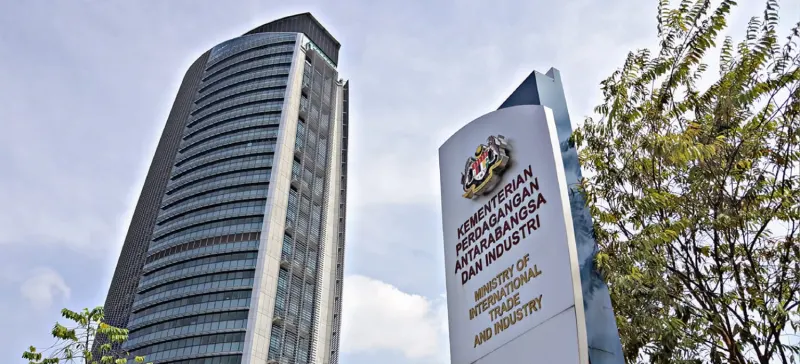
Malaysia's Ministry of Investment, Trade and Industry said on 13 November that it is working with the Royal Malaysian Customs Department to determine whether high performance US AI chips brought into Malaysia by Speedmatrix Sdn Bhd, the local affiliate of Megaspeed International, were transferred to other countries, and whether the transactions complied with the Strategic Trade Act 2010. The ministry stressed that it had never cleared either company, and said verification visits to data centres housing Speedmatrix were routine industry monitoring, not approval.
The legal line is specific. Importing AI chips into Malaysia does not currently need a permit or licence, but the export, re-export, transshipment or transit of high performance US AI chips from or through the country has required MITI approval since July 2025. Giving false information to Customs about goods is a serious offence under the Customs Act 1967. "Malaysia welcomes investment in data centres and technology, but will not allow itself to be used to get around export controls," the ministry said.
The enforcement record is building. On 15 October, customs officers found 30 server units containing advanced AI chips in the free trade zone at Kuala Lumpur International Airport, worth about 49.5 million ringgit, or 12.1 million dollars, CNA reported. The airport's customs director said at least five cases were linked to the same suspected syndicate, involving seizures worth more than 100 million ringgit in total.

Washington's December calendar
The US Congress has moved from letters to dates. The Republican chairs of three House committees asked Huang to sit for a closed door, transcribed interview on 1 December and Nvidia general counsel Tim Teter on 2 December, and invited Jeffrey Kessler, the Commerce Department official whose bureau administers export controls, to a hearing on 3 December, Decrypt reported. Senate Banking Committee chair Tim Scott asked Huang to appear at a public hearing on 3 December and Commerce Secretary Howard Lutnick on 10 December.
Lutnick's spokesperson said he had agreed to appear voluntarily. Nvidia has said it complies with US export laws, and its board has said it has no reason to believe national security or company secrets were compromised. China's foreign ministry warned that tighter US export controls would threaten the stability of global supply chains. The hearings land as Nvidia reports its first quarter under interim chief executive Colette Kress, a test we previewed in our Nvidia results preview.
What to watch next in the region:
- whether Singapore files further charges or names more companies in court
- the outcome of Malaysia's Customs checks on Speedmatrix's chips
- whether Washington adds licensing requirements for chip shipments to Southeast Asia
- how data centre operators in Johor and Singapore tighten customer checks
- whether the US provides the Super Micro information Singapore requested
What it means for Southeast Asia's data centre boom
Singapore and Malaysia have spent years courting the data centre investment that AI needs, and Johor has become one of the fastest growing hubs in the world. The chip cases do not change the demand, but they raise the cost of compliance for every operator and tenant. Landlords now need to know what is inside their tenants' racks, and where it goes when it leaves.
The bigger risk is policy from Washington. US lawmakers singled out Singapore in a letter in January 2025 urging stricter licensing for countries that do not crack down on shipments to China. Singapore's then Second Minister for Trade and Industry said Nvidia products physically delivered to Singapore were less than 1 percent of the company's revenue, with most revenue billed to Singapore entities involving no physical shipment. Each new charge and seizure shows the region is acting; whether that is enough to avoid tighter US rules will be argued in those December hearings.
Who was charged in Singapore on 13 November?
Shi Bingzhe, 34, a former director of Superphi and chief operating officer of NJ Global Financial, was handed 41 charges.
What is he accused of?
Police said he had reasonable grounds to believe 917 servers bought from Aperia International represented benefits of fraud by false representation. He has not been convicted.
How many people have been charged in the case?
Five individuals and six companies have been charged in court in Singapore.
What is the maximum penalty?
Up to 10 years in jail, a fine of up to S$500,000, or both, for each charge.
How did the investigation start?
With an anonymous tip-off about servers that might contain Nvidia chips being exported to Malaysia and possibly onward.
What is Malaysia investigating?
Whether AI chips brought in by Speedmatrix, Megaspeed's Malaysian affiliate, were re-exported in breach of the Strategic Trade Act 2010.
Did Malaysia clear Megaspeed or Speedmatrix?
No. MITI said it never cleared either company and that data centre visits were routine monitoring.
Does Malaysia require a permit to import AI chips?
No. But exporting, re-exporting, transshipping or transiting high performance US AI chips has required MITI approval since July 2025.
What did Malaysian customs seize at the airport?
Thirty server units with advanced AI chips worth about 49.5 million ringgit, found on 15 October.
What did Singapore say about Alice Huang?
She was investigated over Megaspeed, was not investigated for espionage, received a stern warning for giving false information and was barred from re-entering Singapore.
Why did Singapore not charge her?
Police and prosecutors said they had insufficient evidence, partly because the US provided limited information about Super Micro.
When could Jensen Huang testify?
House chairs asked for an interview on 1 December, and the Senate Banking Committee chair asked him to testify on 3 December.
Will Commerce Secretary Lutnick appear?
His spokesperson said he agreed to appear voluntarily. The Senate hearing was requested for 10 December.
What has Nvidia said?
That it complies with US export laws, and its board said it had no reason to believe security or company secrets were compromised.
Could the US tighten rules on Southeast Asia?
It is possible. Lawmakers have previously urged stricter licensing for countries that do not crack down on chip shipments to China.
Singapore's prosecutions, Malaysia's customs checks and Washington's December hearings are three parts of one test: whether Southeast Asia can host the world's AI hardware without becoming its back door. The region's governments are now acting in public and on the record. What they cannot control is how Washington reads the evidence, and that answer will shape data centre investment from Johor to Singapore for years.
Talk to the SpinDepth deskYou've finished this story
Read on, send it to someone, or ask about it.