 Media & Reputation
 Football
 Culture
 Experiences
 Advertising

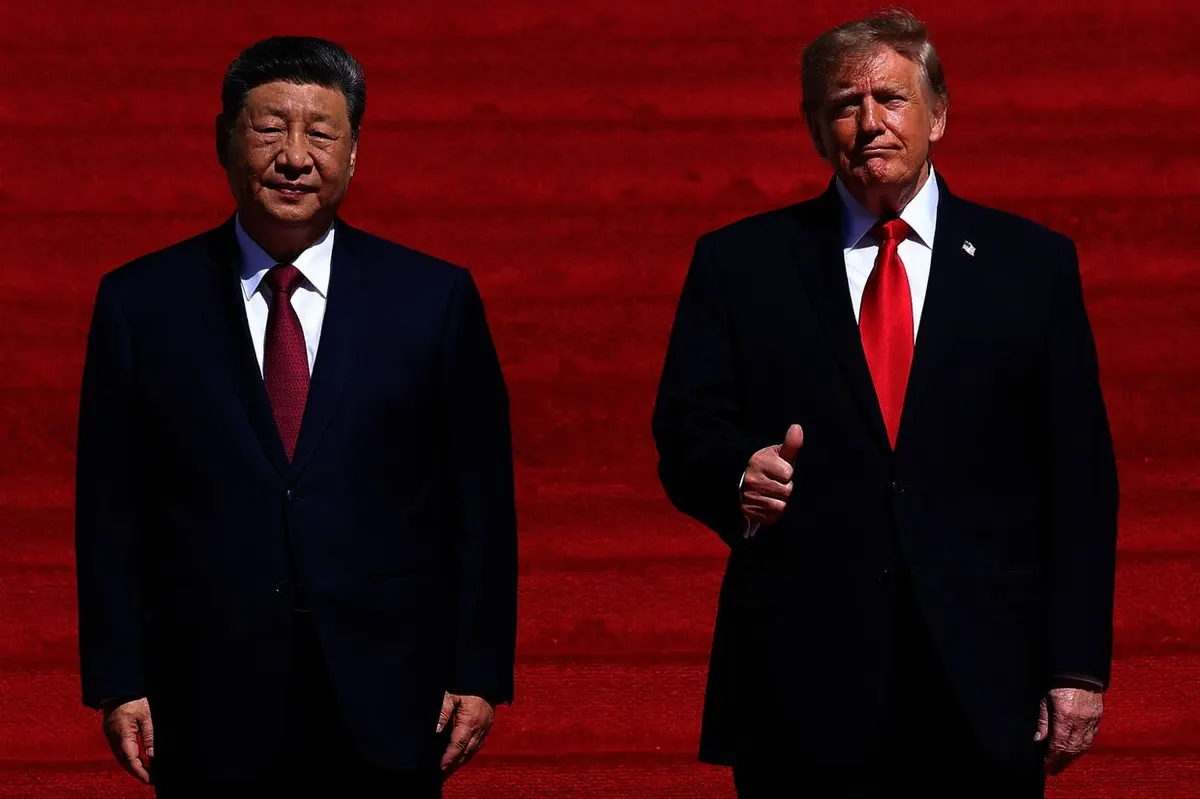
What will Trump and Xi agree in Shenzhen? The APEC leaders' meeting on 18 and 19 November brings the presidents of the United States and China together for the third time this year, after Trump's visit to Beijing in May and Xi's state visit to Washington in September. China has said Xi will chair the meeting, and Trump, Russian President Vladimir Putin and Philippine President Ferdinand Marcos Jr. are among the leaders expected, Reuters reported via BusinessWorld.
For Southeast Asia, the summit is less about grand declarations, which APEC makes by consensus and without binding force, than about what the big powers decide on the sidelines. The trade truce between Washington and Beijing runs only until 10 January 2027, US controls on advanced chips run straight through the region's data centres, and the leaders of Indonesia, Malaysia and Vietnam will be in the room. Here is what is at stake.
The Trump and Xi meeting
The two leaders have already met twice this year, and their teams have been working on something to show for the third. The South China Morning Post reported that technical teams aimed to make AI cooperation a deliverable in Shenzhen, building on a framework announced in September for handling AI related incidents and a bilateral AI dialogue, The Star reported. One possible outcome is a continuing institutional mechanism for AI cooperation involving officials, researchers and industry.
Trade is the harder file. Analysts told Reuters that both sides are falling short on their commitments under the extended trade truce, and that rare earth supplies, AI and tariffs are likely to be discussed, with US arms sales to Taiwan closely watched. Trump has said he expects to meet Xi again at the G20 in Miami in December, which suggests that any large trade deal may be saved for then.
The Putin factor adds uncertainty. Trump told reporters that one meeting might involve both Putin and Xi, and the United States and Russia are expected to want to discuss the war in Ukraine. Analysts said China is hesitant to engage in nuclear disarmament talks, given its smaller arsenal.
The September summit in Washington produced eight outcomes, according to the White House and Chinese government accounts cited by the South China Morning Post, including the plan for an AI dialogue and a communication channel for AI incidents, whose next meeting was scheduled for November. Those initiatives remain largely declarative so far, the Post reported, which is why a working framework in Shenzhen would count as real progress.
Why Southeast Asia has the most to gain or lose
Southeast Asia sits in the middle of every US and China trade decision. Factories in Vietnam, Malaysia and Thailand assemble goods that move between the two powers, and any change in tariffs on goods routed through the region changes the economics of those factories. A truce that holds into 2027 protects that trade; a breakdown in January would hit the region's exporters first.
Chips are the second issue. US controls on advanced AI processors depend on enforcement in countries where data centres are being built, and Singapore and Malaysia have both faced questions over chips reaching China through their territory. Any change in US policy on remote access to advanced chips or export licences would land on the region's data centre boom, which has driven much of its recent investment growth.
APEC itself binds no one. What matters for Southeast Asia is whether two presidents leave Shenzhen with a truce that lasts past January.
The region's currencies are exposed too. A truce that keeps trade flowing supports exporters' dollar earnings, while a breakdown would add to pressure on currencies that are already near record or multi year lows against the dollar, from the rupiah and the peso to the yen, as we described in our report on the yen at 160.
Manila first: ASEAN's own summit week
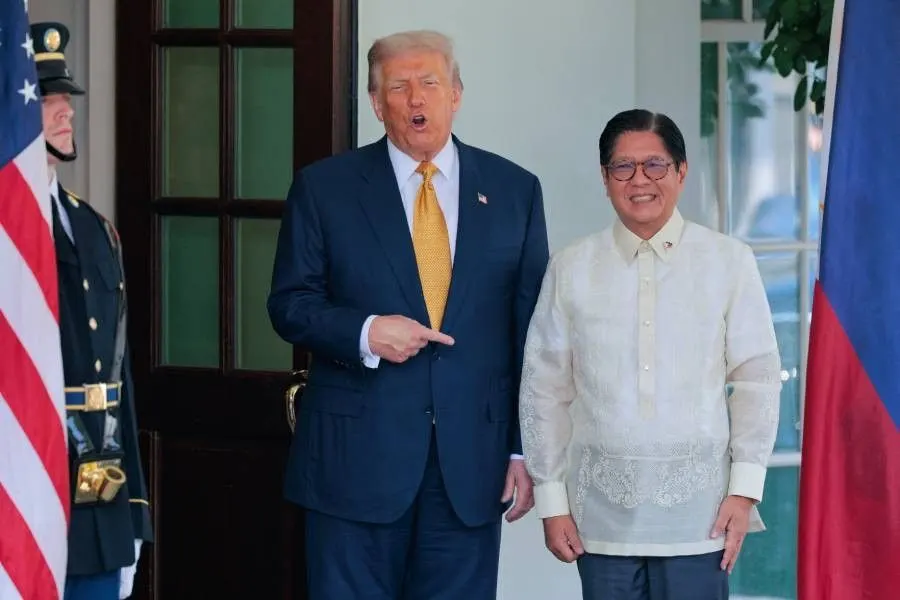
Trump's route to Shenzhen ran through Manila. The Philippines is hosting the 49th ASEAN Summit and related meetings from 15 to 18 November before handing the ASEAN chair to Singapore, and Trump was scheduled to attend an ASEAN and US special summit there on 17 November, The Philippine Star reported. Manila was also scheduled to host the ASEAN Plus Three summit with China, Japan and South Korea and the East Asia Summit, and the Philippines was expected to present a binding ASEAN digital economy framework agreement.
The South China Sea remains the bloc's hardest file. ASEAN had set 2026 as the target to conclude a code of conduct with China, and it was uncertain whether the deal would be completed before the Philippines hands over the chair. Singapore's chairmanship in 2027 inherits that negotiation, along with Myanmar, whose government is represented in Manila only by a foreign ministry official.
Japan's Prime Minister Sanae Takaichi is making the same journey, visiting the Philippines and China from 16 to 19 November, her first trip to China since taking office, AFP reported via The Star. Analysts said a bilateral summit with Xi is very unlikely, given tensions since her comments about Taiwan last year.
What investors should watch
The summit's market impact will come from a handful of signals:
- any extension of the trade truce beyond 10 January 2027
- any change to US chip export rules or remote access restrictions
- an AI cooperation announcement between the US and China
- tariff or rare earth commitments that affect supply chains through Southeast Asia
- whether Trump, Xi and Putin meet together, and what is said about energy and the Middle East
Energy is the wild card. Reuters said Middle East instability, with its risks to energy security, trade flows, supply chains and inflation, was expected to figure in the talks. Brent crude has fallen about a third since mid October on hopes the Iran war is ending, FXStreet reported, and any progress or setback discussed among the three leaders could move oil, Asian currencies and inflation forecasts across the region.
When is APEC 2026?
The leaders' meeting is on 18 and 19 November 2026 in Shenzhen, China, after a CEO Summit on 17 and 18 November.
Who is attending APEC in Shenzhen?
Xi Jinping chairs. Donald Trump, Vladimir Putin, Ferdinand Marcos Jr. and the leaders of Indonesia, Malaysia, Vietnam, South Korea, Australia, Canada and Mexico are expected, Reuters reported.
Is this Trump and Xi's first meeting this year?
No. It is their third, after Trump's visit to Beijing in May and Xi's state visit to Washington in September.
What could Trump and Xi agree?
Reports point to an AI cooperation framework as a possible deliverable, while trade, rare earths, tariffs and Taiwan are also on the agenda.
When does the US-China trade truce expire?
It was extended until 10 January 2027.
Will Trump, Xi and Putin meet together?
Trump said one meeting might involve both Putin and Xi, but no three way meeting had been confirmed.
Is Japan's prime minister attending?
Yes. Sanae Takaichi is attending APEC on her first trip to China as prime minister.
Why does APEC matter for Southeast Asia?
The region's factories, data centres and exporters are directly affected by US and China decisions on tariffs, chips and trade.
What happened in Manila before APEC?
The Philippines is hosting the 49th ASEAN Summit from 15 to 18 November, and Trump was scheduled to attend an ASEAN and US special summit on 17 November.
Who chairs ASEAN next?
Singapore takes over the ASEAN chair from the Philippines for 2027.
Is APEC's declaration binding?
No. APEC works through non binding commitments reached by consensus.
How big is APEC?
Its 21 member economies account for about 62 percent of global GDP and roughly half of world trade.
Does Taiwan take part in APEC?
Yes, as a member economy. It sent Acer founder Stan Shih as its envoy this year.
Has China hosted APEC before?
Yes, in Shanghai in 2001 and Beijing in 2014. Shenzhen is the third time.
What was agreed at the Washington summit in September?
The leaders announced eight outcomes, including a planned AI dialogue and a bilateral channel for AI related incidents, according to official accounts cited by the South China Morning Post.
Where is the next G20 summit?
In Miami in December, where Trump has said he expects to meet Xi again.
APEC rarely produces the headlines that move markets, but this year's meeting brings together the three leaders whose decisions shape Southeast Asia's trade, energy and technology. The region's exporters need the truce to survive past January, its data centres need clarity on chips, and its currencies need oil to stay calm. Whatever Trump and Xi announce in Shenzhen, those three tests are the ones that will matter for Asian investors when the leaders go home.
Talk to the SpinDepth deskYou've finished this story
Read on, send it to someone, or ask about it.