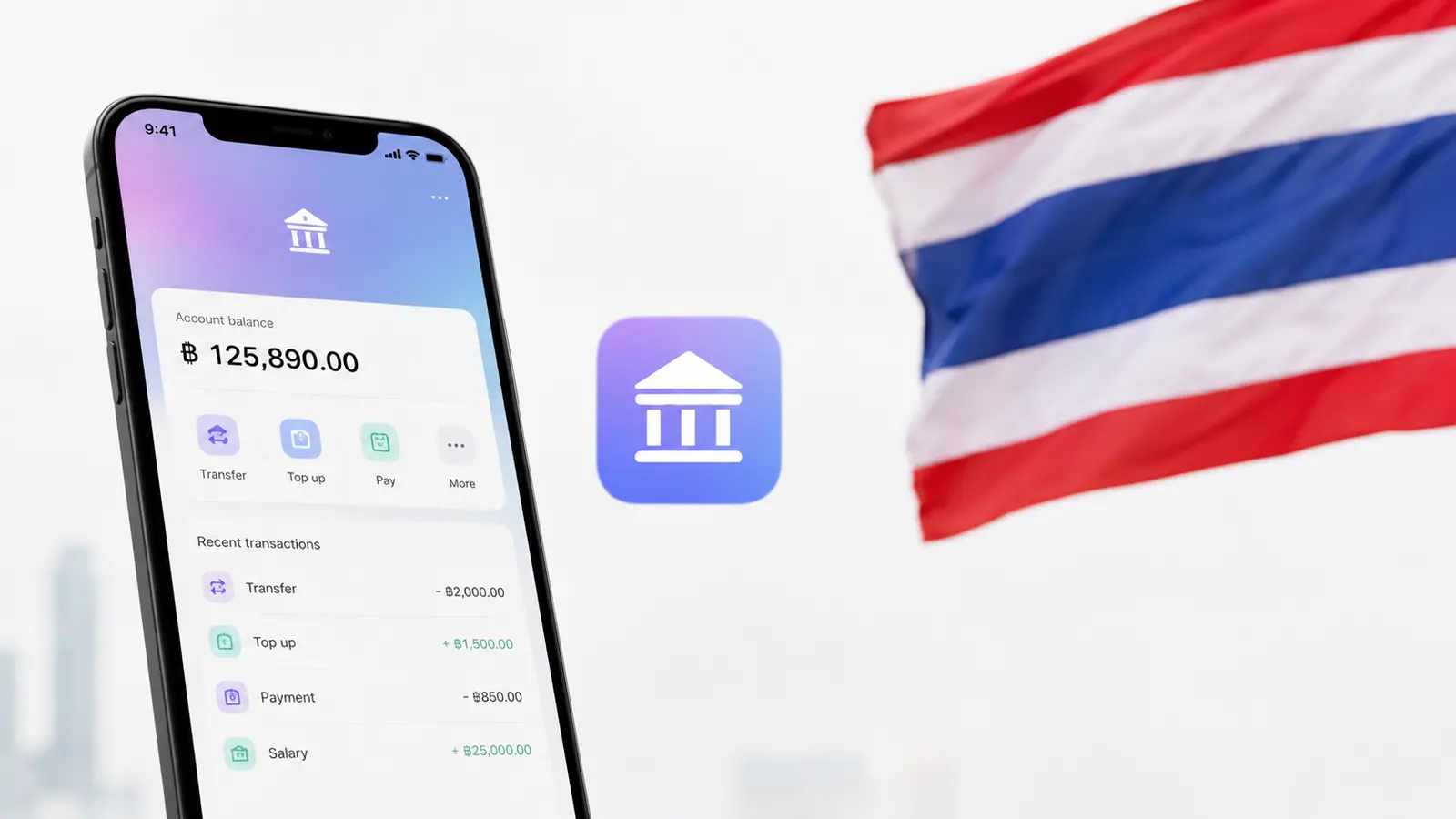
Thailand's virtual banks are banks without branches. They are licensed by the Bank of Thailand to take deposits, lend, and run the full suite of banking services, but they meet customers only through a smartphone app. The Bank of Thailand approved the first three in June 2025, and they are required to begin operations in 2026. The point of the model is not a cheaper app. It is a different way to reach people the branch network never reached. For the full licence timeline and the winners, see our breakdown of Thailand virtual bank licence winners.
What a virtual bank actually is
A virtual bank holds a full banking licence. It can accept deposits that are protected under the same rules as a traditional bank, and it can extend credit. The only thing it lacks is a physical branch. Everything a customer does, opening an account, moving money, applying for a loan, runs inside an app. That removes the single biggest cost in banking, the branch network, and lets the bank price its services for thinner margins and smaller ticket sizes than a conventional lender can justify. The model is not new globally. Hong Kong, Singapore, and Malaysia already run licensed virtual banks, and Thailand is the latest market to import it with local safeguards.
Why Thailand is doing this now
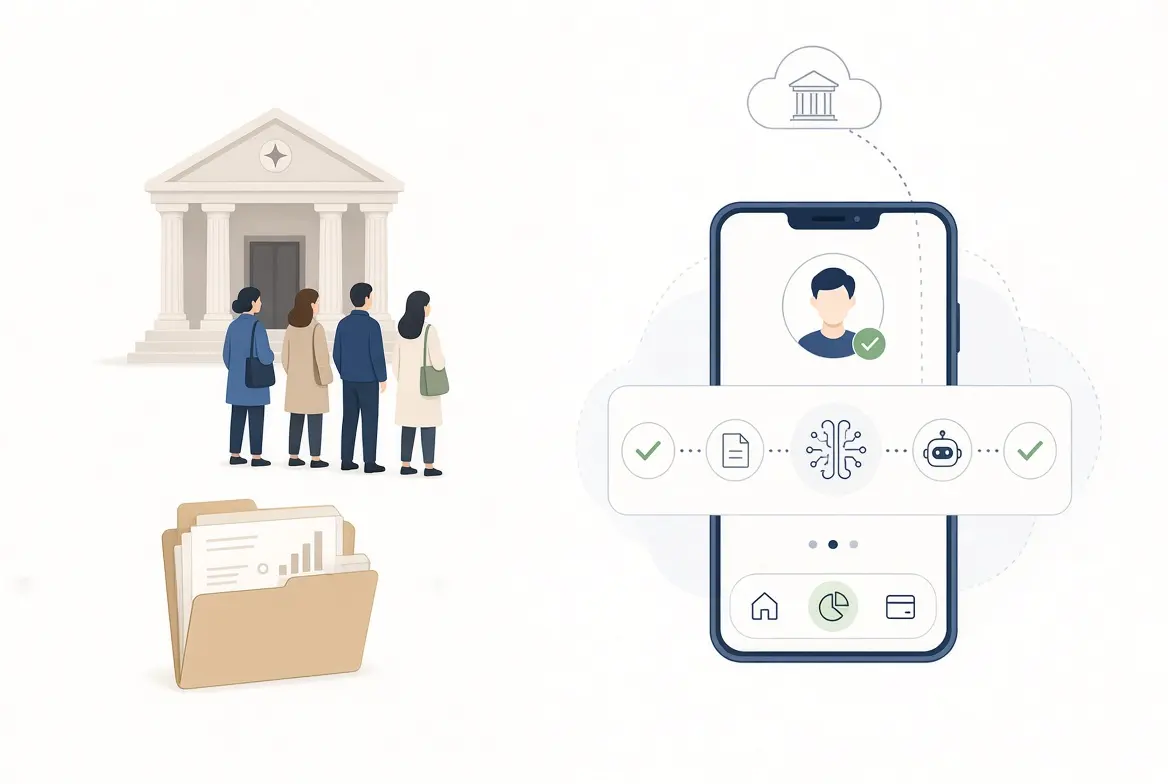
Thailand has high mobile penetration but a large share of households and small businesses that are still thin-file or underbanked, meaning they have little or no credit history with a formal lender. Traditional banks have little economic incentive to serve them, because the cost of a branch visit and a manual underwriting file dwarfs the profit on a small loan. A virtual bank flips that math: a phone is the branch, and data from payments, e-commerce, and telecom usage becomes the underwriting file. The Bank of Thailand is betting that a licensed, supervised virtual bank can do safely what informal lenders have done expensively for decades. The same logic explains why the licences went to consortia that already own distribution, which we cover in the Thailand virtual bank licence winners article.
- Full banking licence, deposits protected like a traditional bank
- No physical branches, everything runs in an app
- Built to serve thin-file and underbanked customers
- Same supervisory perimeter as conventional banks under the Bank of Thailand
How virtual banks make money without branches
The economics rest on two shifts. First, the cost base is far lower without a branch estate, so the bank can serve smaller balances and smaller loans at a profit. Second, the underwriting uses behavioural data, not just a credit bureau score, which lets the bank price risk on customers a traditional lender would decline. That combination is what makes the underbanked segment bankable rather than marginal. The catch is that data underwriting only works at scale, which is why the Bank of Thailand attached a 5 billion baht capital floor to keep the first cohort solvent while they build a book. The delay in getting to market, explained in our piece on why Thailand's virtual banks are delayed, is largely about making sure that safeguard holds.
A virtual bank is not a cheaper app. It is a different way to reach the people the branch network never reached.
What this means for operators
For a regional fintech or bank watching Thailand, the model is a template: pair a banking licence with an existing distribution asset, a payments app, a telco, a retail network, and use it to underwrite the thin-file segment. The Ascend Bank play, built on the TrueMoney app, is the clearest example of that logic, and we unpack it in the Ascend Bank Thailand market piece. The wider question for the region is whether virtual banks actually reach the underserved or simply compete with incumbents for the already-banked, which is the subject of our article on virtual banks serving underserved consumers in Thailand.
For investors, the Thai virtual bank market is a studied bet on inclusion-led growth, not a challenger-bank land grab. The consortium model and the capital floor favour patient, scaled players over fast fintechs, which is a deliberate trade the Bank of Thailand made to protect depositors. Comparing the Thai approach with the more open Singapore digital banking regime shows how different the two inclusion strategies are, and our Thailand versus Singapore digital banking comparison lays that out.
The bigger picture
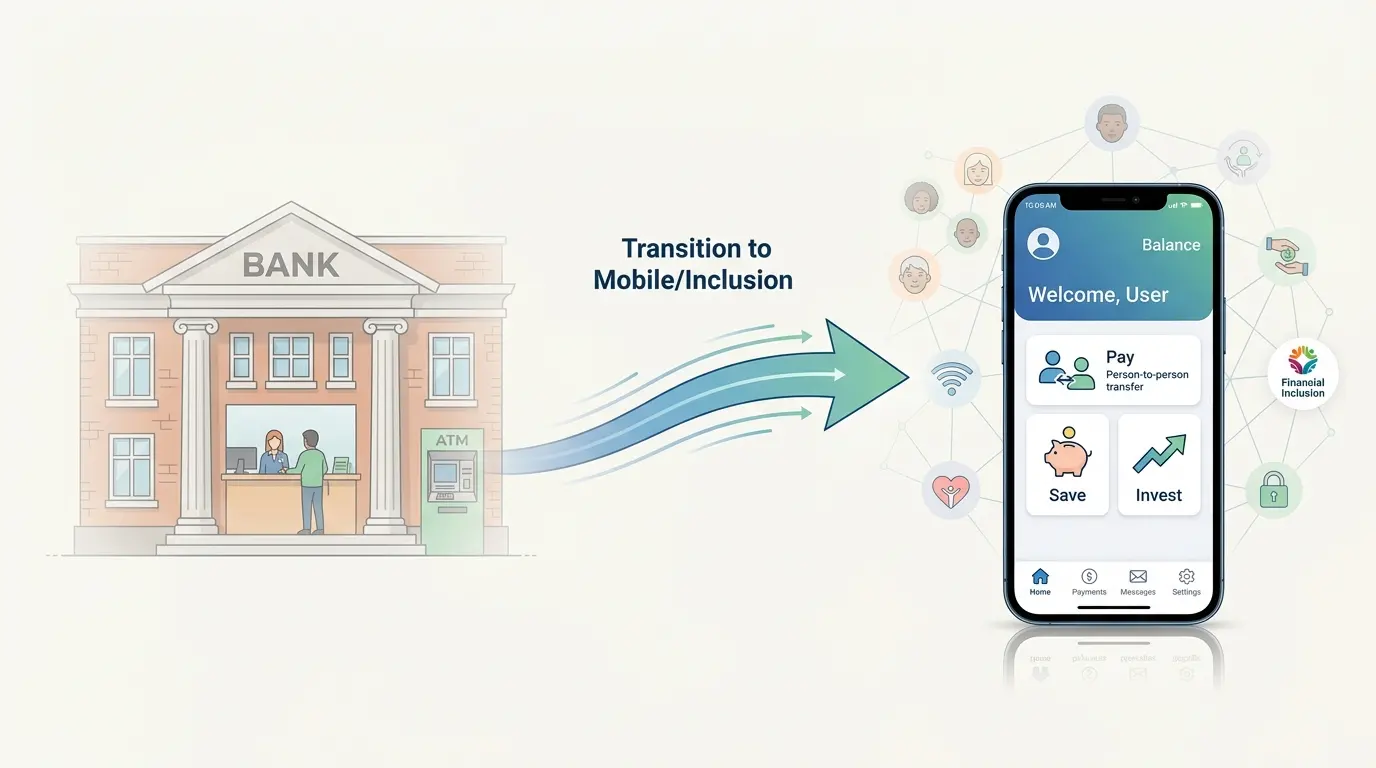
Virtual banking is the regulatory answer to a simple gap: millions of Southeast Asians have a phone but not a bank relationship, and the branch model was never going to close that gap economically. Thailand's version is cautious by design, a small first cohort, a high capital floor, and a phased launch, because the regulator is weighing inclusion against depositor protection. If the first three prove the model, the next cohort expands. If they stumble, the cautious design is exactly what limits the damage. Either way, the direction is set: banking in Thailand is moving from the branch to the pocket, and the virtual bank licence is the legal instrument that makes it official.
What to watch next
The signals to track are launch dates, first-year deposit take-up, and whether the new banks lend to thin-file customers or poach the already-banked. The Bank of Thailand will publish licensing and supervisory updates, and the difference between a virtual bank that grows the pie and one that reshuffles it will show up in those numbers within the first year of operation.
Is a virtual bank a real bank?
Yes. It holds a full banking licence from the Bank of Thailand and can take deposits and lend. The only difference from a traditional bank is that it has no branches and serves customers through an app.
Are deposits in a Thai virtual bank safe?
Deposits sit inside the same supervisory perimeter as traditional banks under the Bank of Thailand, and the first cohort carries a 5 billion baht capital floor as an added solvency buffer while they build their loan book.