
The biggest names in payments are moving deeper into lending, and Stripe has made its intentions clear. The company has agreed to acquire Parafin, a platform that supplies the small-business credit offered by marketplaces and software companies such as DoorDash, Gusto, Jobber and Mindbody to their own customers. The deal was announced at the end of September, according to Stripe's newsroom. Terms were not disclosed, and closing is expected in the coming months, subject to customary conditions including any required regulatory clearances.
Parafin has provided access to capital for more than 60,000 businesses since 2020. Its portfolio will join Stripe Capital, Stripe's existing financing product for platforms. Stripe says the acquisition will strengthen its support for ambitious platforms while bringing more credit to small businesses. The strategic logic is simple: whoever processes a merchant's revenue knows more about that merchant than almost any lender, and can offer credit at the moment the merchant needs it.
What Parafin does
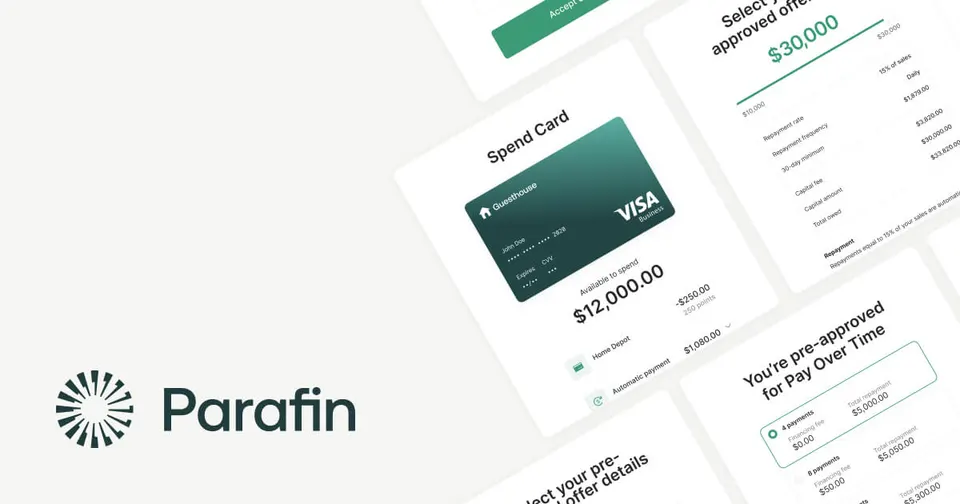
Parafin operates behind the scenes. A platform such as a food delivery marketplace or a payroll software provider integrates Parafin, and its small-business customers see financing offers inside the platform they already use. Parafin provides the capital, underwriting, servicing and compliance, while the platform owns the customer relationship and shares in the economics.
Beyond its core capital product, Parafin offers two further credit products, Pay Over Time and Spend, which help businesses spread payments and manage purchases. Repayment is typically linked to the business's sales on the platform, so repayments rise when sales are strong and fall when they are weak.
That model suits small businesses with uneven cash flow, which traditional banks often struggle to serve. A restaurant on a delivery platform, for example, has a sales history the platform can see in real time. Lending against that data can be faster and more accurate than asking for tax returns and collateral.
- Parafin partners include DoorDash, Gusto, Jobber and Mindbody.
- More than 60,000 businesses have accessed capital through Parafin since 2020.
- Products: capital, Pay Over Time and Spend.
- After closing, Parafin's portfolio joins Stripe Capital.
The approach also changes how small businesses experience credit. Instead of applying to a bank, waiting for a decision and negotiating terms, a business owner sees a pre-qualified offer inside the software they use every day, often with funds arriving within days. That convenience is a large part of why embedded lending has grown so quickly.
Why Stripe wants embedded credit
Payments have become a crowded, low-margin business. Processing fees face pressure from competition, card network changes and alternative payment methods such as account-to-account transfers and stablecoins. Lending offers higher margins and stickier relationships, because a merchant that relies on its payment provider for working capital is less likely to switch.
Stripe already lends through Stripe Capital, but Parafin brings a dedicated platform built for marketplaces and vertical software companies, plus relationships with major platforms. Combining the two gives Stripe a broader set of tools to offer its platform customers, which include many of the world's largest software and marketplace businesses.
The deal also reflects Stripe's strategy after a reported failed pursuit of PayPal. According to American Banker, Stripe had been prepared to team with private equity firm Advent to acquire PayPal for 53 billion dollars before PayPal's board balked at the price, as we covered in our report on the Stripe and Advent bid. Buying a specialist like Parafin is a more targeted way to add capabilities.
In payments, whoever sees a merchant's revenue in real time is best placed to lend against it. Stripe just bought the engine that does it for others.
Data is the advantage that makes this work. Stripe processes payments for millions of businesses and can see their revenue in close to real time. Combining that visibility with Parafin's underwriting models could let Stripe price credit more accurately than lenders who rely on periodic financial statements, which in turn supports better terms for good borrowers.
The competition for small-business lending
Stripe is not alone. Payment companies, marketplaces and software platforms have all moved into lending to small businesses, from merchant cash advances offered by point-of-sale providers to working capital loans from e-commerce marketplaces. Banks compete too, but often lack the real-time data that platforms hold.
The pressure is visible in credit markets. Higher interest rates have raised funding costs for lenders and repayment burdens for borrowers, and bank earnings this week will show how small-business credit is holding up. Lenders with better data and tighter links to borrowers' revenue may manage risk better through a slowdown, which is a central part of the embedded lending pitch.
Regulation will shape the market. Small-business lending is lightly regulated compared with consumer credit in many jurisdictions, but scrutiny is increasing around disclosure of costs and fair treatment, especially for products structured as revenue-based financing. Stripe's scale will make it a prominent target for that scrutiny.
Funding is the other piece of the puzzle. Embedded lenders need capital to lend, typically from their own balance sheets, credit facilities or partnerships with banks and investors. A company of Stripe's scale can access funding more cheaply than a standalone fintech lender, which could make Parafin's products more competitive after the deal closes.

What it means for Asia's super-apps and payment firms
Southeast Asia has its own version of this story. Super-apps such as Grab and GoTo, and payment platforms such as GCash, already lend to merchants and drivers using transaction data. Grab's agreement to buy most of Atome in September, which we covered in our report on the Grab and Atome deal, showed how central credit has become to platform strategy in the region.
Payment processors are moving the same way. Pine Labs launched a unified merchant platform in Singapore in October that combines acceptance, acquiring and instalment payments, and Revolut expanded merchant acquiring in Singapore. The next step for many will be credit, either built in-house or supplied by specialists.
Stripe's acquisition signals that global players see embedded credit as core infrastructure. If Stripe extends Parafin's capabilities to its platform customers worldwide, Asian marketplaces and software companies that use Stripe could gain access to similar financing tools, increasing competition with local lenders.
The risks in embedded lending
Embedded lending carries real risks. Revenue-based repayment can strain businesses if sales fall sharply, and the convenience of one-click financing can encourage borrowing that is hard to repay. Platforms that offer credit must balance growth with responsible lending, or risk damaging relationships with the very merchants they depend on.
For Stripe, integrating Parafin brings credit risk onto a larger balance sheet. Underwriting discipline, funding costs and loss rates will matter more as the portfolio grows, particularly if the economy slows. Investors will watch how Stripe manages a lending business alongside its payments operations.
There are also conflicts to manage. A payment provider that also lends to its merchants must handle data, pricing and collections carefully to avoid accusations of using its position unfairly. Clear policies and transparent terms will be essential.
What the platform partners will watch
Platform partners will want reassurance too. Companies such as DoorDash, Gusto, Jobber and Mindbody chose Parafin as a specialist partner. Under Stripe's ownership, they will look for continuity in service, pricing and data handling, and some may weigh whether relying on Stripe for both payments and credit concentrates too much in one provider.
What is Stripe acquiring?
Stripe agreed to acquire Parafin, a small-business credit platform that supplies financing offered by platforms such as DoorDash, Gusto, Jobber and Mindbody to their customers.
How much is Stripe paying for Parafin?
The terms of the deal were not disclosed.
When will the Stripe and Parafin deal close?
Closing is expected in the coming months, subject to customary conditions, including any required regulatory clearances.
How many businesses has Parafin served?
Parafin has provided access to capital for more than 60,000 businesses since 2020.
What happens to Stripe Capital?
Parafin's credit portfolio will join Stripe Capital, Stripe's existing financing product for platforms.
What is embedded lending?
Embedded lending lets a platform offer loans or financing inside its own software, using data such as sales history, while a specialist provider supplies the capital, underwriting and servicing.
Does Stripe already offer business loans?
Yes. Stripe Capital provides financing to businesses through platforms. Parafin's credit portfolio will join Stripe Capital once the acquisition closes.
Why are payment companies moving into lending?
Lending offers higher margins and stickier customer relationships than payment processing, and payment companies can use real-time revenue data to assess and price credit.
Will Parafin's partners keep working with it?
The announcement does not say whether partner arrangements change. Platforms such as DoorDash, Gusto, Jobber and Mindbody will be watching for continuity in service, pricing and data handling after the deal closes.
Stripe's agreement to buy Parafin confirms that the next battleground in payments is credit. Platforms that process a business's revenue have the data to lend against it, and Parafin gives Stripe a proven engine for doing so through partners. For competitors, from banks to Asia's super-apps, the deal raises the bar: payments alone are no longer enough, and the providers that combine processing with responsible, data-driven credit will be best placed to keep their merchants.
Talk to the SpinDepth deskYou've finished this story
Read on, send it to someone, or ask about it.