
The idea that financial markets should close at night and on weekends is under attack from every direction. On 8 October, Nasdaq Ventures, the corporate venture arm of the exchange operator, made an undisclosed strategic investment in One Trading, an Amsterdam-based regulated derivatives and crypto exchange that runs round-the-clock spot crypto and perpetual futures on equities. The two companies will explore extending One Trading's 24/7 infrastructure into traditional derivatives and broadening their product range, according to Finance Magnates.
The deal is small in dollar terms but large in signal. It follows Nasdaq's 100 million dollar investment last month in Payward, the parent of Kraken, focused on infrastructure for tokenised equities and always-on markets. It also lands as CME reports strong demand for weekend crypto futures. Exchanges are preparing for a future in which equities, derivatives and digital assets trade continuously on tokenised, continuously settled rails.

What One Trading does
One Trading offers spot crypto trading and perpetual futures on equities, both available around the clock to retail and institutional investors. A Dutch regulator backed its first 24/7 equity perpetuals market, according to a related Finance Magnates headline, giving it a regulated foothold in a product that has mostly lived on offshore crypto venues.
Perpetual futures on equities let traders take leveraged long or short positions on stocks or indexes without an expiry date, with a funding mechanism keeping prices aligned with the underlying. Finance Magnates noted that One Trading's leveraged perpetual products resemble CFDs, the instrument most European retail traders use for leveraged exposure.
The combination of continuous hours and CFD-like economics on a regulated exchange is what makes One Trading interesting to Nasdaq. It is a live test of how retail and institutional demand behaves when markets never close, under European rules.
Regulation is what separates One Trading from offshore venues. Operating under European rules means meeting requirements on client protection, capital, governance and reporting that many offshore exchanges avoid. That compliance burden is exactly what makes the platform attractive to an established exchange operator looking for a regulated route into always-on products.
What Nasdaq and One Trading said
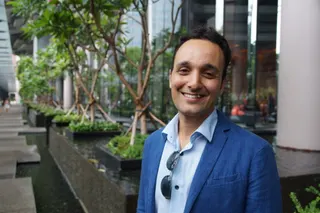
Joshua Barraclough, One Trading's chief executive, said Nasdaq Ventures shares the belief that markets must keep evolving to support clients' liquidity and capital needs. He said the future of derivatives markets will depend on technology, risk management and market infrastructure that make markets more efficient, responsive and resilient.
Gary Offner, global head of Nasdaq Ventures, said the unit seeks teams building disruptive technologies that expand liquidity and transparency. The amount invested was not disclosed, and no completed integration between the two businesses has been announced.
The statement of intent to explore extending 24/7 infrastructure into traditional derivatives is the key line. Nasdaq operates major derivatives markets in Europe, and a partnership that brings continuous trading to those products would be a significant change in market structure.
Exchanges are preparing for a world where stocks, derivatives and crypto never close. The question is who supplies liquidity at 3 a.m. on a Sunday.
The evidence from CME's weekends
CME Group has provided some of the clearest evidence of demand for trading outside normal hours. Its first six weekends of crypto futures and options trading generated 1 billion dollars in volume, according to Finance Magnates' weekly review. Average daily volume in its crypto derivatives rose 44 percent year on year in the first half to 280,000 contracts.
Those figures suggest that institutional and professional traders want to manage crypto exposure when the underlying market is moving, which is all the time. Weekends have historically been when crypto prices can move sharply while regulated futures markets sat closed, leaving traders unable to hedge.
Not every signal is positive. A social media post reported that CME is winding down plans for fully 24/7 markets because of weekend staffing demands, a claim that has not been confirmed. Even if CME scales back, the weekend crypto results show that demand exists for specific products where the underlying never sleeps.
- Nasdaq Ventures: undisclosed strategic investment in One Trading, announced 8 October.
- Nasdaq and Payward: 100 million dollar investment in Kraken's parent in September.
- CME weekend crypto: 1 billion dollars in volume across its first six weekends.
- CME crypto derivatives ADV: up 44 percent year on year in H1 to 280,000 contracts.
The data also suggests where 24/7 trading makes most sense. Products whose underlying markets never close, such as crypto, have the strongest case for continuous futures trading. Equity products are different, because the underlying shares only trade during exchange hours, so continuous derivatives on equities depend on models like Kalshi's, which trade against the last published index level overnight.
The case against always-on markets
Regulators and market participants have raised real concerns. SEC Commissioner Hester Peirce has cited thinner order books, wider spreads and higher volatility as drawbacks of extended trading. When fewer participants are active, each order moves prices more, and the quality of execution for ordinary investors can suffer.
There is also a human and operational cost. Exchanges, brokers, clearing houses and banks must staff risk, surveillance and support functions around the clock. Margin calls and liquidations at unusual hours can catch traders who are asleep. Commentators such as Paul Golden have argued that different types of liquidity will dominate at different times, meaning prices overnight may be set by a narrower group of participants.
Settlement and funding add complexity. Traditional markets settle trades through banks and payment systems that keep business hours. Continuous trading works best when settlement is also continuous, which is why tokenised assets and stablecoins feature so heavily in exchange plans for always-on markets.

What it means for brokers and traders
For retail brokers, 24/7 markets are both an opportunity and an obligation. Clients increasingly expect to trade whenever news breaks, and brokers that offer weekend and overnight access to popular instruments can win business. But they must also manage risk and support clients around the clock, which raises costs.
For CFD brokers in Europe, exchange-traded perpetuals with continuous hours are a potential competitor. If venues such as One Trading can offer CFD-like exposure on a transparent, regulated exchange, some clients may prefer them to bilateral CFDs. Brokers may respond by offering access to such venues or by extending their own trading hours.
For traders, the practical lesson is caution. Liquidity outside core hours can be thin, spreads wide and prices jumpy. Using limit orders, reducing leverage and understanding how a platform handles margin calls overnight are sensible precautions. We examined a similar product in the United States in our report on Kalshi's US500 perpetual.
Technology providers stand to benefit as well. Platforms such as cTrader, MetaTrader and TradingView-linked brokers already handle round-the-clock crypto and CFD trading, and their infrastructure will be tested as more instruments move toward continuous hours. Brokers that rely on third-party platforms will need confidence that their providers can support always-on risk management.
What it means for Asia
Asian traders have the most to gain from always-on markets. When US and European markets are closed, it is daytime in Asia, and news that breaks during Asian hours often cannot be traded on Western exchanges until hours later. Continuous trading on major instruments would give Asian investors real-time access.
Asian exchanges are watching closely. Several already offer extended hours on futures, and the region's crypto exchanges trade continuously. The growth of 24/7 products in the United States and Europe will push Asian venues and brokers to consider how they compete for that flow.
For regulators in the region, the debate mirrors the one in the West: how to protect retail investors from thin, volatile markets while allowing the access that technology makes possible. The answers will differ by market, but the direction of travel is the same.
What did Nasdaq invest in?
Nasdaq Ventures made an undisclosed strategic investment in One Trading, an Amsterdam-based regulated derivatives and crypto exchange, announced on 8 October 2026.
What does One Trading offer?
One Trading offers round-the-clock spot crypto trading and perpetual futures on equities to retail and institutional investors, regulated in the Netherlands.
How much volume did CME's weekend crypto trading generate?
CME's first six weekends of crypto futures and options trading generated 1 billion dollars in volume, according to Finance Magnates.
What are the risks of 24/7 trading?
SEC Commissioner Hester Peirce and others cite thinner order books, wider spreads and higher volatility outside core hours, along with operational costs and margin calls at unusual times.
Did Nasdaq invest in Kraken?
Nasdaq announced a 100 million dollar investment in Payward, Kraken's parent, in September 2026, focused on tokenised equities and always-on markets infrastructure.
Will stock markets trade 24/7?
Exchanges are preparing for it, with continuous trading in crypto, perpetuals and some futures. Full 24/7 trading of traditional equities still faces settlement, staffing and regulatory hurdles.
Nasdaq's investment in One Trading is another step toward markets that never close. The demand is real, as CME's weekend volumes show, and the technology of perpetual contracts and tokenised settlement makes continuous trading more feasible. But the costs, from thinner liquidity to round-the-clock risk management, are real too. For brokers and traders, especially in Asia, always-on markets will bring more access and more responsibility in equal measure.
Talk to the SpinDepth deskYou've finished this story
Read on, send it to someone, or ask about it.