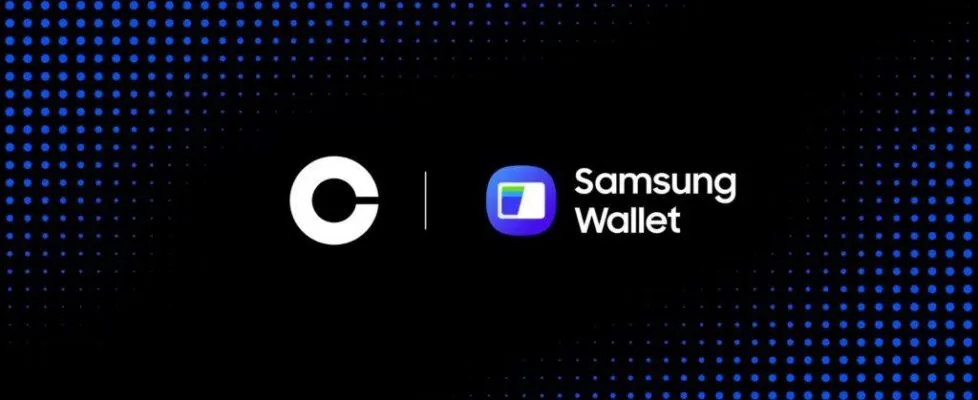
The fight for stablecoin dominance is moving onto the home screen. Coinbase announced on 8 October that it will provide the stablecoin infrastructure for Samsung Wallet, with USDC as the default US dollar stablecoin. The rollout begins in the last week of October 2026 and covers the US market only. When a Samsung Wallet user tops up a stablecoin balance, USDC will appear automatically as the default choice.
Defaults are powerful. Most consumers never change the settings they are given, which is why search engines pay billions to be the default on phones and browsers. By securing the default slot in one of the world's most widely installed phone wallets, Coinbase and Circle, the issuer of USDC, have won a distribution advantage that rival stablecoins will find hard to match.

What the partnership includes
Coinbase will run the stablecoin infrastructure behind Samsung Wallet's dollar stablecoin feature. USDC is designed to be redeemable one to one for US dollars and is backed by cash and short-dated US Treasuries, with monthly attestations published by its issuer.
Custody is a central part of the design. Coinbase Prime will hold the USDC using NYDFS-qualified custody services, and Bastion, a licensed stablecoin custodian and infrastructure provider overseen by US financial regulators, works with Coinbase on the framework. That structure is aimed squarely at the trust concerns that keep mainstream users away from crypto.
Alec Lovett, head of infrastructure products at Coinbase, said Samsung's global reach makes the deal a significant distribution milestone for USDC, adding that stablecoins are becoming an important way for people to move money online.
- Launch: last week of October 2026, US only.
- Default: USDC appears automatically when users top up a stablecoin balance.
- Custody: Coinbase Prime with NYDFS-qualified custody, working with Bastion.
- Reserves: USDC backed by cash and short-dated US Treasuries, with monthly attestations.
- Reach: earlier partnership steps reached more than 82 million Galaxy users in the US.
For Circle, the issuer of USDC, the arrangement means its token is presented to consumers through two trusted brands rather than through a crypto exchange's trading screen. That framing matters for mainstream adoption, where the reputation of the app delivering a product often counts for more than the product's own brand.
How the Coinbase and Samsung relationship evolved
The announcement is the latest step in a partnership that has expanded in stages. Coinbase first added Samsung Pay as a payment option for buying crypto in the Coinbase app. Months later, it extended the relationship to Galaxy users in the US, offering Coinbase One subscription benefits inside Samsung Wallet, a step that reached more than 82 million users.
Each stage moved Coinbase deeper into the Samsung ecosystem. The first made it easier for Samsung users to fund Coinbase accounts. The second put Coinbase's brand inside Samsung's wallet. The third makes Coinbase the infrastructure provider for a native stablecoin feature in that wallet.
For Samsung, the arrangement adds a feature without requiring it to build crypto infrastructure or take on custody risk itself. Partnering with a regulated, listed US company for the technical and compliance layer lets Samsung offer stablecoins to users while keeping its own exposure limited.
The most valuable real estate in payments is the default setting on a phone. USDC just took one of the biggest.
The deal also fits Samsung's broader strategy of turning its wallet into a hub for payments, identity, keys and tickets. Adding a dollar stablecoin balance makes the wallet more useful for online purchases and transfers, and gives Samsung a feature that differentiates its devices in a market where hardware looks increasingly similar.
Why wallet defaults matter for stablecoins
Stablecoin competition has largely played out on exchanges and in decentralised finance, where traders choose between tokens based on liquidity and fees. Mainstream consumers behave differently. They rarely compare stablecoins and are likely to use whichever one their wallet offers first.
That makes distribution through consumer apps the next battleground. A stablecoin that is the default in a widely installed phone wallet gains users who may never have opened a crypto exchange. Those users bring everyday balances and payments, which are stickier than trading volume.
It also shapes regulation and trust. Visa's survey of Asia Pacific consumers found that people trust banks, regulated institutions and government-linked entities most to issue or back stablecoins, as we reported in our coverage of the Visa stablecoin study. A stablecoin delivered through a phone maker's wallet, with a listed US company handling custody, inherits some of that institutional trust.
The economics reward scale. Stablecoin issuers earn interest on the reserves backing their tokens, so every dollar held in a default wallet balance contributes to revenue. Distribution partners can share in that value, which is why negotiations over default placement are likely to become one of the most important commercial battles in digital payments.
What it means for Circle and rival stablecoins
For Circle, the deal is a distribution win at a time when competition among dollar stablecoins is intensifying. New entrants backed by payment companies, banks and consortia are launching tokens aimed at mainstream payments. Securing a default slot in a major phone wallet is the kind of channel that can shift market share over time.
Rival issuers will look for equivalent deals with other device makers, wallets and super-apps. Apple, Google and large Asian super-apps represent similar opportunities, and the terms they negotiate will shape which stablecoins become everyday money for consumers.
Regulation adds a layer. In Europe, ESMA has just told authorised crypto firms to stop serving stablecoins that do not comply with MiCA, while Singapore is moving to give its stablecoin framework legal force. A stablecoin's regulatory status in each market will increasingly determine whether wallets can offer it at all.
Payment networks are watching closely. Visa and Mastercard have both invested in stablecoin settlement and card programmes, while new stablecoins backed by payment firms aim to capture the same mainstream use. A phone maker's wallet choosing one stablecoin as default shows how quickly the landscape can shift when distribution partners make decisions on behalf of millions of users.

Why Asia should pay attention
The rollout is US-only for now, but Samsung's largest user bases include markets across Asia. If the feature succeeds in the US, an international expansion would be a natural next step, subject to local regulation. In Southeast Asia, where Visa's research shows strong interest in stablecoins for cross-border payments, a phone wallet with a built-in dollar stablecoin could be attractive.
Regulators in the region will shape that path. Singapore's MAS is consulting on legally backed stablecoin rules, Indonesia's OJK treats stablecoins as transactional instruments rather than payment tools, and Thailand's central bank remains cautious about dollar stablecoins in domestic payments. Any expansion would need to navigate those differences country by country.
For Asian wallets and super-apps, the deal is a competitive signal. Platforms such as GCash, DANA, GoPay, TrueMoney and Touch 'n Go already dominate local payments. The question is whether they will add stablecoin balances of their own, partner with global issuers, or wait for regulators to define the rules.
What users should know before using it
Holding a stablecoin in a phone wallet is not the same as holding dollars in a bank account. USDC is designed to be redeemable one to one and is backed by reserves, but it is not a bank deposit and is not covered by deposit insurance. Users should understand how to convert stablecoins back to dollars, what fees apply and how long redemption takes.
Security habits matter too. A phone wallet is only as secure as the phone itself, so strong device passcodes, biometric locks and vigilance against phishing apply. Users should be wary of messages that claim to come from Samsung or Coinbase and ask for login details.
Finally, users should check availability. The feature launches only in the US, and stablecoin features may not be offered in other countries even on the same device.
What did Coinbase and Samsung announce?
Coinbase will provide the stablecoin infrastructure for Samsung Wallet, with USDC as the default US dollar stablecoin, starting in the last week of October 2026 in the US.
Is USDC available in Samsung Wallet outside the US?
The rollout covers the US market only. No international launch dates have been announced.
Who holds the USDC in Samsung Wallet?
Coinbase Prime holds the USDC using NYDFS-qualified custody services, working with Bastion, a licensed stablecoin custodian overseen by US financial regulators.
Is USDC the same as a dollar in a bank?
No. USDC is designed to redeem one to one for US dollars and is backed by cash and short-dated Treasuries, but it is not a bank deposit and is not covered by deposit insurance.
How many Samsung users could see the feature?
Coinbase said an earlier stage of its partnership extended benefits to more than 82 million Galaxy users in the US.
Why does being the default stablecoin matter?
Most users keep the default option they are given. Being the default in a widely installed phone wallet can bring USDC mainstream users who never use crypto exchanges.
The Coinbase and Samsung deal shows where the stablecoin race is heading: away from trading screens and into the apps people use every day. By making USDC the default in Samsung Wallet, with regulated custody behind it, Coinbase and Circle have secured a channel rivals will struggle to replicate. For stablecoin issuers worldwide, and for wallet providers in Asia, the lesson is that distribution and trust now matter as much as the technology.
Talk to the SpinDepth deskYou've finished this story
Read on, send it to someone, or ask about it.