
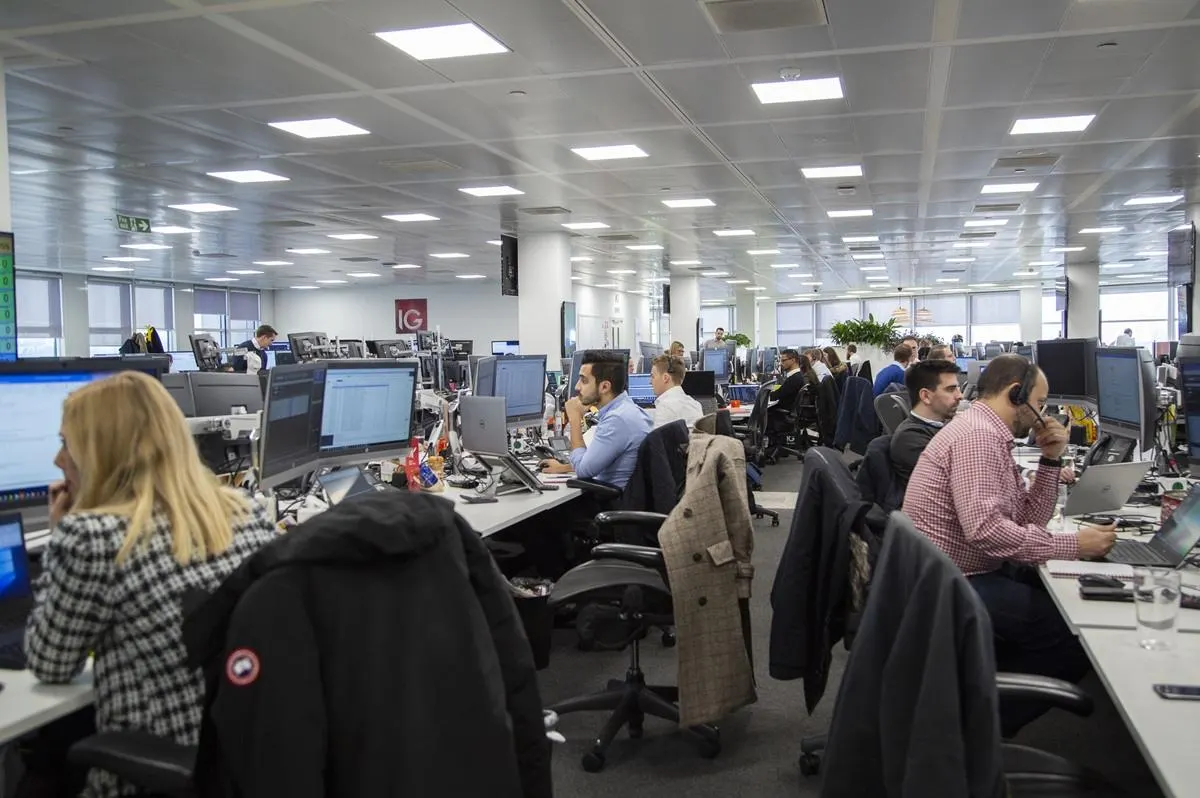
IG Group is one of the oldest and most respected names in online trading, with a long history in contracts for difference and spread betting and a presence that stretches from London to Singapore and Tokyo. On 2 October, its shares fell about 22 percent in a single day after a disappointing third quarter update, as reported by FX News Group. At one point during the session, they were down as much as 27 percent.
The drop was not caused by a scandal or a regulatory penalty. It came from something more fundamental: the company made less money from its customers' trading than investors expected. For retail brokers across Asia, which rely on the same business model, the reasons behind IG's fall are a lesson worth studying closely.
What IG reported
IG said third quarter revenue was about 240 million pounds, roughly 14 percent lower than a year earlier, and it cut its full year revenue growth outlook to a mid single digit range. That was a significant downgrade for a company investors had expected to grow faster, according to Investing.com.
The weakness came from its OTC derivatives business, which includes contracts for difference and similar products. Revenue retention in that business, a measure of how much of its clients' trading activity IG converts into revenue, was about 70 percent in the quarter, below the roughly 80 percent average since the company changed its market making approach in the second half of 2025.
Not everything was negative. Customer metrics were strong, with organic first trades up more than 25 percent year on year and organic active customers up about 17 percent. IG is attracting more clients, but it earned less from their trading in the quarter.
Why retention matters so much
To understand IG's fall, it helps to understand how retail brokers make money. When clients trade contracts for difference, the broker often takes the other side of the trade or manages the risk internally. Over time, because many retail traders lose money, brokers can retain a share of client trading activity as revenue. But in some periods, clients win more than usual, and the broker's retention falls.
That is what appears to have happened at IG. Lower retention means that, for the same amount of client trading, the company earned less. Since retention can swing with market conditions and client behaviour, it introduces volatility into broker revenues that investors find hard to predict.
A broker that profits when clients lose has a revenue line that depends on its customers' worst days, and markets price that risk harshly.
IG's change in market making approach in 2025 was designed to improve how it manages risk and revenue. The third quarter showed that the new approach can still produce weaker quarters, and investors reacted by sharply repricing the stock.

The ripple across the sector
IG's fall dragged down other listed brokers. CMC Markets fell 9 percent, Plus500 dropped 4 percent and XTB declined 3 percent, as investors worried that the conditions affecting IG might hit the whole industry. Listed brokers often move together, because their businesses respond to similar market conditions.
Not everyone saw the sell off as justified. UBS called it an overreaction, cutting its earnings forecasts for 2026 to 2028 by 13 percent and its price target to 1,425 pence from 1,700 pence, while keeping a buy rating. The bank's view was that the underlying business remains strong, with growing customers and a solid market position.
IG has also been expanding beyond its core business. It completed its acquisition of crypto exchange Independent Reserve on 30 January 2026, adding a regulated crypto platform with a presence in Australia and Singapore. That move reflects a broader push by traditional brokers into digital assets.
Lessons for Asia's brokers
Asia is one of the world's largest and fastest growing markets for retail trading, with millions of clients trading forex, CFDs and other leveraged products. Many brokers serving the region use business models similar to IG's, which means their revenues are also exposed to swings in retention and client performance.
The key lessons for brokers operating in Asia are clear:
- Revenue that depends on client losses is volatile and can disappoint investors.
- Growing client numbers does not guarantee growing revenue.
- Diversifying into commissions, subscriptions and new products can stabilise income.
- Transparency about how revenue is earned builds long term trust with clients and regulators.
Regulators across Asia are also paying closer attention to how brokers earn money from retail clients, and listed peers have faced their own scrutiny, as we noted when CMC Markets' guidance put its board in the spotlight. The conflict between a broker profiting from client losses and its duty to treat clients fairly is a recurring concern, and it shapes rules on leverage, marketing and disclosure.
The industry's evolving model
The retail brokerage industry is in transition. Competition from low cost platforms, tighter regulation and changing client preferences are pushing brokers to rethink how they make money. Some are moving toward commission based models, others are adding subscription services, and many are expanding into crypto, stocks and investment products.
Asian brokers have been part of this shift. Several have expanded into new markets, added multi asset offerings and invested in technology to attract younger traders. The most successful will be those that build revenue models less dependent on client losses and more aligned with clients' long term success.
IG's experience shows that even large, well established brokers are not immune to the volatility of the traditional model. Investors want predictable growth, and businesses that cannot deliver it will continue to face sharp repricing.
A warning in the numbers
IG Group's 22 percent fall was a vivid reminder of how the market views the economics of retail trading. Strong customer growth was not enough to offset weaker retention, and investors punished the uncertainty. The episode will likely push brokers everywhere to explain their revenue models more clearly and to diversify their sources of income.
For Asia's brokers, the lesson is to build businesses that earn more when clients succeed, not when they fail. That alignment is better for clients, more appealing to regulators and, as IG's shareholders learned, more reassuring to investors.

Why did IG Group shares fall?
IG Group shares fell about 22 percent on 2 October 2026 after it reported third quarter revenue down about 14 percent and cut its full year growth outlook, driven by lower revenue retention in its OTC derivatives business.
What was IG Group's third quarter revenue?
IG reported third quarter revenue of about 240 million pounds, roughly 14 percent lower than a year earlier.
What is revenue retention for a broker?
Revenue retention measures how much of clients' trading activity a broker converts into revenue. When clients perform better than usual, retention can fall, reducing the broker's income.
Did IG Group's customer numbers fall?
No. Organic first trades rose more than 25 percent year on year and organic active customers rose about 17 percent, even as revenue fell.
Which other broker shares fell?
CMC Markets fell 9 percent, Plus500 dropped 4 percent and XTB declined 3 percent after IG's update.
What did UBS say about the sell off?
UBS called it an overreaction, cut its earnings forecasts by 13 percent and its price target to 1,425 pence from 1,700 pence, but kept a buy rating.
Does IG Group own a crypto exchange?
Yes. IG completed its acquisition of crypto exchange Independent Reserve on 30 January 2026.
What can Asian brokers learn from IG's fall?
Brokers can learn that revenue dependent on client losses is volatile, and that diversifying income and aligning revenue with client success can build more stable businesses.
Why do regulators care about how brokers earn revenue?
When a broker profits from client losses, it creates a potential conflict with its duty to treat clients fairly, which is why regulators set rules on leverage, marketing and disclosure.
Why did other broker shares fall with IG?
Listed brokers tend to move together because their businesses respond to similar market conditions, so investors worried that weaker retention at IG could signal problems across the sector.
Is IG Group still growing its customer base?
Yes. Despite lower revenue, organic first trades rose more than 25 percent and active customers about 17 percent year on year.
IG Group's sharp fall shows how fragile the economics of retail trading can be, even for one of the industry's most established names. More customers did not mean more revenue, and investors responded by marking the company down hard. For brokers across Asia, the episode is a timely reminder that the most durable business is one that grows when its clients do, and that transparency about how revenue is earned is now as important to investors as it is to regulators.
Talk to the SpinDepth deskYou've finished this story
Read on, send it to someone, or ask about it.